Nau Côclea Residency - Log 3

The second day we went into Camallera in the morning with her car so I could stock up on groceries beyond what would comfortably fit in my backpack.  I accidentally bought yogurts with sucralose in them again.  This always happens to me when I'm traveling internationally, so you'd think I'd learn, but I always am so wrapped up in making sure there's no gelatin in the new brands I encounter that I completely forget about making sure they don't have artificial sweeteners.  I just hate the taste.  And I bought eight of them.  We'll see how many I can force myself to eat before I throw the rest away.

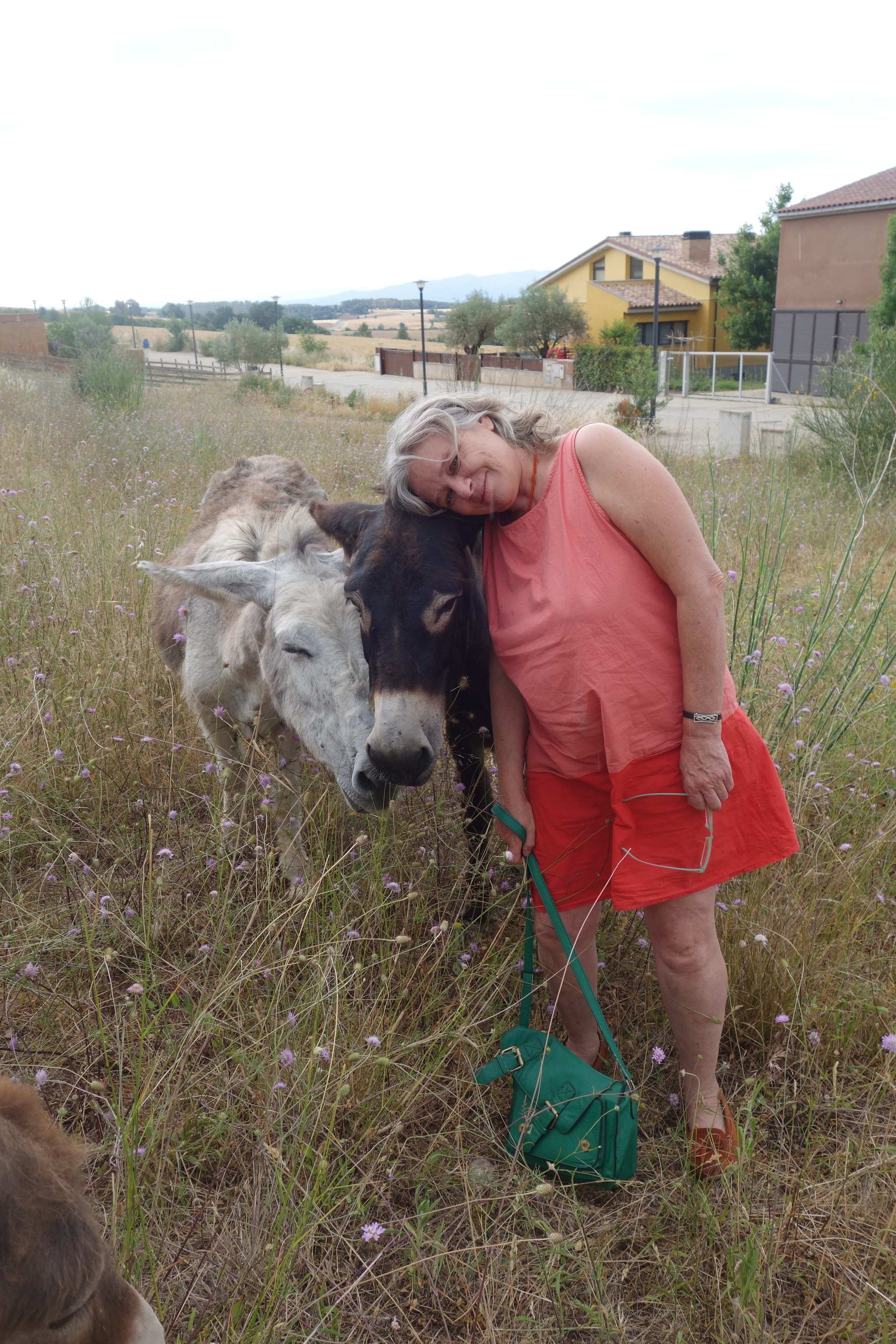
Clara also had to run an errand at a donkey farm, and mentioned in passing that she didn't think I'd be interested in going at all, but...  WHAT??! Yes, the person who applied to your residency with paintings of animals and abstracted natural landscapes does in fact want to join you on your excursion to a donkey farm.

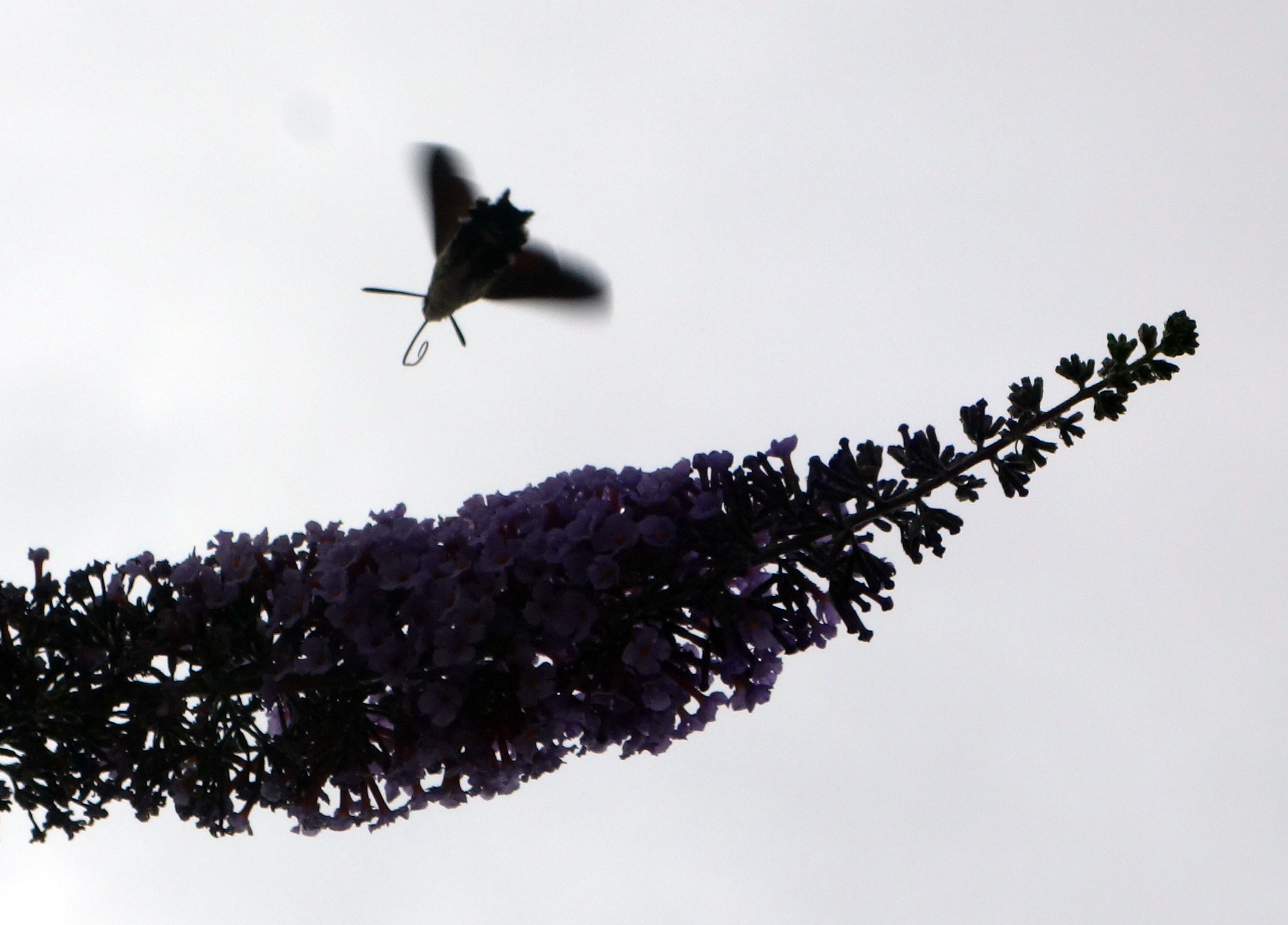
We arrived at the donkey farm and it pretty much immediately started to rain.  But these were not your typical North American donkeys.  These were Catalan donkeys, which have ridiculously proportioned ears and are super adorable and sweet.  So despite the rain, I took a ton of source photos of the donkeys in between scratching their ears and trying not to step in donkey poo.  My poor camera.  I kept tucking it under my shirt for the worst of the rain, but seriously, this camera is a trooper.  I also encountered an insect called a hummingbird hawk moth, and it is a magical creature.  As in, it appears to be a unicorn/fairy/not of this world.

The rest of the day passed in a very sleepy, leisurely, jet-lagged state.  I did manage to get outside long enough to note that A) there are a lot of snails around Nau Côclea (to which Clara responded that côclea comes from the latin for spiral) and that B) there are a TON of ants.  As in, if you stand still outside for more than two seconds ants will swarm onto your feet and up your legs and bite you all over.  Clara commiserated and said she accidentally made them a home here with her when she installed underground drip irrigation and that she'd brought an entomologist in but they said there was nothing that could be done.  There is a powder she gave me that I can sprinkle just outside my doorway to try to keep them more out than in.

The third day was spent entirely on drawing and painting.
Nau Côclea Residency - Log 2

After all the flights, I had to take the train from Barcelona to Camallera.  I was a bit nervous about this, since I didn't actually know which trains went to Camallera (only the regional trains do, but telling a regional from a non-regional is more difficult than it would first appear).  I also hadn't slept other than a 10-minute nap in Charlotte, NC, and the flights together were about 16 hours long.  First I had to find the train station (not too bad), and then buy a ticket.  It transpired that there were actually two stations I had to visit; at the second, at first it looked like I was in for a 2 1/2 hour to get on a regional train but then somehow a completely different train was found that would go to Camallera in the next four minutes.  I scrambled to get on that one, and did.  Then I spent the next couple hours of transit time falling asleep on the train, waking up, hoping I hadn't passed Camallera but also thinking that it was a ways away so I should be fine but not even being entirely sure this train actually did go to Camallera, and so on.  As I got more and more uncertain, I finally found a list of the stops of the train on my smartphone, and then in six more stops, I was in Camallera!

The residency is about a 20-minute walk away from the station, but the day I arrived my host and the art director of Nau Côclea, Clara, was there to pick me up (no one wants to drag their luggage 20 minutes when sleep-deprived and uncertain of end destination).  The residency itself is a small grouping of buildings in the midst of hay fields on the outskirts of Camallera.  The town is inhabited by only about 500 people, but the train station means it actually has a fair amount of services for such a small town.  It also means that travel to nearby towns is pretty easy.

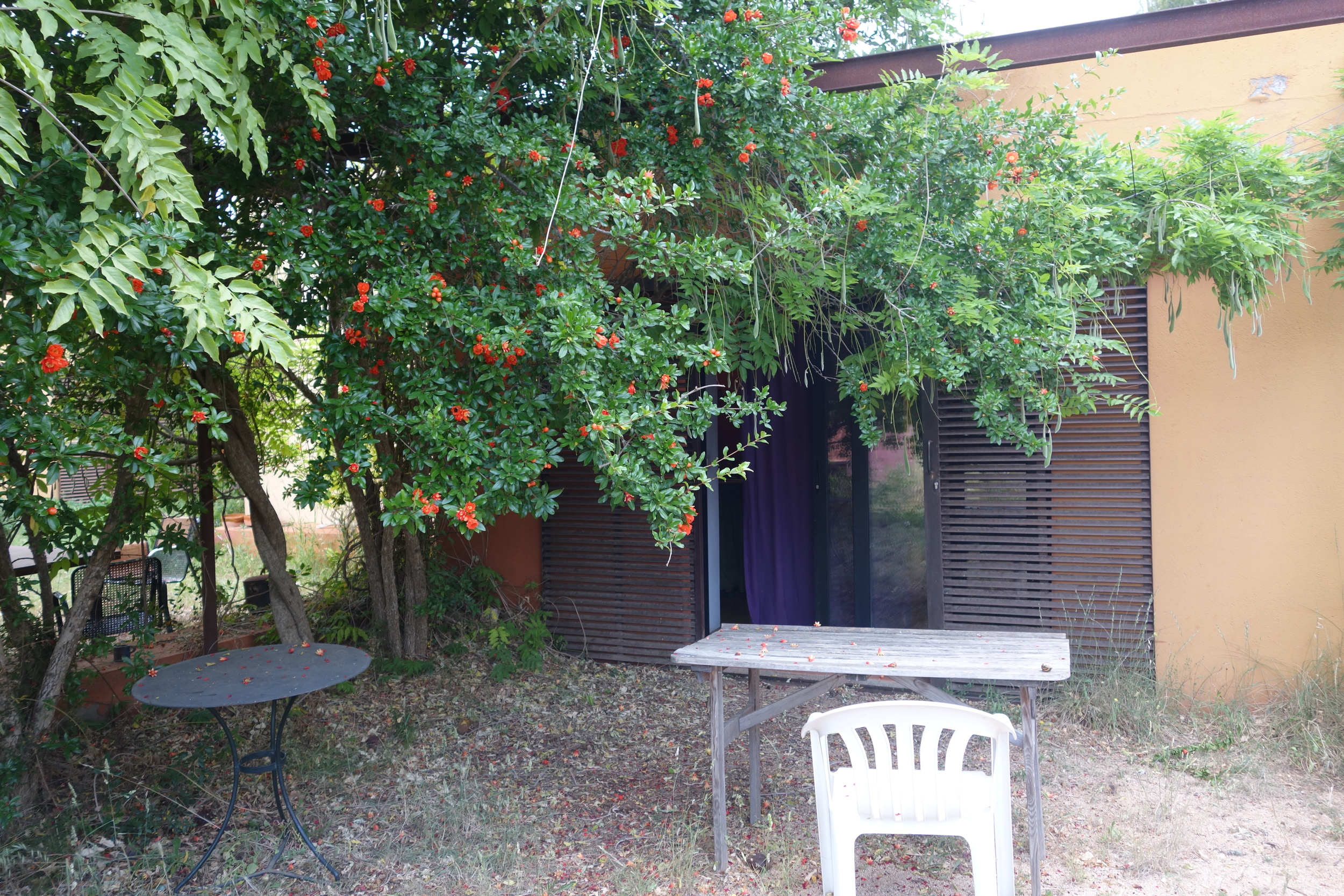
I have my own small house to myself and it's kind of a hybrid between the Peruvian housing situation and a more Western one.  The kitchen is reminiscent of the one in Peru - a stovetop range fueled by a gas canister, a fridge, and a sink.  Unlike in Peru, though, the water is safe to drink right out the tap and the bathroom has a water-based toilet and a shower - and all the water can be heated.  However, the rooms have no air conditioning and rely on windows and airflow from outside to cool them off, so just like in Peru, the insects come in with the breeze.  I acquired about seven new mosquito bites in the first day before I remembered to start applying mosquito repellent every eight hours or so.

The first day I had a tour of the land, a snack, took a long nap, and then ate dinner with Clara while getting acquainted with her.  I'm the only resident here at this time, so she's going to be inviting me along to some of her social/arts events so that I don't get too isolated.

Nau Côclea Residency - Log 1

My flights were happily uneventful.  However, on the Charlotte-Barcelona leg, we were served yogurt for breakfast.  The foil top of mine was extremely puffed up.  This has occasionally happened to me before when the yogurt has begun to ferment and it's recommended that you don't eat them at that point.  I looked for the expiration date, and found it was 05.08.15.  That's actually not out of date - in Europe the dates are written day.month.year.  Yogurt can in fact ferment before its proposed expiration date, but typically it doesn't go bad two months before.  I peered around for a while trying to see other people's yogurts or a flight attendant to query, but everyone else nearby had already opened theirs up and there were no attendants on my side of the plane.

A seatmate on the other side asked me if I needed his help in getting a flight attendant since I was clearly looking around a lot.  I said I wasn't sure - what was his yogurt foil doing?  He investigated his yogurt and those of his friends, and said they were all bloated as well.  I figured that while one puffy yogurt may have snuck past quality control and onto my tray, if everyone's were like that then the staff clearly must be aware and believed they were okay to eat.  So I opened it and cautiously dug in while continuing to mull over the problem.  Then it hit me - it's because we're on an airplane.  The yogurts were packaged while on land and sealed with normal air pressure, and were then transported up with us to a lower air pressure environment so the trapped gases inside the yogurt container expanded and puffed the foil top up.  It didn't occur to me at the outset because I'd only ever encountered the problem in a different context.  This is one of the main reasons I like to travel: I love challenging expectations I don't even know I'm making (even when they're about something as quotidian as foil yogurt tops).

Best in Show Award at Wild Things National Juried Exhibition

Confrontation won the Best in Show award at the Wild Things national juried exhibition!  Though the reception and awards ceremony have already been held, you can view my pieces (Lambs in Field is also on display) at the exhibition through June 27th.  The Arts Council of Southeast Missouri is also planning on publishing an interview with me under their Let's Talk Arts series due in part to the win, so once that's published I'll put up another post with that link as well.

Aphids Are Born Pregnant (Unless They're Not Born At All...)

Did you know that most aphids are born pregnant?  I was thinking about this odd fact since my sempervivum collection (colloquially known as Hen and Chicks) had an aphid infestation due in part to the unusually wet late spring here in Kansas.  Luckily, neem oil has so far discouraged the little ladies from successfully hatching their next two generations.  Below is a close-up of one the several sempervivum species I'm keeping in a rail planter on my porch.


First Fully Warm-Blooded Fish Identified!

This is cool:

"The opah, or moonfish, is the first known fully warm-blooded fish, according to a study published in the journal Science.
...
Certain other fish, such as some sharks and tuna, have what’s known as 'regional endothermy,' or limited warm-bloodedness. It allows them to stay active in colder depths, as well as shallower waters. But the fully warm-blooded opah are unlike all other fish, at least so far as we know it."

Wild Things National Juried Exhibition

I have two paintings in this exhibition juried by Ruth Ann Reese: Confrontation and Lambs in Field.

Exhibition Dates: June 5 – 27, 2015
Opening Reception: June 5, 2015 from 5:00 – 9:00 pm, awards announced at 6:00 pm
Exhibition Location: Gallery 100 & Lorimier Gallery at the Arts Council of Southeast Missouri on 32 N. Main Street, Cape Girardeau, MO 63701