I really hope my blog doesn't end up as an incessant Cassandra dilemma, but that seems to be where we're headed.
Here's the latest in super depressing news: Republicans are somewhat literally gunning for the Endangered Species Act.
I really hope my blog doesn't end up as an incessant Cassandra dilemma, but that seems to be where we're headed.
Here's the latest in super depressing news: Republicans are somewhat literally gunning for the Endangered Species Act.
The Environmental Protection Agency was just frozen, "temporarily halt[ing] all contracts, grants and interagency agreements." It's also been placed under a media blackout. I cannot emphasize enough how problematic this is not only for its immediate effect but also for the implications this action has in conjunction with other decisions and promises - including sharply increasing drilling and mining operations in previously protected land - already made by Trump and his team. This will lead to short-term financial profit at the short-, middle-, and long-term expense of catastrophic environmental mismanagement. It's not a unique decision, unfortunately, but it is still a deeply wrong one to make.
Right after Trump assumed the presidency, the White House's webpage on climate change was deleted.
Meanwhile, Earth reached its highest temperature on record in 2016, which beat the previous record that happened in 2015, which beat the previous record which took place during 2014. We've had three years in a row of highest temperatures on record for our planet.
The Spring 2017 semester is almost upon us! At the University of Saint Mary, we commemorate Martin Luther King Day instead of taking it as a holiday, so Monday was slated to be out first day of classes... but the weather has other plans, and to avoid the predicted ice storm and attempt to help unravel the resultant travel complications our students are already facing, we have canceled classes on Monday and will instead begin Spring 2017 classes on Tuesday.
This semester, I am teaching an overload (five classes instead of my typical four): Basic Design, Drawing II, Typography, Honors Seminar: Interdisciplinary Art, and Art Career Internship/Advanced Studios/Senior Exhibit. The overload is due to taking on the Honors Seminar; I'm very excited about it as I got to create the class entirely with our honor student population and my own academic interests in mind.
And speaking of seeds - my Anacampseros rufescens has bloomed repeatedly for me, and due to its self-fertile nature, it's produced seed pods at least twice that I've noticed. I also suspect it's a monocarpic plant (though googling has only led me to one other person willing to make that statement, so who knows for sure) as each branch that blooms severely dies back. Over time, this has meant my plant has become smaller and smaller. So when I spotted another seed pod in late September that still had seeds in it, I pounced. I grabbed it and then massaged it over the mother plant such that the tiny little seeds sprinkled into the same pot. I wasn't sure that would do anything, but I figured it was worth a shot. Several months later and... we have seedlings! Adorable little Anacampseros rufescens seedlings, some of which are even sprouting telltale white hairs! Take a peek - there are at least sixteen visible by my count and that's just one corner of the pot:
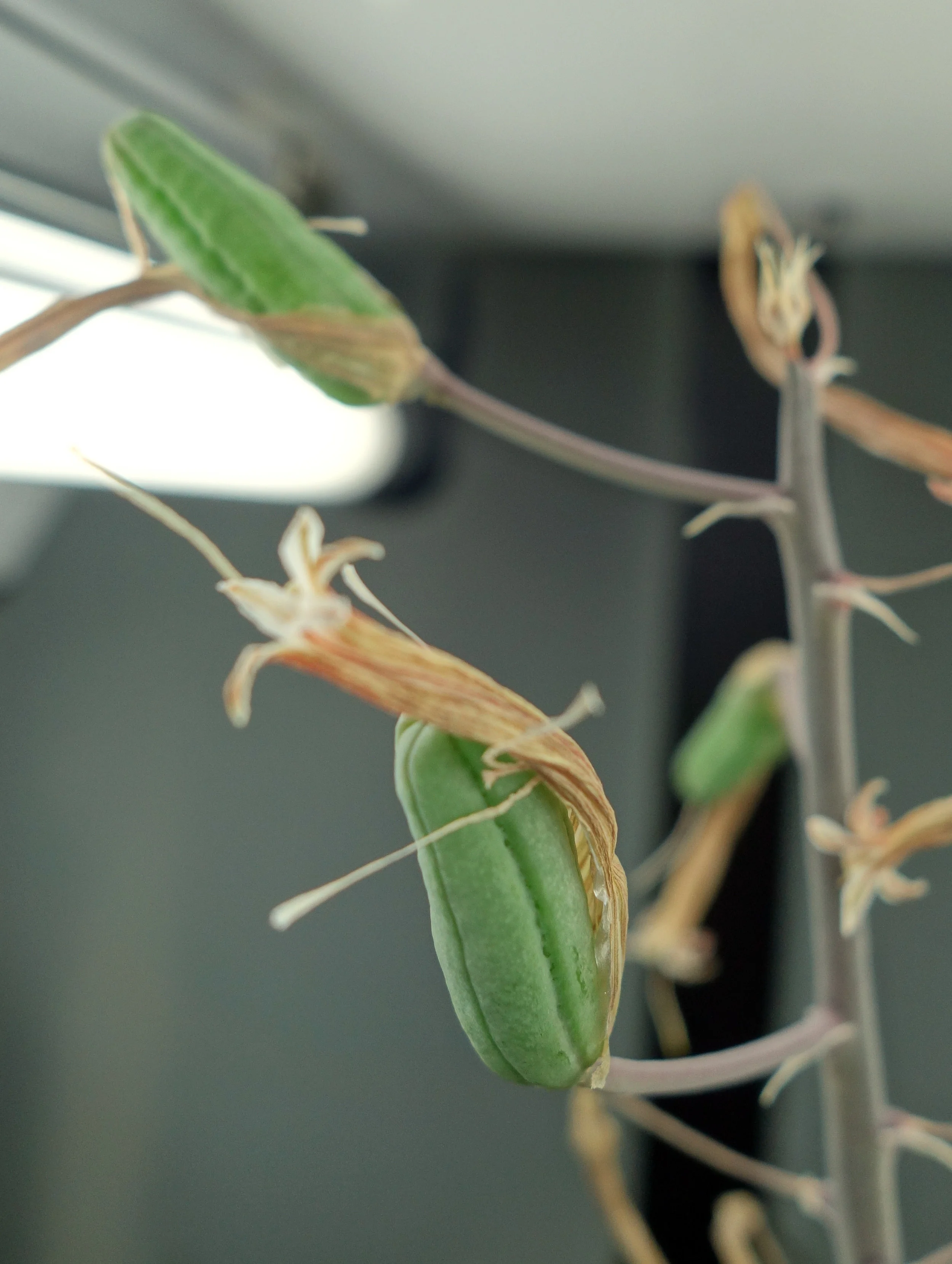
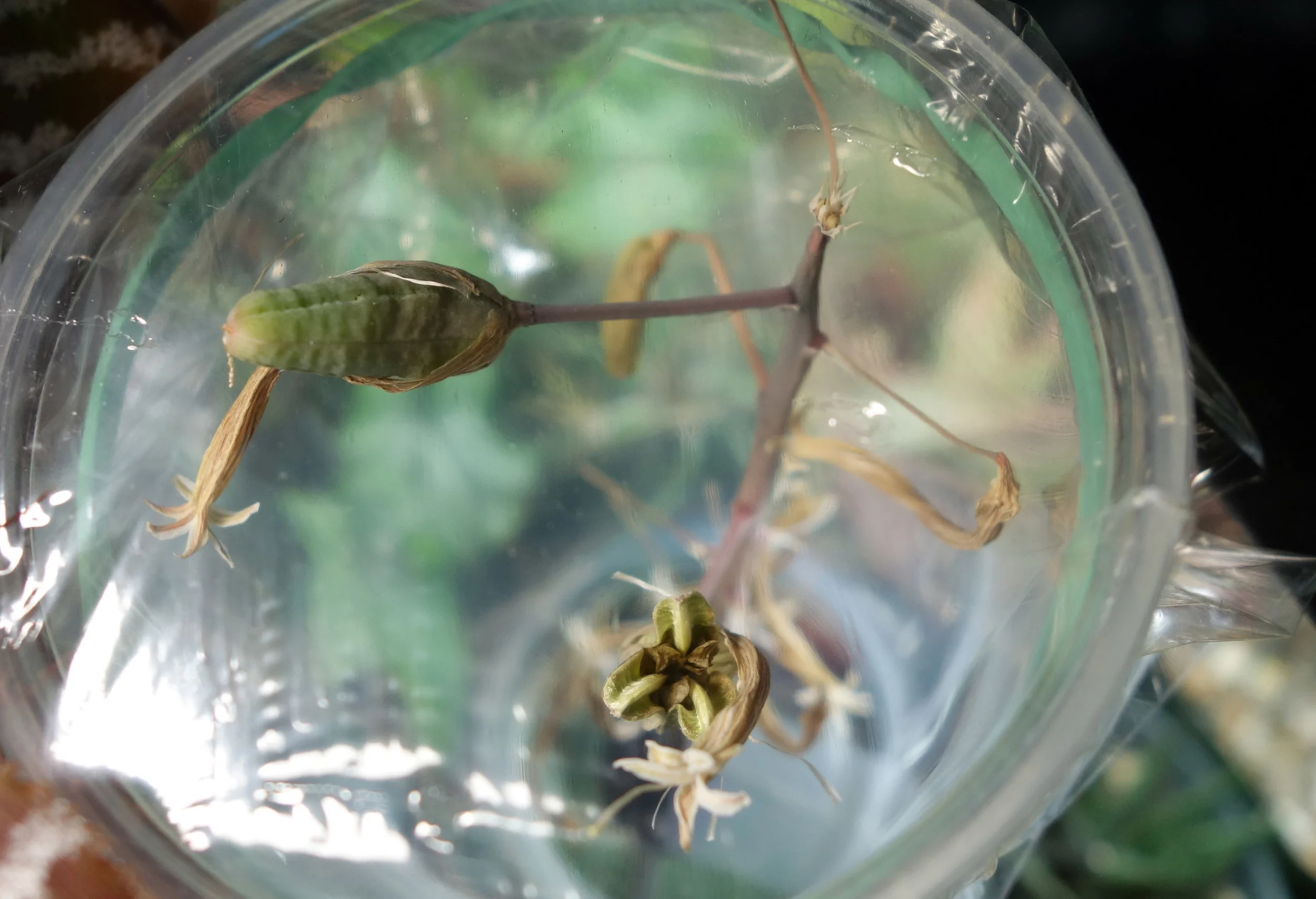
Speaking of the new year and new beginnings - something managed to pollinate my Aloe aristata (or potentially itself an Alworthia cross or a Haworthia spp. lookalike like Haworthia decipiens), and now I have seeds! I've never bothered to try to pollinate any of my Haworthia/Gasteria/Aloe flowers due to their long, thin throats, so this is a first for me. I plan to sow the seeds once all the pods have burst open. I slit a plastic cup in such a way that I fit it around the flower stem and covered it with saran wrap (with air holes) to try to catch the seeds, as the pods apparently explode with some force in order to scatter their goods far and wide. As you can see, one pod has already opened!
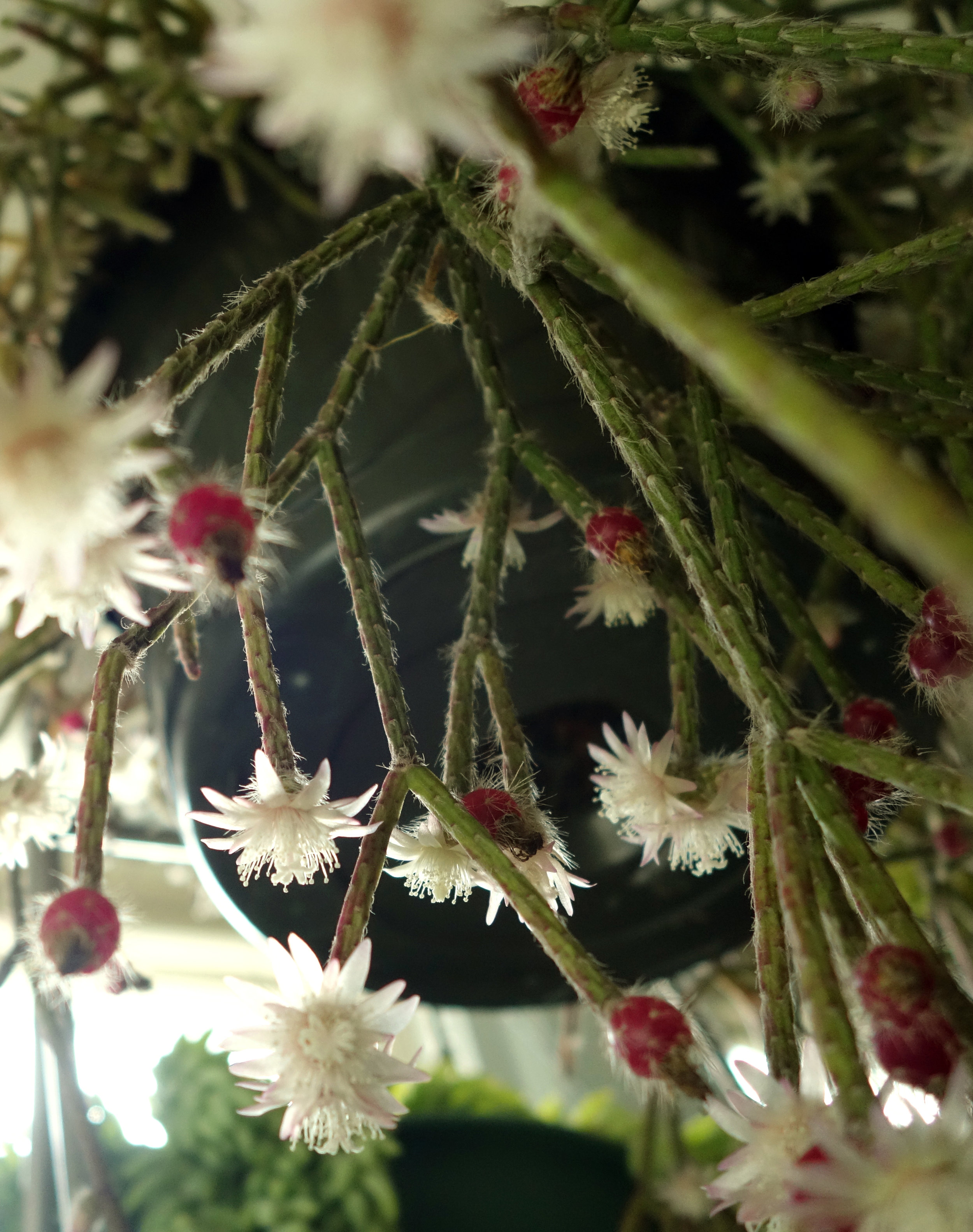
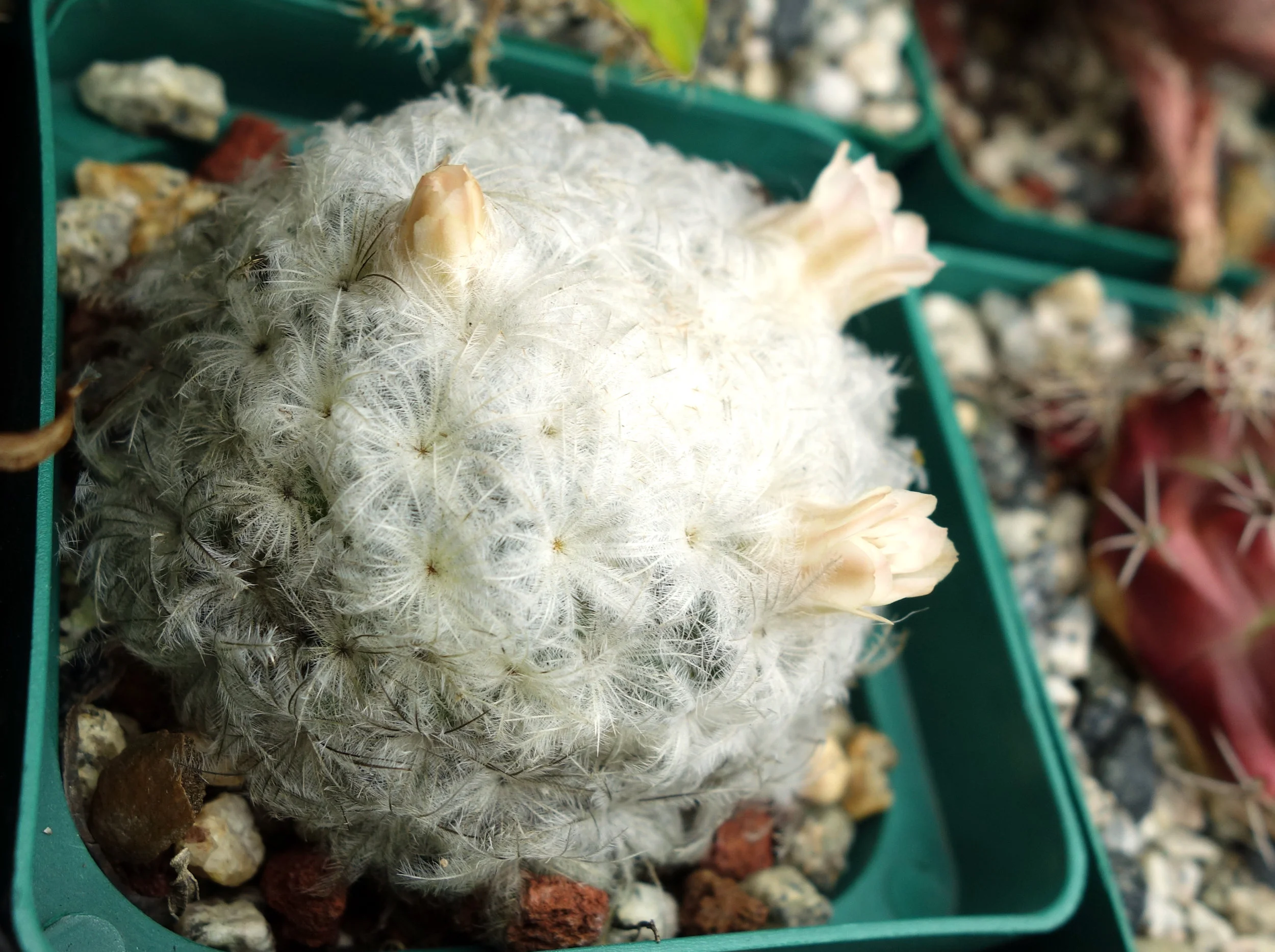
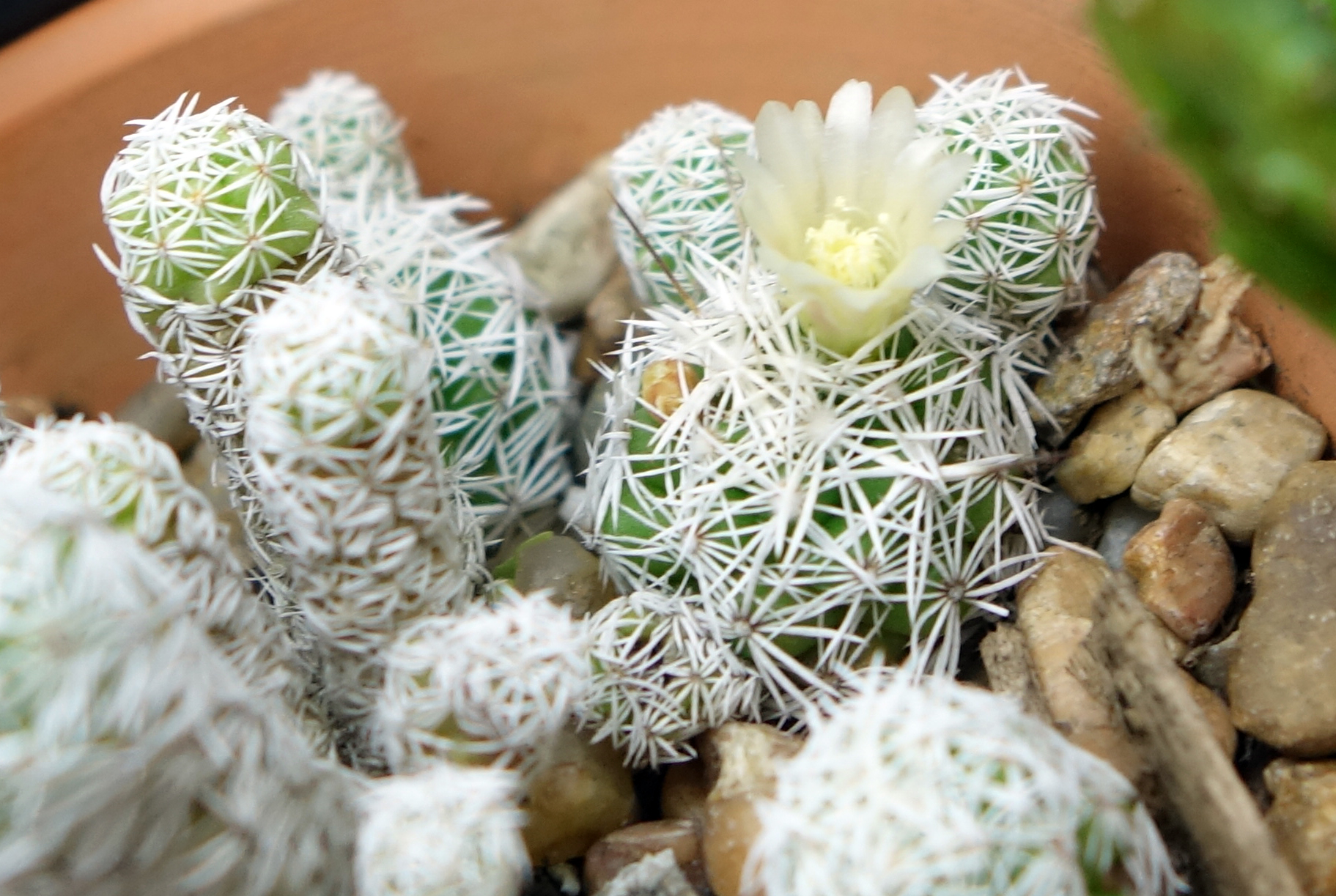
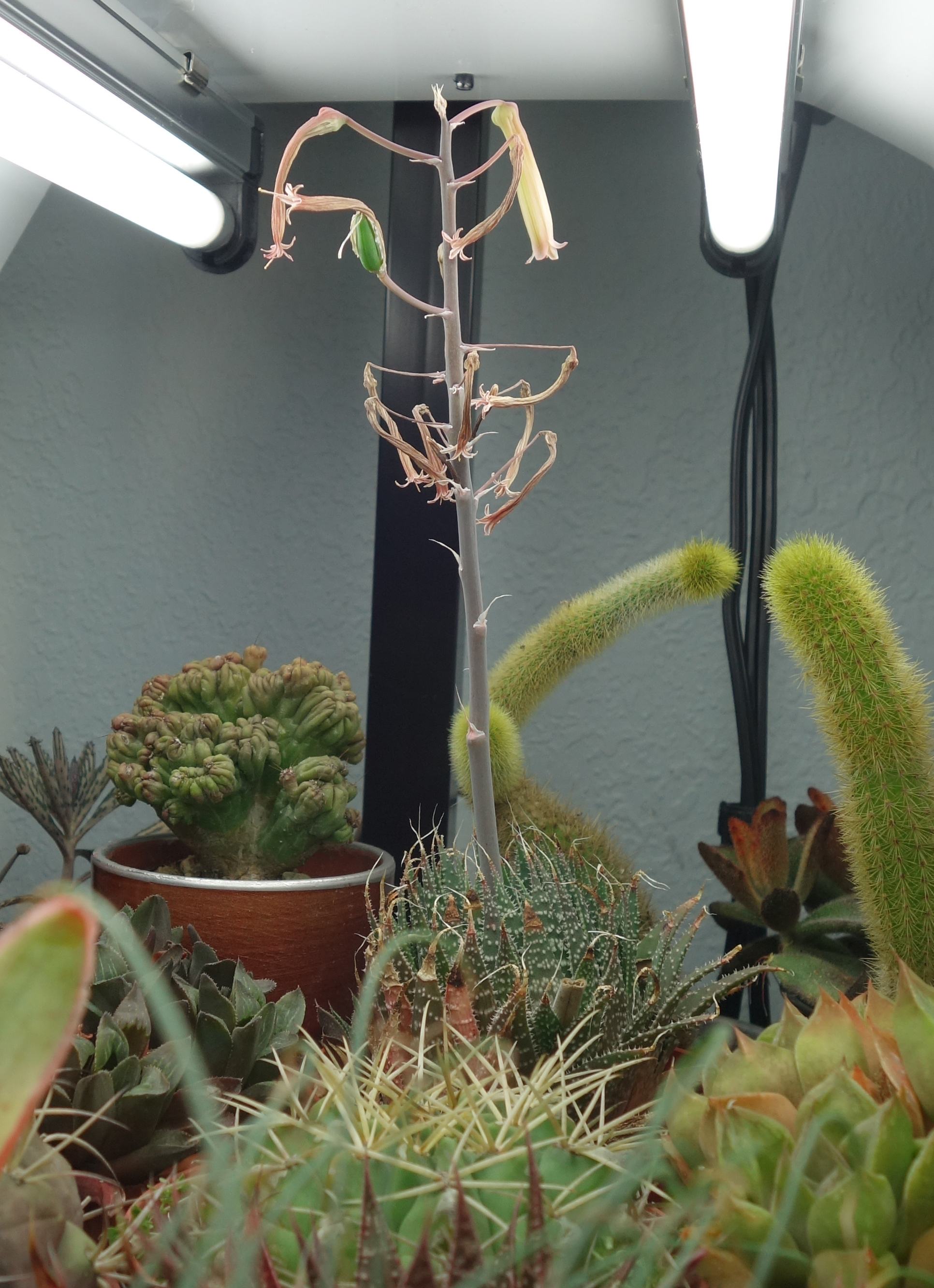
Happy New Year! Here are my houseplant blooms from December, minus my Senecio jacobsenii which rebloomed but is currently in my office and therefore I kept forgetting to bring my camera in. From left to right and top to bottom: Gasteria liliputana, Gymnocalycium bruchii, Haworthia cuspidata, Haworthia fasciata, Mammillaria bocasana, Pachyphytum oviferum (a little misleadingly as its bloom stalk is leaning past the trunk of my Uncarina roeoesliana), Phalaenopsis spp., Rhipsalis mesembryanthemoides, Sansevieria phillipsiae, Ibervillea lindheimeri, Euphorbia flanaganii, and Faucaria tigrina.
My crested gecko Lex and I wish you happy holidays! Her native environment is a tropical island, so I mist her at least twice a day. She doesn't enjoy being directly sprayed in the face, though, so using a pothos leaf as an umbrella is a far preferable option.
One of my students, Ryan Hill, just sent me this video he made featuring a time lapse of our recent Goppert Gallery installation as well as a tour of the exhibition! It's super cool:
As a part of my Portfolio Seminar class (basically a career preparation course), I require my students to make a website if they don't already have one. None of these enrolled students already had one, so these are all brand new - check them out!
anthonyiii.com
arciliagonzalez.com
dravenwood.weebly.com
freedominked.com
kristinacarbrey.weebly.com
Here are some images of the show! I got sidetracked by an alumna when I was walking around photographing so I haven't taken pictures of the whole of the show yet, but that just means there's more to experience if you want to stop by - the show's up through the 15th.
An image of my wall of artwork from the exhibition.
Looking at my wall from the other side.
I'm exhibiting my series of botanical-garden-themed mixed media reliefs made on residency this summer at La Maison Verte in Marnay-sur-Seine, France, as well as the first three paintings in my ongoing puffin series inspired by my 2014 Icelandic residency in the University of Saint Mary's Goppert Gallery! My work is in its own distinct space, but the Gallery has a number of rooms to it and is also simultaneously exhibiting student artwork from this past semester as well as our graduating senior Brandon Handy's senior thesis exhibition, "Nature from Afar and Close-Up." The gallery is free and open to the public, with exhibition dates and times as follows:
December 9-15, 2016, 10am-4pm with an opening reception today from 3-5pm - complimentary refreshments will be served.
If you'd like to join us, Goppert Gallery is on the ground floor of Xavier Hall on the University of Saint Mary's main campus found at 4100 S. 4th Street in Leavenworth, KS. Here's the full press release if you're interested, though since we sent it out we've changed a few details so this post has the most current information.
I'll upload some photos shortly!
Someone asked me the other day what my favorite, presently owned plant is. I honestly don't know. I imagine most people who have reached the stage where they own over a hundred plants would have a very difficult time answering this question; that's part of the reason why they own over a hundred plants! I can narrow down my favorites into an only moderately long list, though. This is in no particular order, other than me thinking about wandering through my house, porches, and office and what's in each of those spaces.
It's hard to call out only one species of these genera, so the whole genus will have to do:
So there it is. For someone who has as many plants as I do, that's actually quite a narrowing down! I left off perfectly good species and genera that I keep and enjoy like Homalomena 'Emerald Gem', Phalaenopsis "Moth Orchids", Aglaonema "Chinese Evergreens", Saintpaulia "African Violets", Paphiopedilum "Lady Slipper Orchids", Echeveria, Tillandsia "Air Plants", Hoya, Philodendron, Ledebouria, Mesembs, Anacampseros, Sempervivum, and so many more (including a ton of cactus species), so don't tell me I didn't winnow.
I can also tell you the plants are on my never-again list: Opuntia spp. and all other glochid-bearing cacti. I fervently hate glochids. I will take firm spines or toxic sap any day over hundreds of nearly invisible, easily detached, reverse-barbed stabby hairs. It's like the difference between bees and wasps - bees are defensive stingers; wasps are aggressive jerks that seek out trouble. Glochids are the wasps of the cactus world and I will not invite them into my home no matter how aesthetically pleasing the plant that carries them is.
Though they aren't necessarily perma-banned like glochid-bearing cacti, I also tend to avoid Selaginella spp. due to its rabid desire for water, Crassula and Kalanchoe spp. (with a couple tentative exceptions) and annuals due to my own disinterest in plants that die no matter what I do, and larger plants like many Ficus spp. pretty much solely due to my limited and already overtaxed space. It may also be of note that since one factor in my favorites and not-favorites depends on what thrives for me which changes due to local climate, some plants I enjoyed more in Baton Rouge aren't on the list now that I'm in Leavenworth. That's the thing about favorites, though - they come and go depending both on historical performance as well as present conditions, and can also be usurped by a relative newcomer who nevertheless outperforms admirably! So when I make this list again in a few years, it'll be interesting to see what stays, what goes, and what takes the place of the jettisoned.
Here are some of my November blooms! I've excluded a few from display due to hard-to-photograph-well-for-various-reasons flowers (a couple of my ever blooming Phalaenopsis and Saintpaulia spp.), but there are more than enough that were accessible. We've got a range of plants here; in order from top to bottom and left to right, they are: Episcia spp., Rhipsalis pilocarpa, Pleiospilos nelii, Mammillaria plumosa, Schlumbergera truncata, Quaqua incarnata, Mammillaria gracilis var. fragilis, Gasteria glomerata, Haworthia spp., and Faucaria tigrina. I was particularly excited about the Quaqua incarnata blooms, as I've never had a Stapeliad bloom for me before; but I've also never had a Faucaria tigrina flower either and it's the Mammillaria gracilis var. fragilis' first time as well. Admittedly some of the photos aren't when the flower was in full bloom; I'm quite busy and I'm not always around when they're at their prime. That'll give me something to look forward to for future blooms, though!
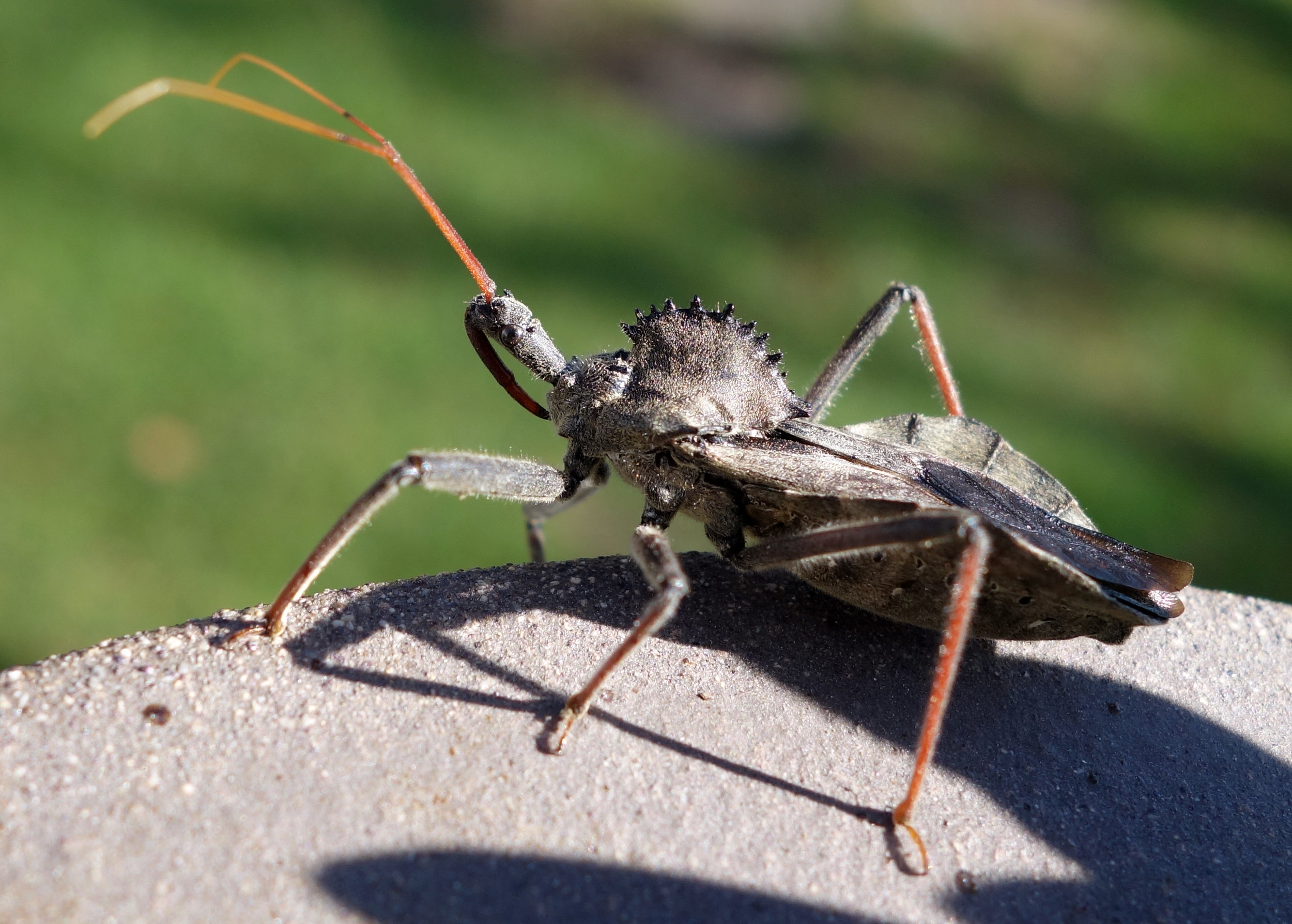
Hey, hey, I finally got to see another beneficial insect on my porch right before hauling my plants in for the winter! This time, it was Arilus cristatus, the wheel bug. As their ridged back portends, they are a type of assassin bug which in both its larval and adult stages preys upon aphids, caterpillars, and beetles - including my very common fall pest, the stink bug. If manhandled, they can bite painfully but they are not aggressive and this fellow somewhat unwillingly posed for me for several minutes before flying off when I got the camera lens just a little too close. As I was planning on bringing in my plants later that afternoon, I was OK with having scared it away temporarily; I don't think it'd be able to survive overwintering in my house. Hopefully it'll return, though, to guard my sempervivum and sedum which spend the winter outdoors.
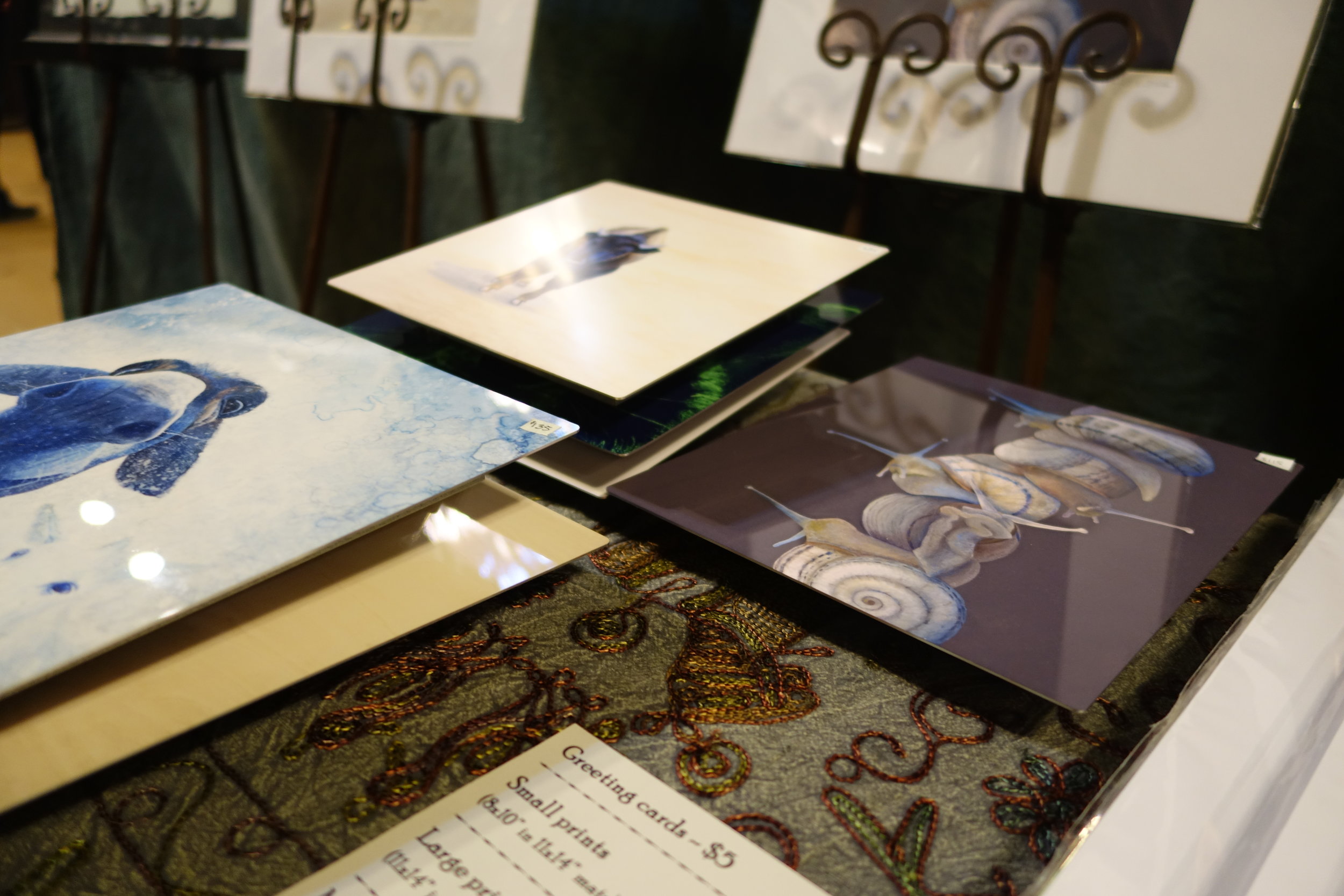
I recently participated in a art sale on November 11-12 in downtown Leavenworth's First City Photo & Frames. I had a stand at this artist-run event last year as well, but this year I had even more of a selection available for sale. The greeting cards were particularly popular! I have plans to expand my reproduction sales to my website, so stay tuned...
Do you ever go on Wikipedia research spirals? I end up on them all the time. My most recent lengthy one began with this Yankee Magazine article, "A Fatal Mistake | The Sinking of El Faro," which brought me to the Wikipedia page for SS El Faro, which somehow led to researching rogue waves and rogue wave holes and the MS München as well as the Three Sisters waves and the SS Edmund Fitzgerald amongst other well known incidents.
This was all particularly interesting to me given my prior experience working as an assistant vessel operator in dry bulk shipping. While steering-into-a-hurricane-leads-to-calamity is an unsurprising notion to me, I was not aware of the phenomenon of rogue waves prior to this research spiral; science itself wasn't really aware either until 1995! It's amazing and kind of simultaneously exciting and terrifying to me that there is still so much about this world that we don't know or understand.
If you aren't able to make it to the exhibition (up through November 4th, aka tomorrow, in USM's Goppert Gallery), here's an installation video Hannah took!
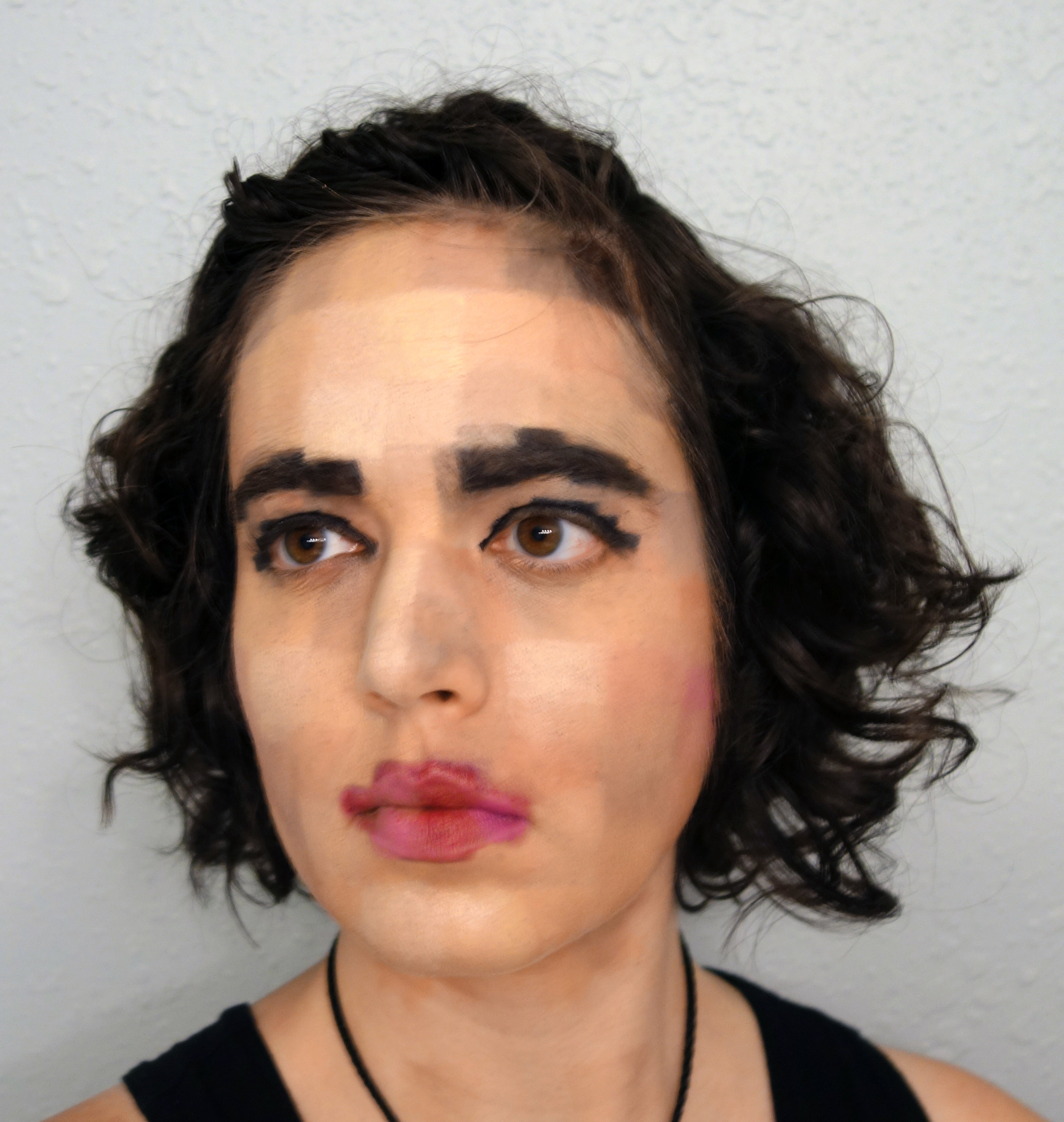
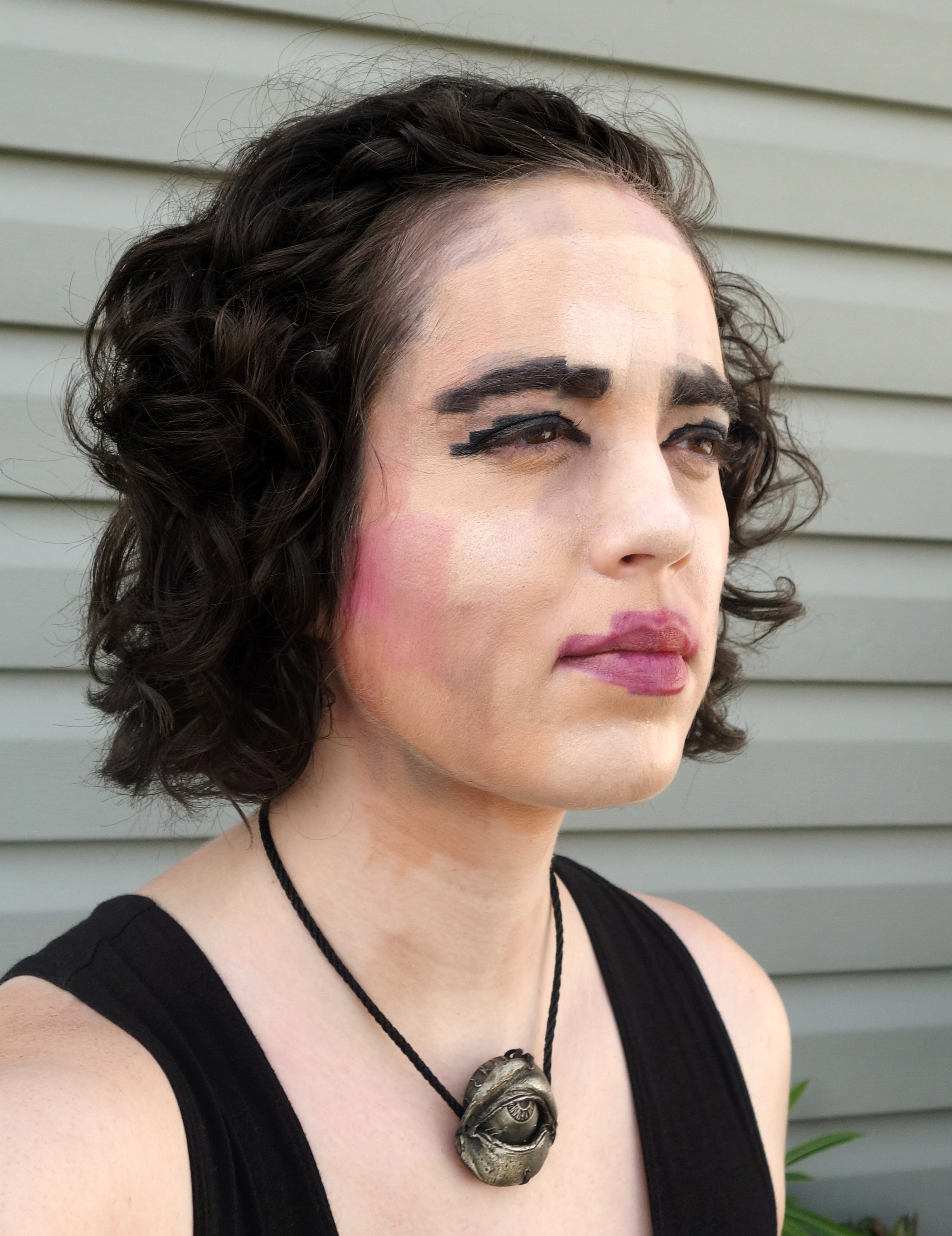
I like to paint my face each Halloween with either an art-related theme or a high skill look (or ideally, both!); I fancy that it shows my students another facet of artistry they may not have considered - and being a good makeup or visual effects artist absolutely involves a lot of the principles and elements of design.
This year, I did a pixelated, low-resolution look. That's what you get when blowing up raster... and we've been talking about vector vs. raster artwork in Computer Graphics all semester!
I mean, I love my spider friends, but come on - there are predatory insects, too, and yet I haven't seen one aside from wasps this whole summer around my plants... until now! Perhaps my favorite one just showed up on my back porch: the praying mantis. Guard away, comrade.