General Interest

Scandals in the Houseplant Hobby

There have always been scandals in the world of houseplants. Big box stores selling dyed and painted plants, cacti and succulents with dried and dyed strawflowers glued on, injected orchid spikes (spoiler - there are no naturally blue Phalaenopsis), doomed plants in glass baubles, and glued-down top dressing are some common ones. Though more specialized nurseries tend not to commit those no-nos, many do sell tinted tillandsia and single Hoya kerrii leaves without stem cuttings that will never grow without any disclaimers. Some online sellers will purposefully mislabel or sell inert seeds or parts of a plant for propagation that will never be able to grow as well, relying on time, relative cost, and the ever-present risk inherent in attempting to grow seeds or propagate to erase any blame. And now there’s a new scandal rocking the houseplant world, the full scope is still in the process of being uncovered!

Let me first set the stage. If you, like me, have been in the houseplant hobby for decades, you might have noticed that it’s become quite the fad lately. There were (and still are!) some good online forums and blogs fifteen years ago, but recently I’ve witnessed the rise of “plantubers” aka YouTube stars who do surprisingly well discussing plants, Facebook groups, and - though I’m not that active on the platform - I’ve heard tell of Instagram plant influencers, aka plantfluencers. The rise of these various social media houseplant stars and societies has helped shape what is the must-have plant and drives demand for large swathes of new hobbyists. For whatever reason, right now monstera, philodendron, rarer pothos, and calathea are all hot commodities but the variegated and atypically colored ones are by far the most sought after. I actually don’t grow any of those types of plants aside from a small Philodendron ‘Prince of Orange’ at the moment; I had an early experience killing a calathea and have never felt called to try again, pothos to me seem common as dirt so while I don’t mind them I also don’t prioritize them, and while I like philodendrons including monstera a lot, they’re often large plants and I’d prefer to be able to have ten or twenty plants in the space where one philodendron might live. My Philodendron ‘Prince of Orange’ is a pretty plant though; its new growth comes in reddish orange and then over time it ages to a green. I think it cost either $3 or $4 because I bought it as a baby.

My Philodendron ‘Prince of Orange’ plunked behind several other plants on my outside shade table this summer.

My Philodendron ‘Prince of Orange’ plunked behind several other plants on my outside shade table this summer.

I have joined or been added to quite a few of the Facebook plant groups over the years, and many are for buying and selling. I’ve always found most of the pricing on Facebook for plants to be overly high, so I think I’ve only purchased maybe three plants total from such listings. It turns out that even bearing that in mind, I was still apparently only in the more reasonably priced groups until a few weeks ago. At that time, I was invited to join two “plant purge” Facebook groups. The biggest is nuts, though I dislike the format and atmosphere of both. These groups structure their sales to be very small quantity buy-now-or-you-miss-it opportunities and build up excitement by dangling the most coveted plants ahead of time without prices and then “opening up” the sale hours to days later. This very intentionally is not meant to encourage calm research and reflection but rather hype, panic, and instant gratification; it’s basically gambling. People are buying individual plants for hundreds of dollars, regularly, in a flurry of adrenaline and a heady sense of exclusivity that rarely is accurate. Enter Philodendron ‘Pink Princess.’ It’s a variegated philodendron that has the same general shape, growth, size, and habit as my ‘Prince of Orange’ but it has green-base leaves with splashes of pink and sometimes cream variegation. It used to be sold for approximately the same price point as other philodendrons - typically somewhere between $6-20 per plant depending on size and store. Its explosion in popularity due to plant influencers means it now typically costs between $100-300 per plant, and that’s when you can find one at all. Pink is a very “in” coloration for the Instagram and Youtube plant crowd.

You now have the backstory. Recently a newcomer variegated philodendron arrived on the scene: Philodendron ‘Pink Congo’. (Newcomers do arrive sometimes - there are hybridizers and tissue culture cloners that introduce interesting new plants to the industry.) ‘Pink Congo’ was positioned and understood to be much like my ‘Prince of Orange’ in its growth habit but with pink leaves instead of orange. However, photos of ‘Pink Congo’ differed from ‘Prince of Orange.’ There were just dark green outer leaves and bright pink inner leaves. A few pictures appeared to show a different type of transition, where green patches started developing on some of the older pink leaves as opposed to the slow and total hue change on the entire leaf as per ‘Prince of Orange.'

From what I’ve read, people started paying $70-100 for ‘Pink Congo’ - mostly on these rabid Facebook groups but also occasionally on nursery websites, Instagram, eBay, and Etsy - and prices escalated from there. Then a knowledgeable hobbyist dropped a bomb on Facebook - the ‘Pink Congo’ was a fake and he had source material from an Indian vendor to prove it. He showed that the pink central leaf coloration was a temporary reaction to being gassed by ethylene and the plant would revert back to its standard green coloration in several months to a year or two and never grow more pink again. The base plant would typically sell in a $4-20 range.

Apparently some houseplant sellers knew it all along and were fine with it. Others didn’t, and decided to eat their own loss in having purchased the plants for resale so as not to lose credibility and trust. Many continue to sell them but added vaguely worded disclaimers that can be easily misinterpreted to give false hope. Meanwhile, a lot of buyers are upset that they dropped triple digits on temporary variegation, but some claim they don’t mind and plan to continue to buy ‘Pink Congo.’ A few have shared a belief that the scandal itself is the hoax, and that if anyone’s plant is reverting that it’s just an unstable variegation rather than a systemic fake.

And that’s the current scandal!

Wait… I did say it was still unfolding, so what’s that about? Apparently, philodendrons are not going to be the only ethylene-treated plants coming out of the import market! (Dun dun dun!) As far as I know, no one’s listed any other implicated plant varieties with specificity yet, but it’s a new ploy to be aware of across the hobby. I don’t know what other plants’ responses to being gassed with ethylene might look like, so any very unusual and new coloration might warrant a critical eye these days.
Not Everyone Experiences the World the Same Way: Counting Stars Edition

I’ve written about linguistic relativity before but here’s another perception-is-relative reference point. I was recently discussing with some friends how one of their parents has a hearing blip where a certain frequency just doesn’t register for him but he otherwise has normal hearing. I mentioned that I have the opposite problem - there was an extremely popular song a few years ago that hurts me to hear due to the repeated high-pitched screech that’s been accidentally built into the soundtrack.

I have always been confident that it’s accidental and that most people can’t hear it because it is an extremely undesirable sound. If everyone experienced the song the way I do, there’s no way it could be popular; I had to scramble to change radio stations or playlists when it came on because it’s legitimately painful to listen to. To me it sounds like an audio feedback squeal but it’s very high in pitch. If you’ve ever heard a TV set that’s on but not playing, or an elevator waiting for its doors to be unblocked, it’s in that kind of register but piercing. If not - well, I can hear if a TV is on or if someone is blocking elevator doors with their bag even though they’re certain they’re inside because those pieces of equipment do make a kind of whining noise in those circumstances… and I can also hear this horrible sound in the song. If I had to listen to the whole song and then you told me my ears were bleeding a little, I would probably believe you. I can’t think of another song I’ve heard that has this problem.

My friends obviously asked me what song this was. I couldn’t immediately recall because I spent a lot of time trying not to listen to it… but the trauma of the shriek was burned into my brain and I did hear the opening sequence a lot before managing to switch it off so I was able to remember enough preceding lyrics that I could research and ID it as OneRepublic’s Counting Stars. According to Wikipedia, this song reached billboard number two in the US, number one in a bunch of countries, and is the 14th most played video on YouTube as of a few months ago. People in general really like this song.

As would presumably be expected, my friends then listened to it themselves and couldn’t hear it. I wanted to see if I could find any substantiation of my issue with it online for them - and I did! Though as expected, only from a very small minority of people relative to those who’ve been exposed to the song. I don’t know if you’ll find any of this as funny as I did since of course odds are you can’t hear the problem either, but I am amused to have found my people and thought I’d share:

Here’s a Reddit thread about the issue, with timestamps about when it occurs. (A couple responders can’t hear it but don’t recognize that, and so their answers are about normal audio effects. Communication problems do crop up with relativity studies.) Another Reddit user lists it as a ruined song, which I wholeheartedly agree with.

Here’s an upset-yet-supportive Amazon review.

Here’s a Twitter thread with the band. (Again, since they can’t hear it, they think people are talking about different sounds which results in a fair amount of confused and inaccurate cross-talk.)

Here’s an edited version of the song that removes the problem, with hilarious comments supporting the change.

Kudos to both the listeners who white-knuckled their way through the song to timestamp it and the editors who then invested time into removing the sounds from the song (there’s more than one edit out there as I guess several people independently wanted to fix it!). I also thought it interesting that most people are describing it as a “squeak,” as to me that’s too diminutive a label for its sharp intensity and implies additional variance in how it’s heard even by those who do hear it. I side with one commenter who instead described it as an “ice pick to the brain.”

One of my friends did follow up to share that upon listening at 25% speed - YouTube offers that option! - she could discern it and found it annoying. So if you want to potentially ruin the song for yourself, you can give that a try.

I wonder what other experiences set each one of us apart from the crowd - both the ones we’ve sussed out and the ones we might never recognize.

Biking the Adams Homestead & Nature Preserve

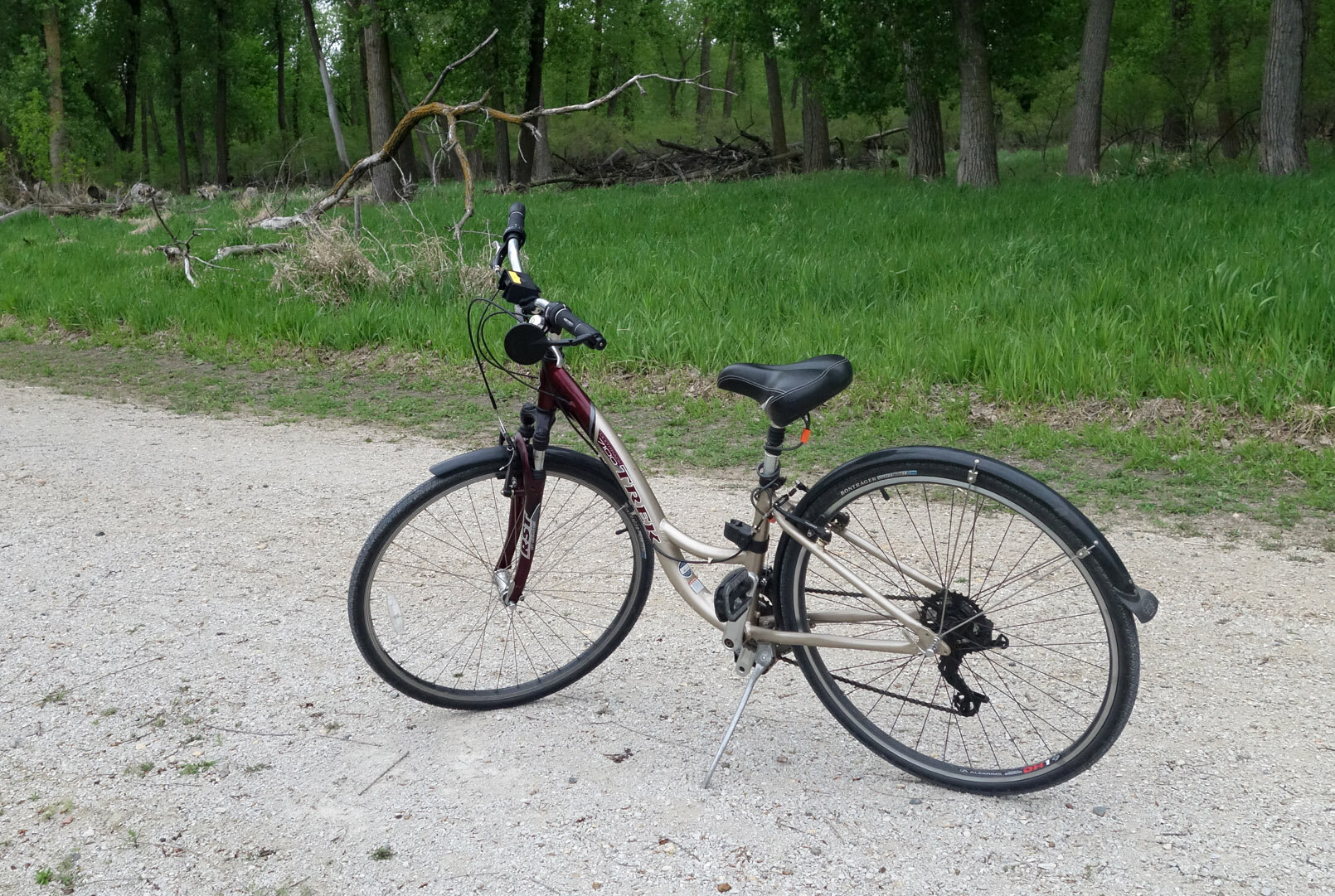
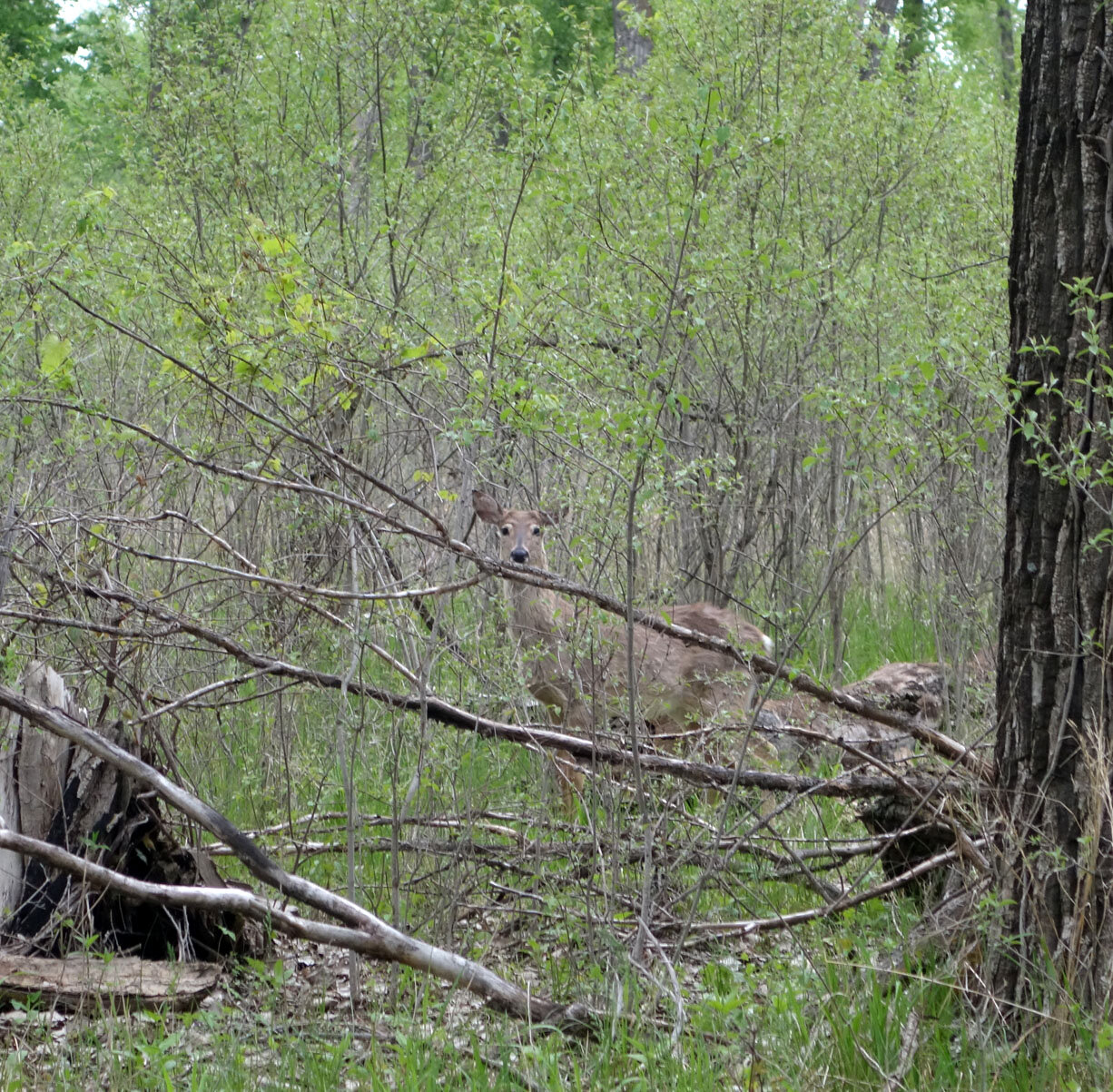
The COVID-19 pandemic shut gyms down and canceled artist residencies, so I’ve been attempting to combine alternatives for both by visiting the Adams Homestead & Nature Preserve! It’s located in South Dakota, but given that I live on the tri-state border it’s only about twenty minutes away. There’s a beautiful gravel trail with two joined loops - the River Loop is longer and is a prairie/farmland/forest ride with peeks at the Missouri River, and then the Lake Loop is shorter and combines prairie and beautiful shallow wetlands. Connecting the two is Cottonwood Crossing, which is also prairie/forest but seems to be the prime deer-spotting segment as well.

I’m still in the planning and reference imagery gathering phase, but it’s been a great time. Though I need to find a better way to deter the biting flies that have recently appeared…

Ashlar the Adorable

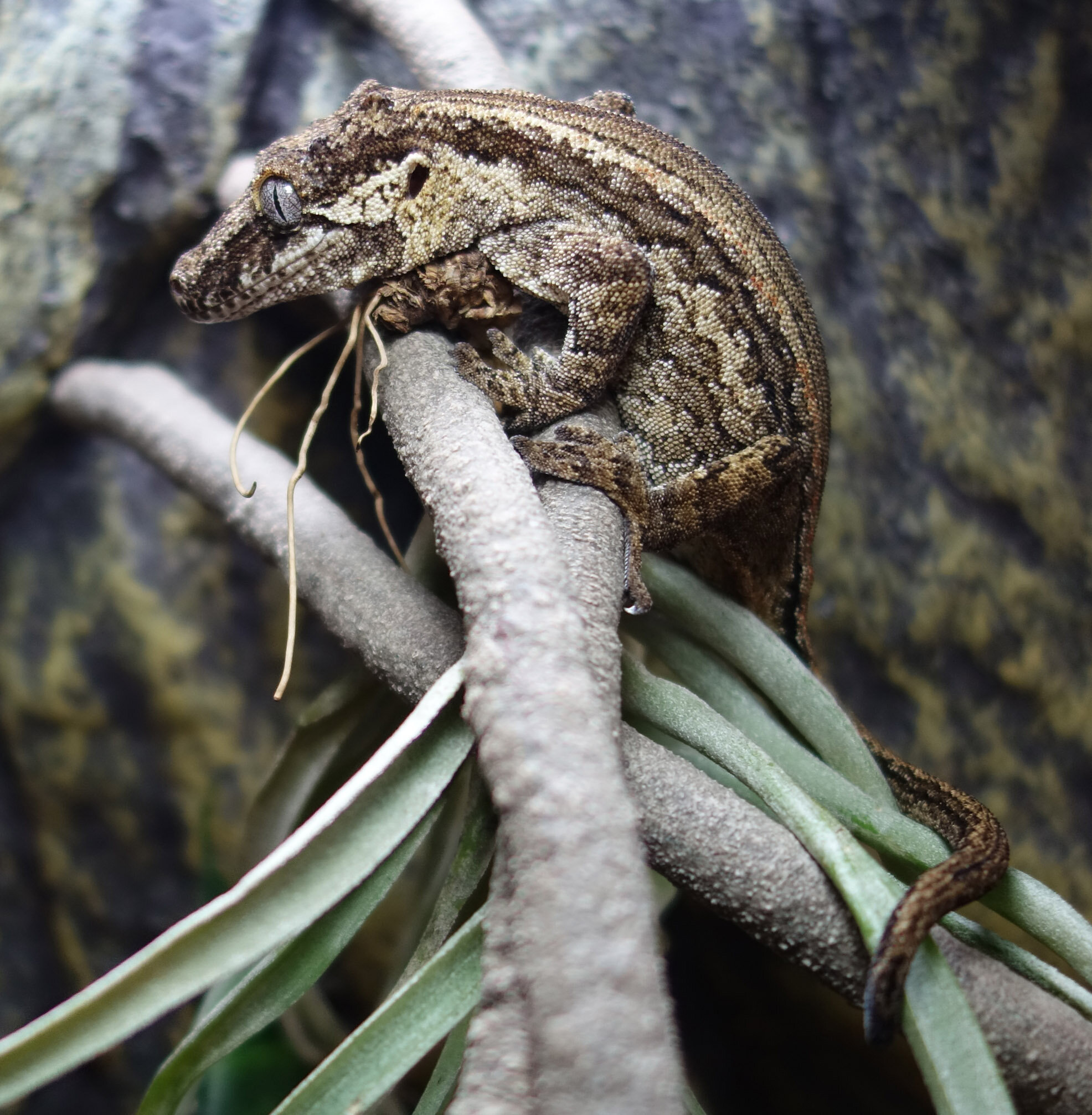
I haven’t updated you on my pet gargoyle gecko Ashlar in a while - she’s doing very well, and has even redecorated her cage recently by moving the vine supports around!

Ash 5.jpg
Ash closeup May 2020.jpg

Eating an Ethical Diet

I’ve been a vegetarian for ethical reasons for over twenty years, and my artwork and writings about my pieces address issues including animal rights, ethics, conservation, and ecological balance. The COVID-19 pandemic is a direct result of our generally poor relationship with meat consumption, including that of endangered wildlife. Now due to meatpacking plants, the city that I live in has topped a variety of coronavirus tracking charts in terms of spread, density, and duration. Iowa is mass torturing and slaughtering pigs as a result of the pandemic’s disruption of the processing and supply chain. Eating meat increases global warming, obesity rates, and an acceptance of cruelty and superiority that can’t help but seep into other parts of our lives.

Here’s a great Op-Ed in the New York Times that goes into more detail on all of my above points. I support eating an ethical diet and believe we need real reform in this arena as well.

Black Lives Matter

Here in the US, there have been massive protests against racism and police brutality; these have spawned global support and protests in cities around the world. I support the Black Lives Matter movement. Earlier this week I donated to the American Civil Liberties Union (more commonly referred to by its abbreviation ACLU) to support their work in suing the government and police on behalf of protesters and victims of police brutality and injustice. We need substantive reform.

Here’s a link to the ACLU donation page if you also feel called to support them!

Sansevieria Has Been Subsumed!

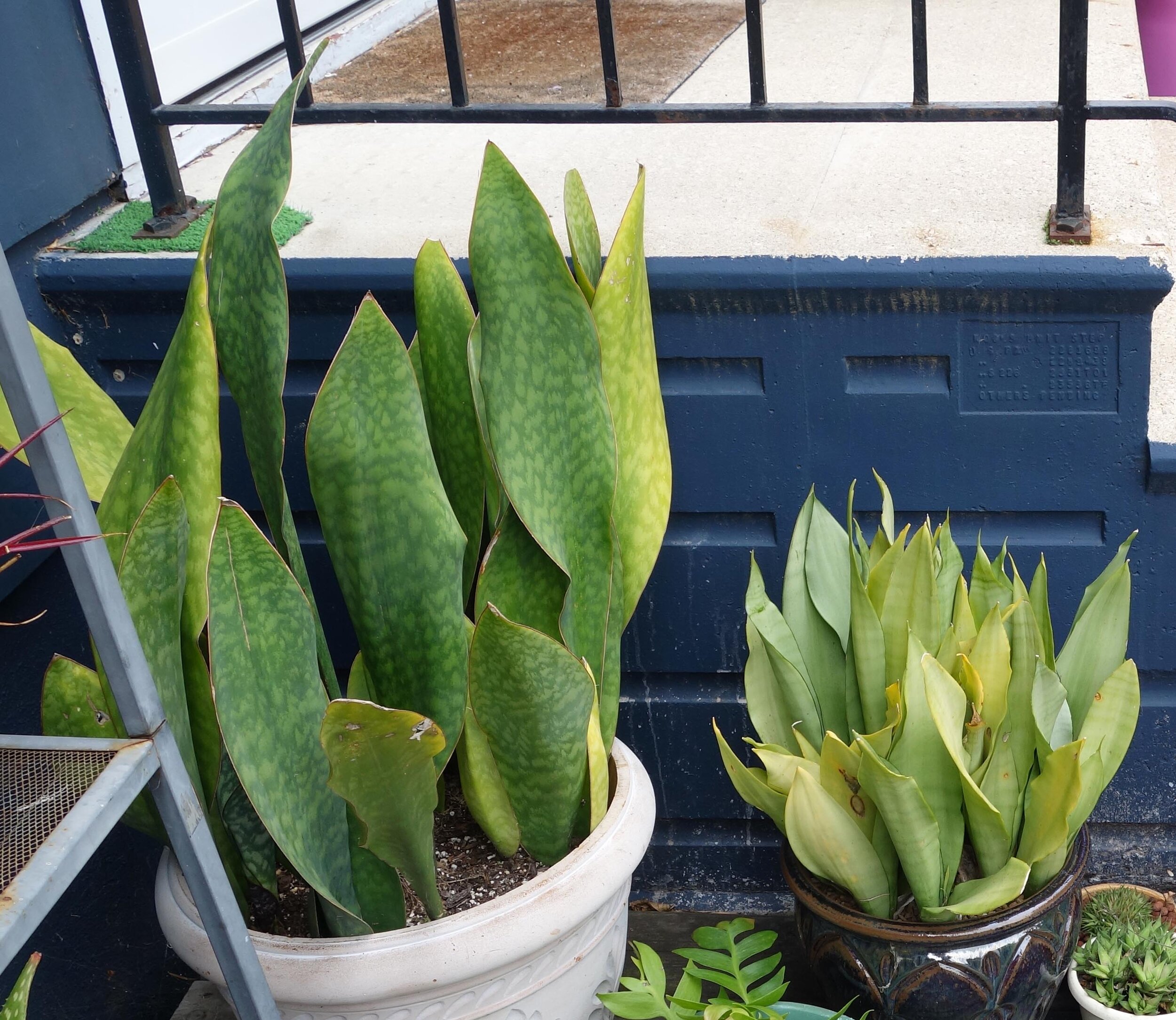
I know we’ve had a lot of craziness of late, but I have another world-altering piece of information for you plant lovers out there who haven’t heard about it yet, so get ready: the genus Sansevieria has been contested for years and it has now been subsumed into Dracaena. Officially, taxonomically, there is no more Sansevieria! Below are a few images of some of my (formerly Sansevieria) species and and flowers if you need a visual aid. They’re colloquially called “snake plants” and “mother-in-law’s tongue.”

In my houseplant-growing years, I’ve been aware of plants switching genera before, but all of those switches only affected a small amount of plants and were relatively easy to swallow. Gloxinia speciosa and Rechsteineria leuchotricha both moving to the genus Sinningia, Philodendron bipinnatifidum changing to Thaumatophyllum bipinnatifidum, Cotyledon splitting into at least five different genera, and so on.

This switch, though, affects over seventy species that have visual and habit-related signifiers that seem to more narrowly identify them as a subgroup within their new genus compared to the rest of the Dracaena species that are typically grown as houseplants, so I don’t even know if I want to start calling them by their new taxonomic names!

For me and perhaps for most serious houseplant keepers, this is going to be much more of a challenge than Pluto’s downgrade to dwarf planet.

Approaching the End of the Semester

Well, finals begin at the end of next week for Spring 2020 here at Morningside College! It’s been a lot of work converting in-person classes to online - I spent several hours finding public domain imagery of skeletons and nude models for my figure drawing class, as just one example - but we’re making it through!

Here’s our first fully virtual senior show of the season, courtesy of our skilled student Riley Custer:

And here are some more photos from my walks around Sioux City over the past couple weeks, including a surprising and somewhat misguided street donut offering:

Pandemic Productivity

Well, the world’s been upended. As a professor, this is the first time I’ve attempted to teach online coursework, and obviously the circumstances - these courses were not designed with online in mind, ISP overloads are causing even my own mid-tier home internet to no longer be able to stream high-quality video between the hours of 7am-2am, students have other demands on their time like familial support and sharing devices and spaces - are sub-optimal for sure. The courses I’ve been teaching this semester include Figure Drawing (no live model anymore and no ability to give rapid critiques on what is the hardest technical subject matter, but at least they can do self-portraits and use public domain imagery), Painting I (honestly, not so bad especially since we had a little over eight weeks in person to lay the groundwork), and Senior Art Seminar (I am mourning the loss of accessible senior thesis shows and receptions but am intrigued about how a virtual exhibition could be executed), as well as overseeing internships. We’re all just trying to cope as best we can with these new circumstances, but from the conversations I’ve been having with students I think we’re all chomping at the bit to be able to return once it’s safe to do so. When that will be, though, is still the big unknown.

I know that I am very lucky in that overall I still have my job and am not currently in financial crisis like millions of others due to this pandemic. The quarantining has nevertheless overhauled my personal life, too, beyond the obvious lack of professional and social gatherings. I really enjoy exercising, but more than that, I also need it - when I’m too sedentary, my back weakens to the point that it then goes out. What seems to work best for back maintenance is regular, long, and fairly high-intensity cardio. However, my knees are not able to cope with high-impact exercise. This means that ellipticals are my favorite workout, followed by swimming and riding stationary bikes. (I’m a gym devotee not only due to the access to low-impact forms of exercise but because I really appreciate climate control when I’m exercising - I sweat a lot even in air conditioned spaces. I also like the ability to watch cable television on their machines since I don’t have cable at home!). Because I can’t do any of my gym workouts, I have been alternating long walks around the neighborhood and riding my bicycle in laps around a nearby elementary school parking lot.

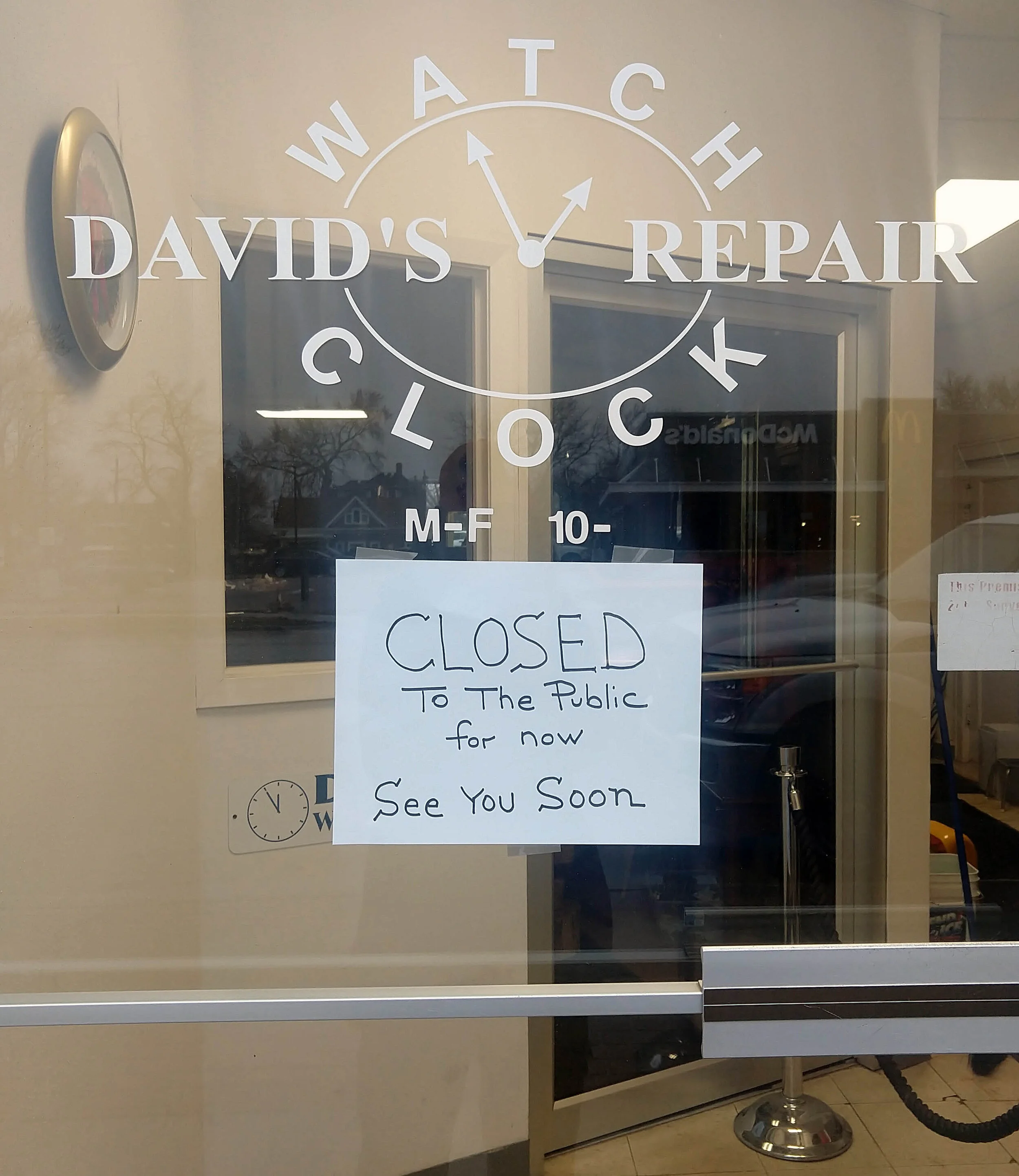
I try to stay out for at least 30 minutes each time, but especially on the walks I aim for an hour since I’m not getting high-intensity exercise from them. I haven’t ridden a real bike (as opposed to a stationary bike) in such a long time that I’m basically relearning how to do so and am not great at controlling it yet, but I’m already improving a little! The neighborhood walks have been both interesting and a bit scary - I was attacked by a loose and very territorially aggressive dog a couple days ago but luckily I wasn’t bitten. I have discovered that Sioux City is not the most walkable place due to a lack of sidewalks and crosswalks on some major streets (Gordon Drive, I’m looking at you). A lot of people also block their driveway sidewalks with vehicles. Furthermore, the weather has not been particularly conducive to outdoor exercise. We had a blizzard that knocked the power out for several hours a week ago, and today I was awoken by the sound of hail and whistling wind. It’s also been quite rainy, which is fairly normal for March but does put a damper (see what I did there?) on being outdoors. But needs must! Here are a few coronavirus door signs I documented on my neighborhood walks.

Since I’m still working (and doing so in a different way that was unplanned-for), I have less free time than one might anticipate. Between work, needing to exercise more frequently since the intensity is lowered, and cooking all of my meals, I’m staying fairly busy. I also have a list of chores I’ve been slowly tackling (filing my taxes are next on the list). But everyone needs some form of fun, and I’ve been feeling just a little too stressed to want to begin a new professional piece - though I hope to begin that soon! So instead, I’ve been making a few ceramics. For professional development, I was sitting in on a section of Ceramics I this semester because it was the one discipline I knew barely anything about, and that seemed like a deficit that especially since I also serve as Art Department Head I wanted to address. I learned some about wheel-throwing (there’s much more there than I’ve mastered as of now, but maybe some day!), and a little about glazing. About six or seven weeks in, I gathered that you can add chunks of rust (aka iron oxide) into the clay and they will add value and texture. What values and textures are TBD each time, though, based on firing and other variables - the iron oxide will likely melt in high-fire temperatures and that can cause cavities and vertical runs! That really captivated me - I think because A) I love color, B) I love nature-based chaos as a compositional wild card, and C) I love the conceptual power of rust. It also opened up the world of additives in general, and I decided to attempt experimenting with adding mica pieces, dried clay bits, and potentially other media like vermiculite too.

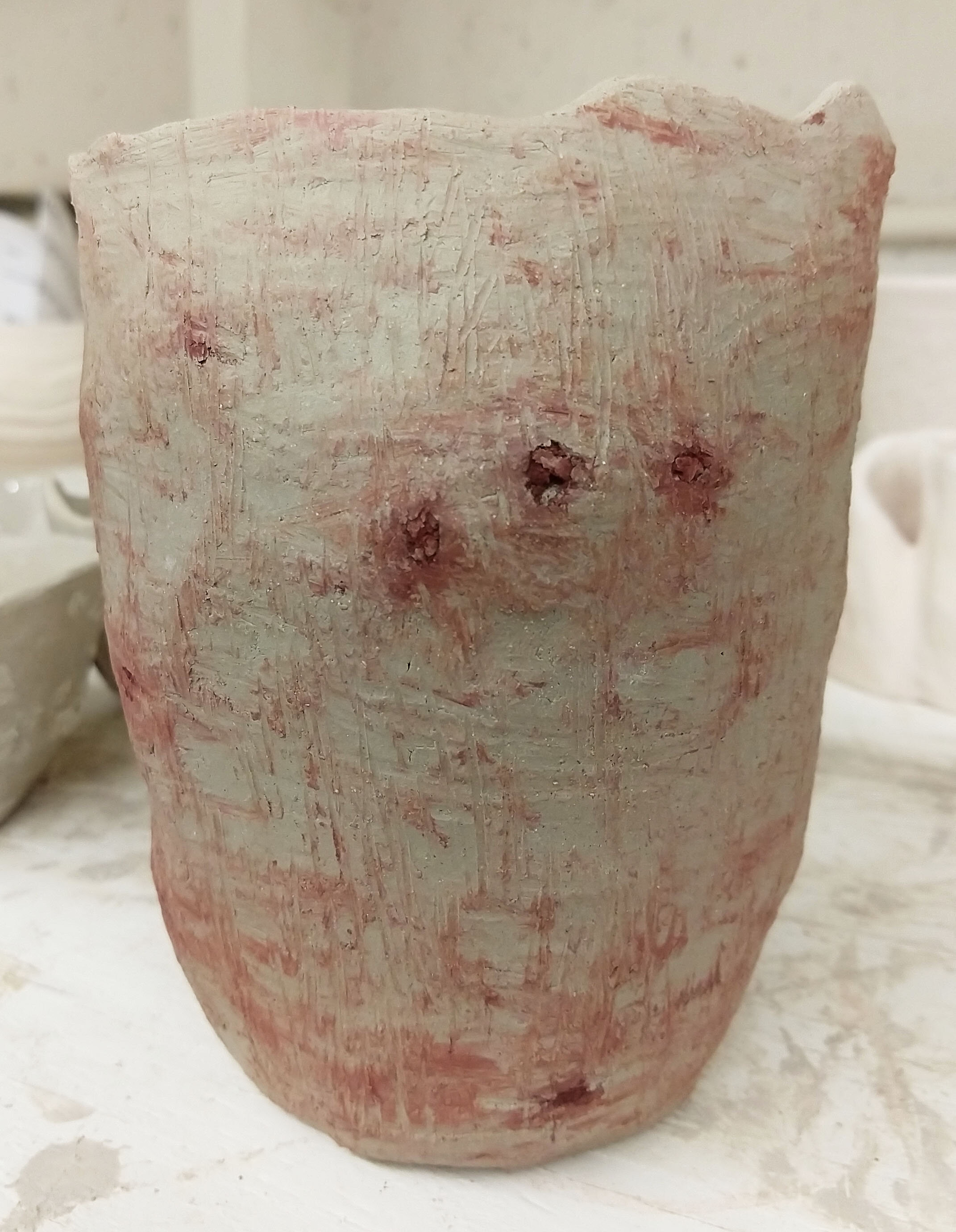
Obviously the pandemic has disrupted my ceramics progress, but it hasn’t halted it. I’ve been slowly but steadily making pinch pots at home as a low-pressure creative outlet and form of fun. Here are a few images of some of my current experiments. I won’t see how any of these pieces actually turn out until they’ve been through bisque-firing and then glazing, so probably at this point we’re looking at the fall, but it’s something nice to work on nevertheless!

Ashlar and a Blooming Sinningia Cardinalis

Here are a couple recent photos from fauna and flora in my life!

A Few Interesting Plant and Fungus Articles

Ash Channeling Cork Bark and Napping

Here’re a couple shots of my gargoyle gecko Ashlar hanging out inside of cork bark. The second photo is post-misting, and you can see that she’s scooted down and compressed a little to avoid directly being spritzed. The third picture shows how extremely variable in color she can be - in this image she’s what’s referred to as “fired down” while in the other two images she’s relatively “fired up,” though she can get even darker! She also has several in-between options to offer, too.

Melting Face Makeup - Happy Halloween!

Here’s my melting face makeup for Halloween, inspired by the ever-amazing Mimi Choi’s version combined with another unnamed artist’s version and my own flair! Happy Halloween!

The Amazon is on Fire

There is an ongoing, mostly manmade tragedy unfolding right now in the Amazon rainforest in the form of an 85% increase in forest fires over last year. Many of the fires are intentionally being set to clear trees and jungle vegetation - as well as indigenous territories - for agricultural use.

I am reminded of this standalone comic strip, which in many ways seems quite optimistic to me.

Moving to Morningside!

Whew, so I still have quite a number of new pieces to show you from my BROTA residency, but I am interrupting the stream of new art piece posts to share that I have finished moving from Leavenworth, KS, to Sioux City, IA, and have officially started at Morningside College!

From the time when I arrived back to the US in mid-June until the end of July, I drove up to Sioux City a number of times - to scope out the rental market (it’s insanely competitive), to sign the lease on my new house, to accompany the movers, to escort my enormous plant collection, and finally, to move myself and Ashlar the gargoyle gecko. I’ve now been in Sioux City for a little over two weeks, and while there are still boxes everywhere I turn, I’m making progress at unpacking every day and have even started work (though classes don’t start until August 21st).

I’m excited to dive into the vibrant art community both at Morningside and in Sioux City! I also need to get back into my normal exhibition schedule, as I took a bit of a hiatus due to the move and the fact that the return shipping address for the artwork was a big unknown for a while…

Extinctions and Other Sad Environmental News

Here’s a well-written lament from The Atlantic about the ongoing extinctions of a huge number of native Hawaiian snail species.

Zooming out from just Hawaii, here’s a map of how many species are being pushed to the brink globally.

This is a sad photographic illustration of how littering - even when the litter is biodegradable - negatively impacts wildlife.

BROTA and Buenos Aires Journal 2

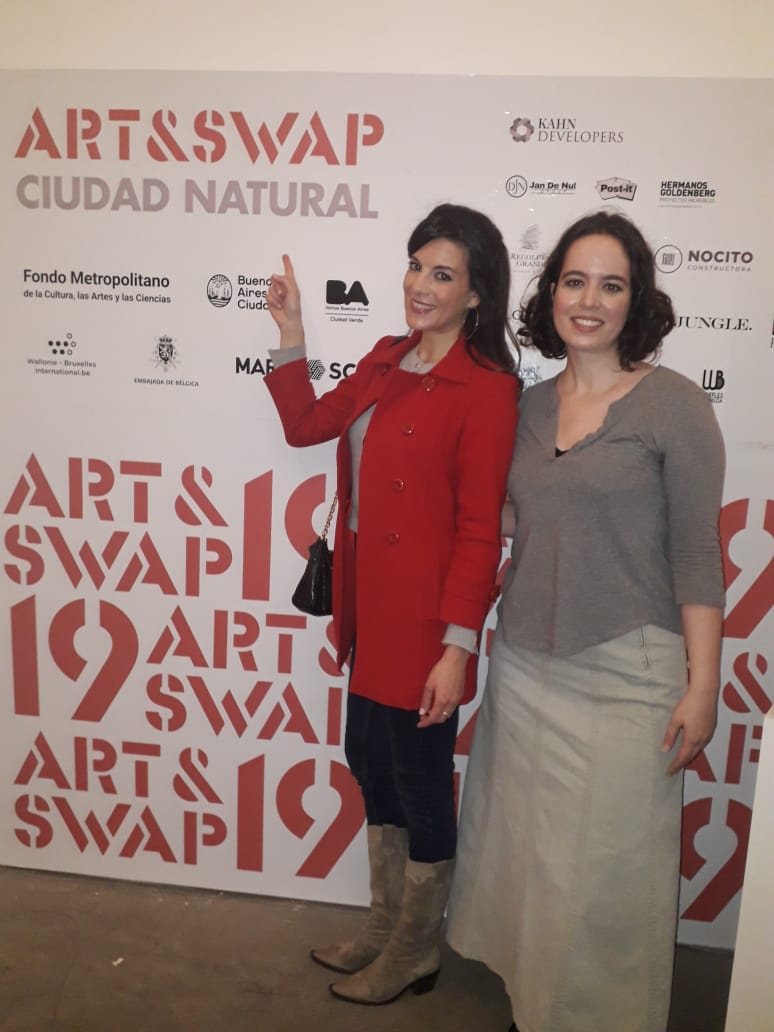
On my third day, I spent some time working in the studio. I brought some very new-to-me, experimental papers that I wanted to try to work with, so I started off with the methylcellulose paper. It dissolves in water, but if you print atop it with toner (using a laser printer) the ink is supposed to remain, floating, in the water. I wanted to see if that meant I could collage with it and if it would be a visually distinctive method. It turns out the ink doesn’t hold together super well - maybe because I didn’t just print straight black on it - but if you move quickly you can still catch the image though it breaks and twists in uncontrollable ways. I’ve always liked collaborating semi-chaotically with water, so this suits me well. That evening Patricia took me to an opening she was participating in: Art & Swap 19. Artists display their work, and viewers place Post-Its near any work they want to offer a “swap” for - I saw web design services, therapy sessions, artwork trades, and more - and contact info and if the artist is interested, they will negotiate a swap. The opening was a real event, with free food from food trucks (french fries, filled croissants, and mini waffles as well as coffee and beer)!

The next morning, Saturday, I woke up with a sore throat and a cold. I was grumpy about it because it is not my ideal way to spend residency time, but it’s understandable when flying, coming into contact with tons of new people, and visiting an area where you have no local immunity. I rested for a day, but then tried to get on with seeing Buenos Aires. I visited the Feria de San Telmo, which is a big open air Sunday market similar to El Rastro in Madrid. Unfortunately for me, El Rastro is more to my taste; the goods at the Feria de San Telmo were mostly leathers/furs, Mafalda cartoons, pipes, piedra rosada (a pink stone that is the national stone of Argentina, but I’m not into that shade of pink), and yerba mate mugs. None of those really appealed to me either for myself or as gifts, which is of course not the market’s fault. The prices were also relatively high, which I had been warned about. I did eat lunch at a vegetarian restaurant near the start of the feria, and that was nice, as was getting to see the feria and that part of the San Telmo neighborhood! On my way back, I stopped by the Feria de Recoleta, which was quite similar in content but smaller and in the midst of a park.

The following afternoon Patricia took me out on a search for several of the items I’d requested - starting with artisanal papers and spray fixative. Unfortunately neither of us realized what a chore finding artisanal papers would be… due to the ongoing financial crisis in Argentina, some of the stores we went to visit had shut, others had downsized their selections, and eventually we ran out of options for the day but Patricia had one last lead we’d look into later. We then went to her neighborhood to find me a mortar and pestle that I had decided I needed for a second type of experimental artwork along with isopropyl alcohol, and tried to hunt down a shop that would sell me prints-per-page on my own paper on a laser printer, in case I wanted to print more on the methylcellulose paper. Patricia also invited me to dinner, so when we were all done shopping for studio supplies she made Milanesas de soja with salad. Milanesas are a sort of patty, and can be made out of many things but these were soy because she likes them and I’m vegetarian. It was a good, long day.

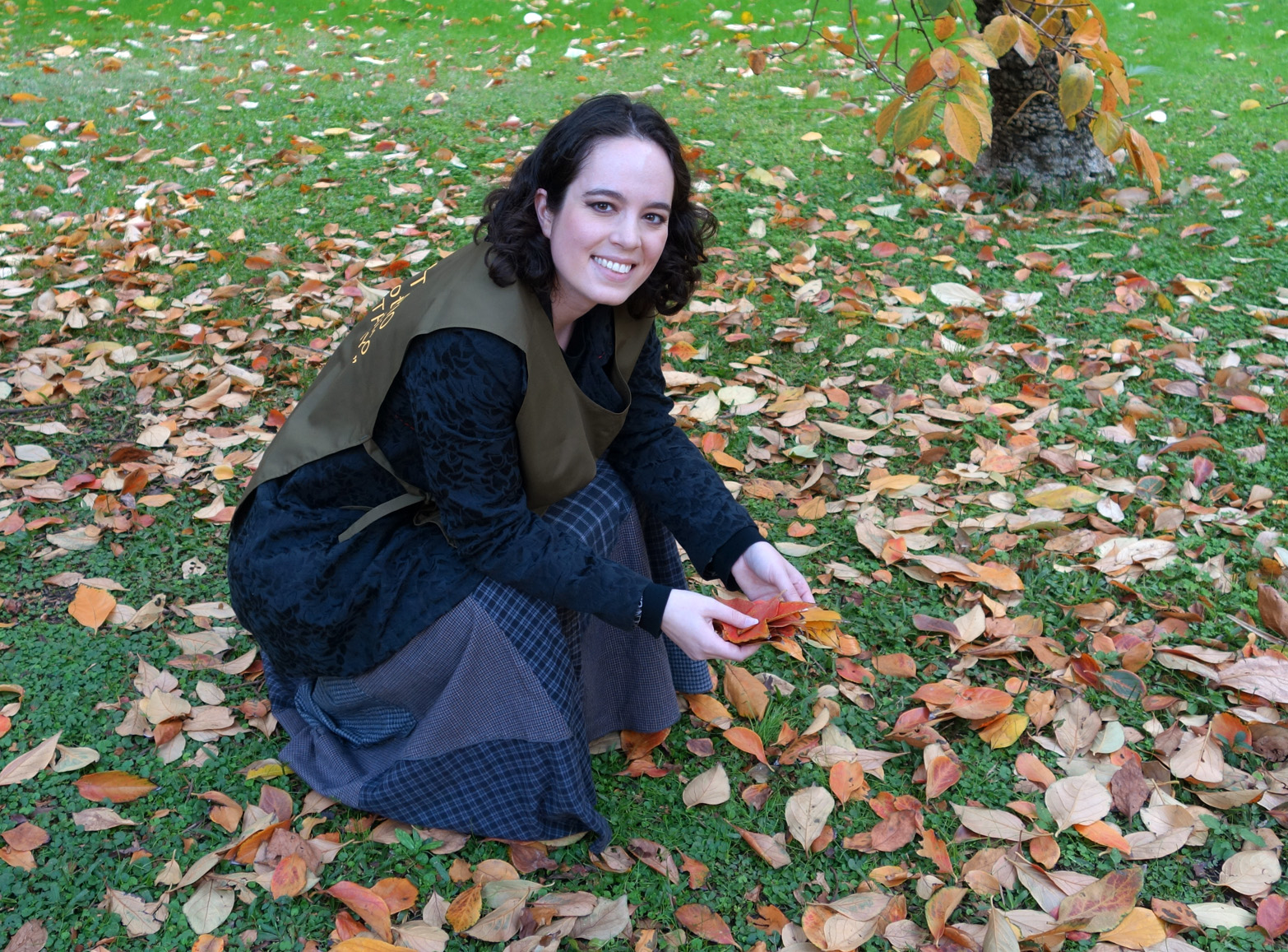
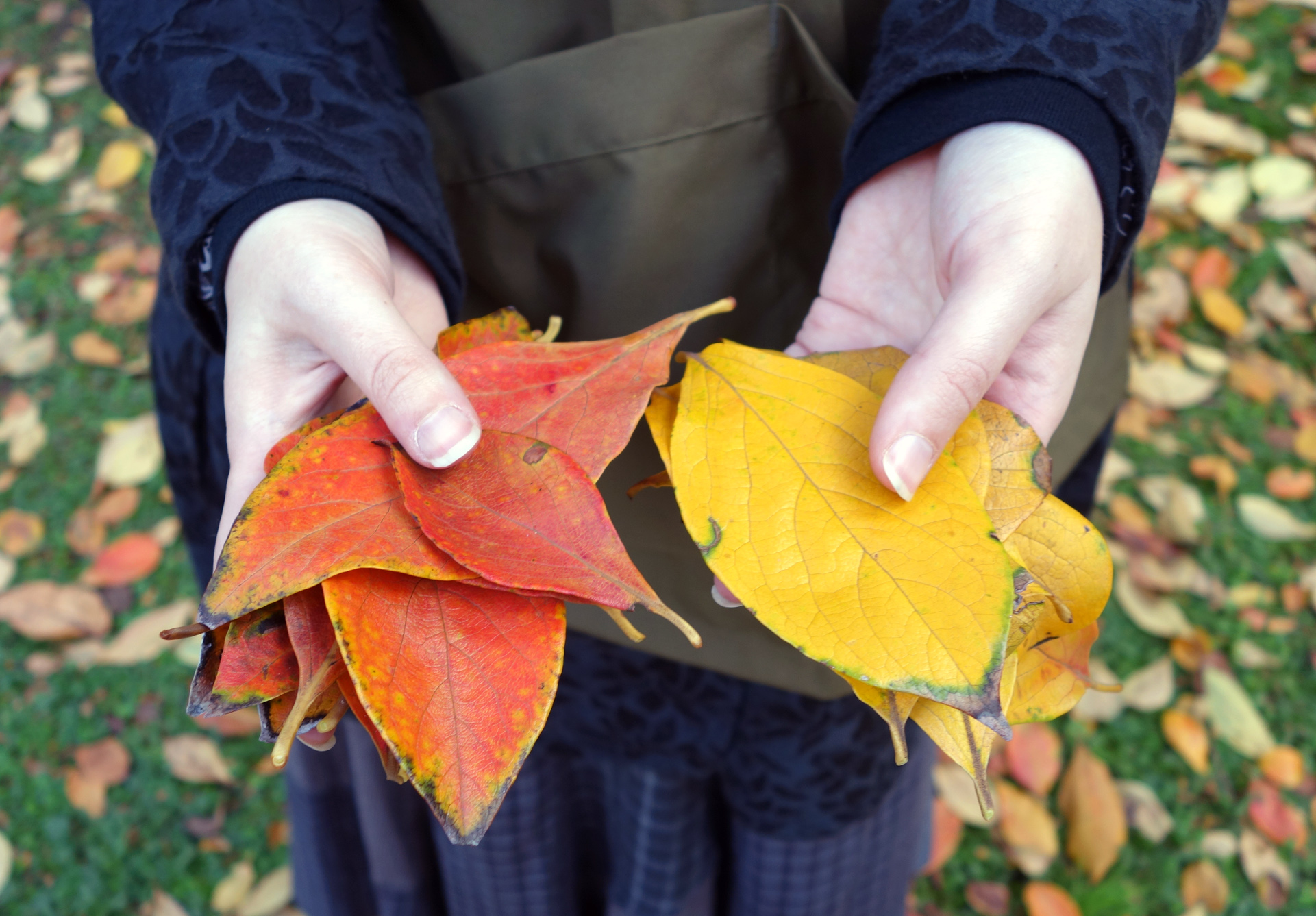
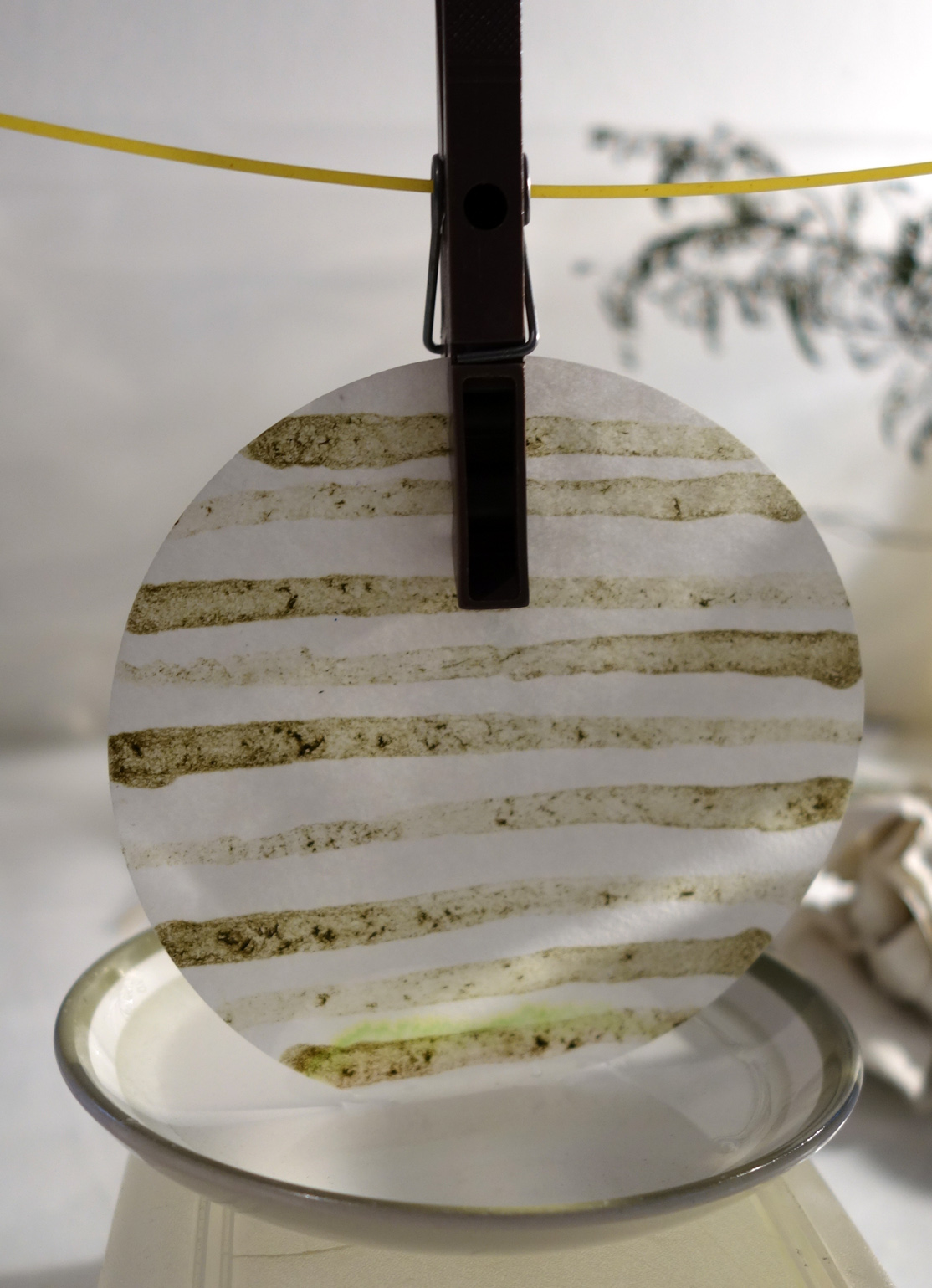
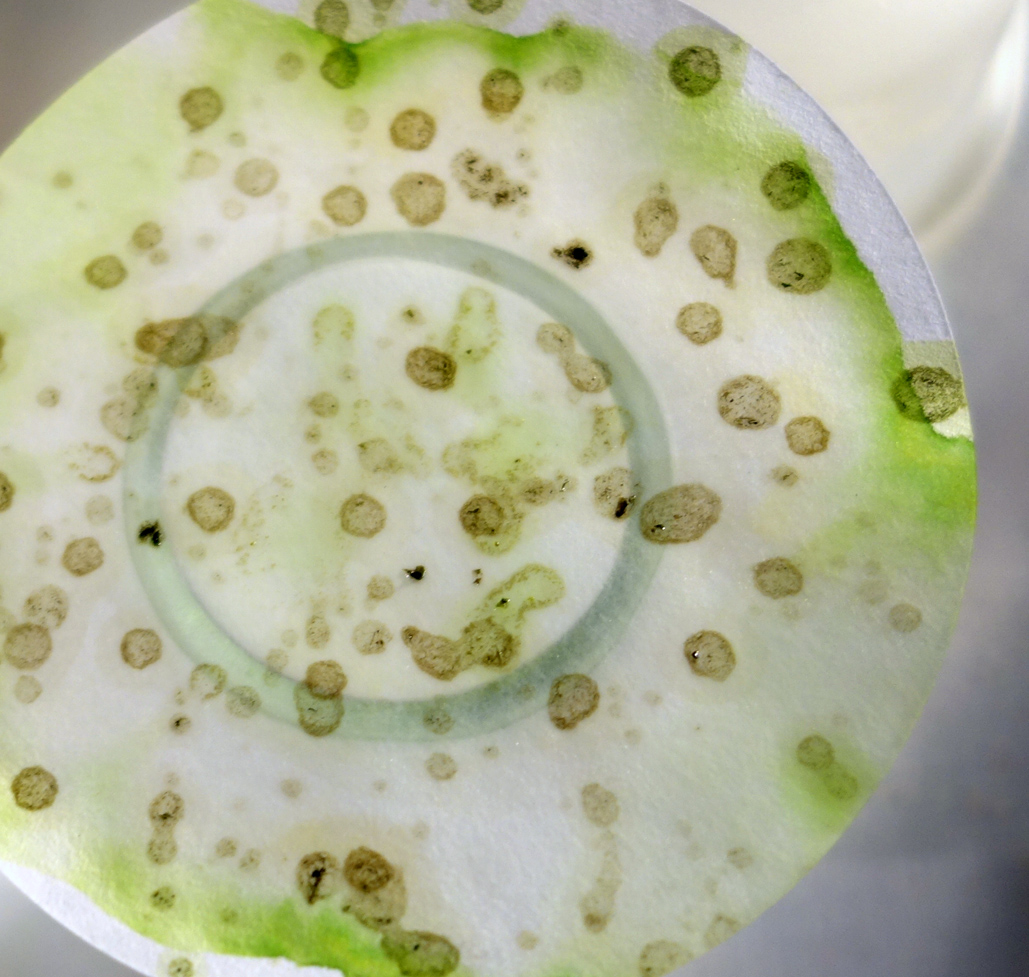
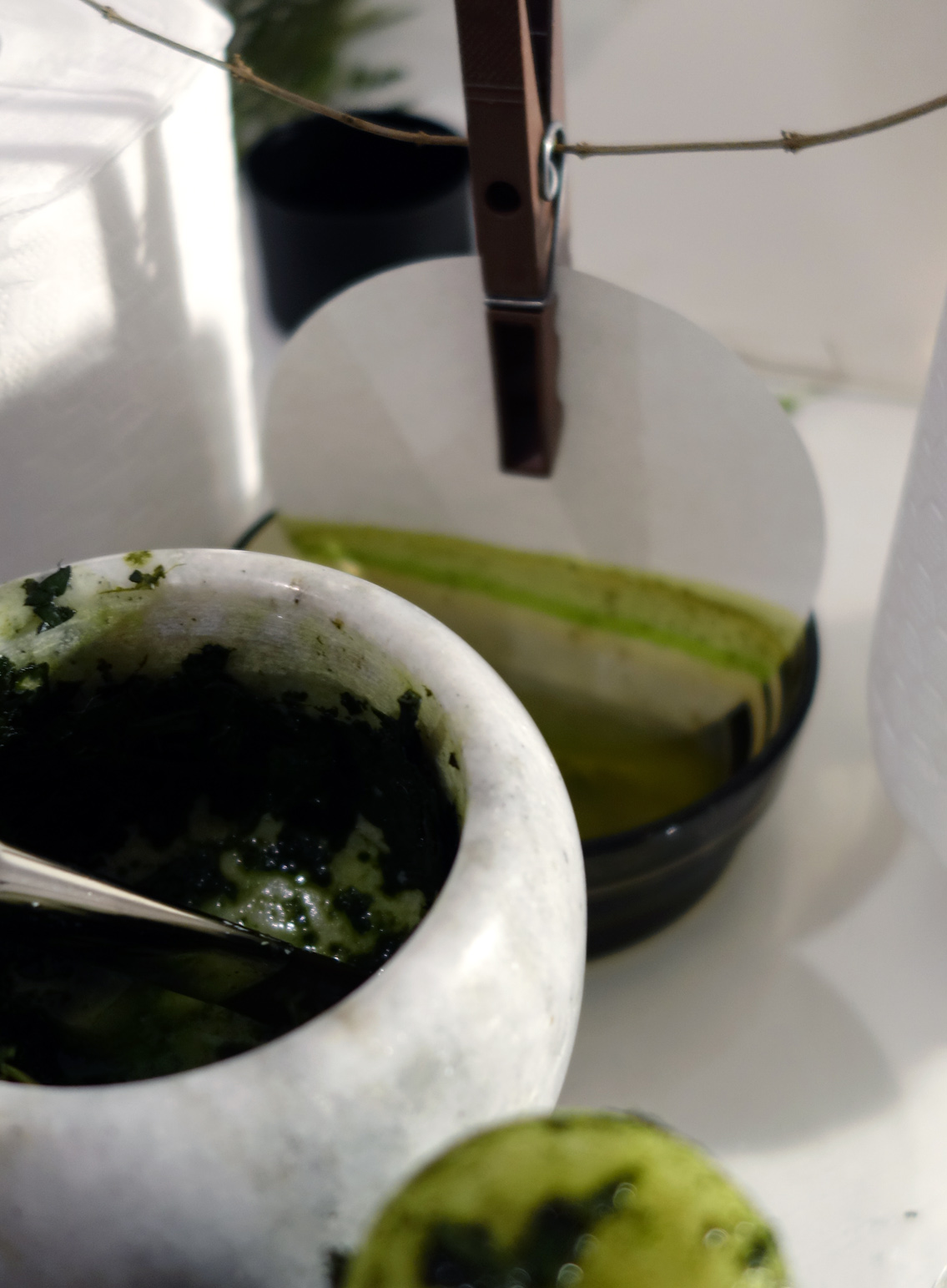
The next day Patricia met me in the botanical garden to take a couple photos of me for her Instagram announcement post about my residency. I needed to go to the garden anyway to collect leaves for the second type of paper I wanted to work with - a filter paper that would allow me to practice chromatography. Using a mortar and pestle, I can grind up leaves and/or flowers with alcohol, and then the filter paper will soak up the solution and separate out each pigment layer - chlorophyll A, chlorophyll B, xanothophyll, and carotenes. Each plant will presumably have a different chromatography, so the paper rounds will function as abstract portraits.

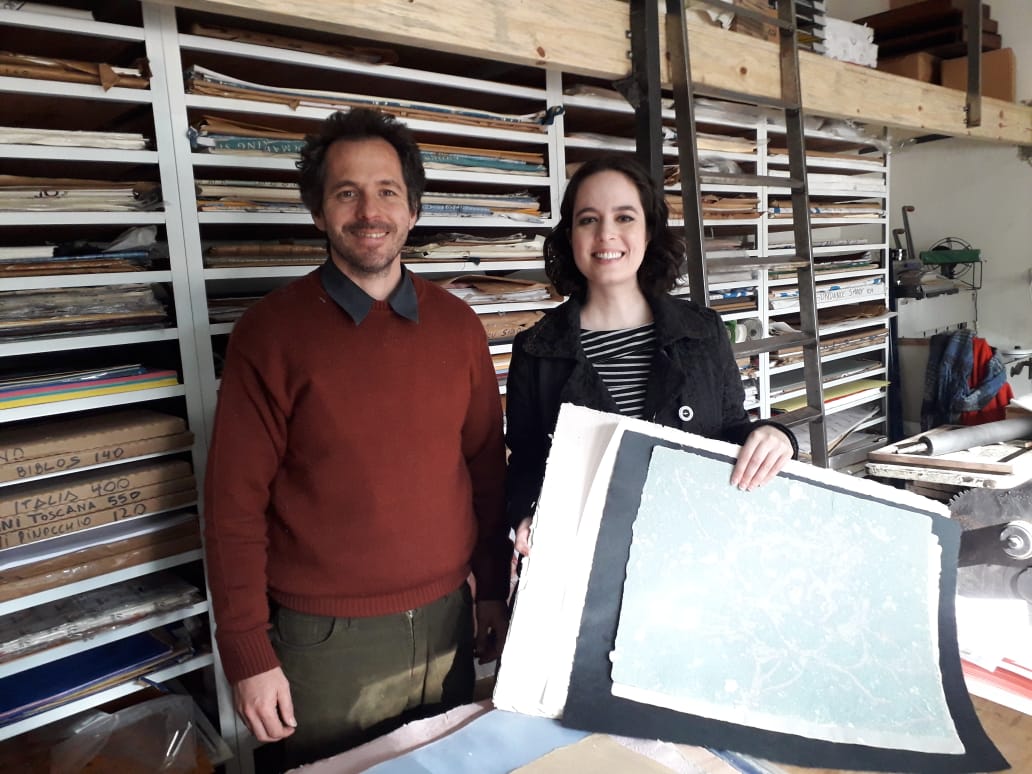
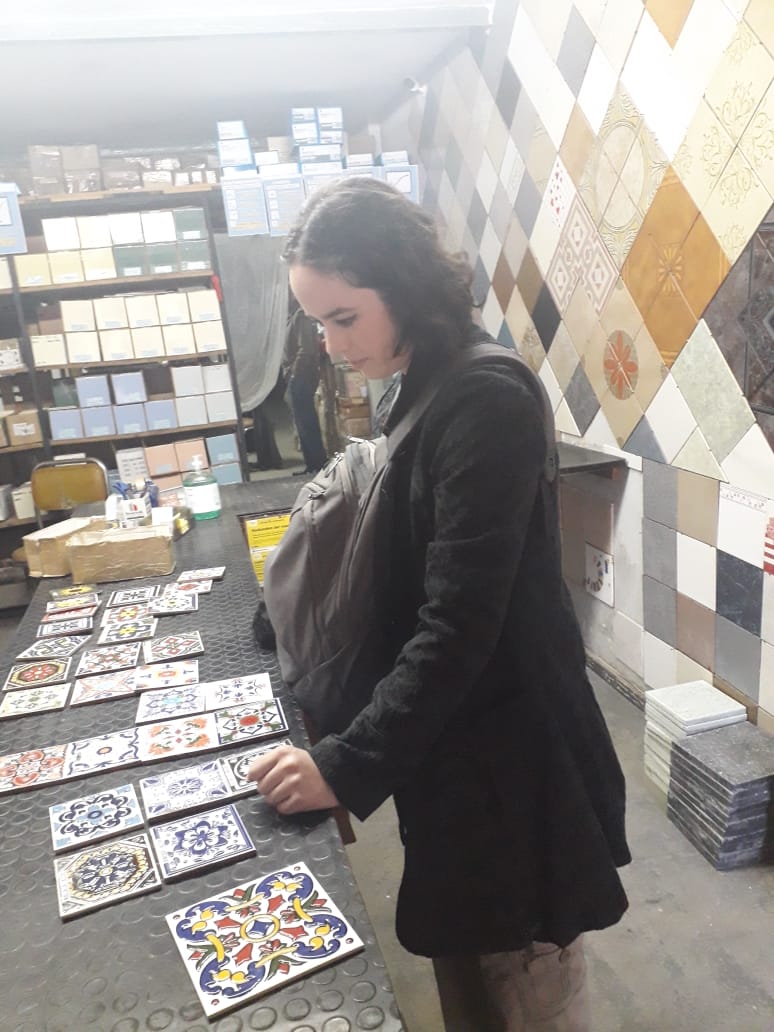
The following afternoon Patricia and I journeyed to the final lead for artisanal papers: Ato Menegazzo Papeles. The owner is a very nice man who makes his own artwork, does letterpress and printmaking, and had a few handmade papers as well as a lot of decorative and stamped papers. I bought several sheets. Then Patricia had taken notice that I like tiles, so she suggested we go to a tile store. I was excited, as it would never have occurred to me to ask, but I do like tiles! We stopped by one with antique tiles and one that had some modern options. Unfortunately I had to limit how many I could buy as they are surprisingly heavy and there are luggage weight limits. I’ve also heard terrible things about the mail service in Argentina - unlike in other residencies, I’ve been advised not to mail anything back as it likely won’t ever arrive.

Thursday I spent gathering more plant samples from the botanical garden and Patricia and I stopped in at two exhibition openings in galleries on the same block that evening. Both were very small, but one had ceramic wall pieces that I liked. That brings us to Friday, which I spent in the studio again!

BROTA and Buenos Aires Journal 1

My flight to Buenos Aires was a red-eye, and that seems to be the norm as all the flights I looked at were approximately at the same time. Though KCI is purportedly an international airport, I’ve never had a direct international flight out of it (the current expansion should help in the future, though!), and this was no exception - I flew through Atlanta and then on to Buenos Aires. My flights all went very smoothly and I also had very good luck on both and got to sit in empty rows each time! On the long leg, I was in a two-person row so there still wasn’t enough room to lay down… but I really appreciated the extra foot room and seat storage. I have a very difficult time sleeping on planes, and this was no exception. Instead, I watched a few movies (Deadpool II, Annihilation (which was rather different than the book which I’d already read), Aquaman, and Arctic).

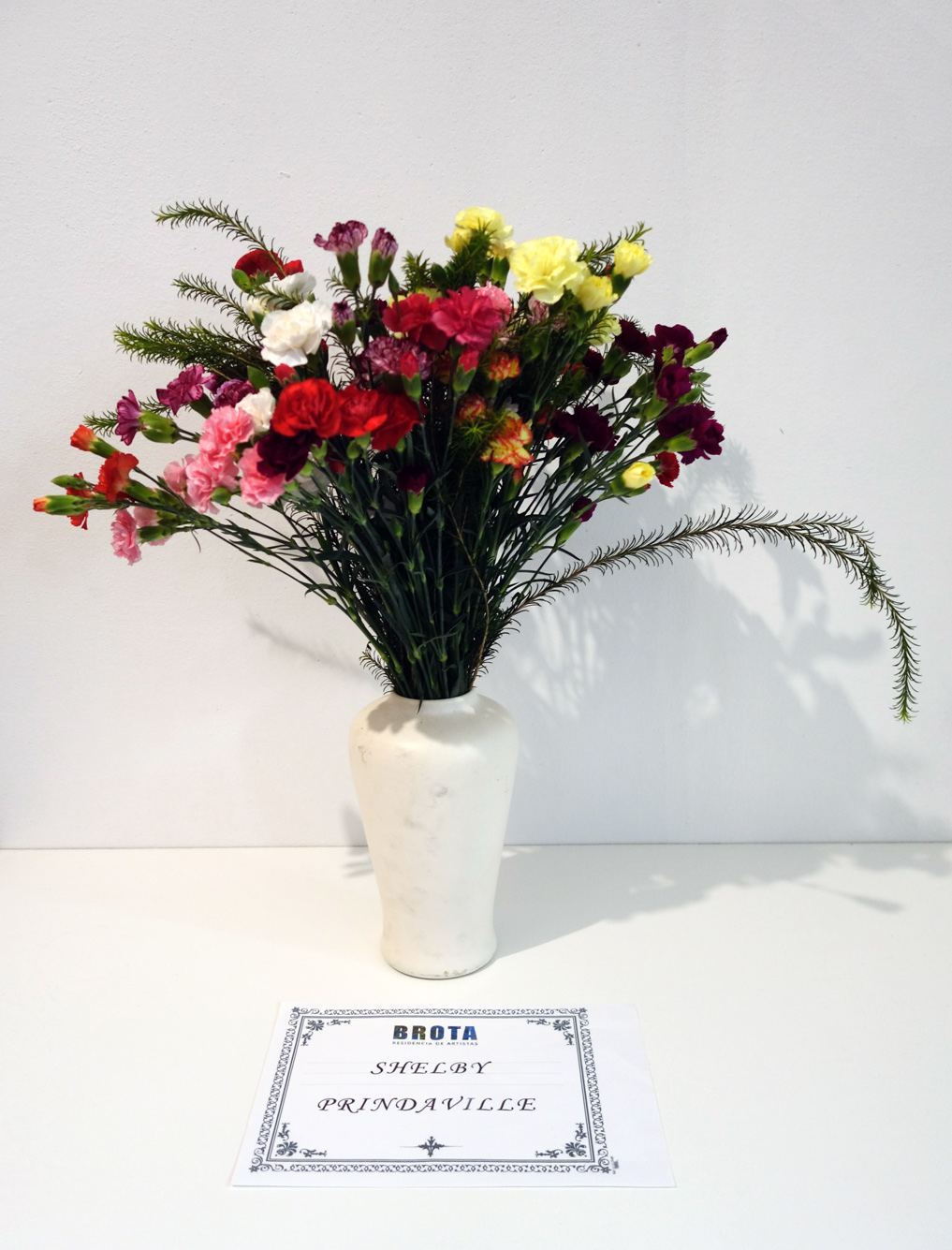
I arrived in Buenos Aires at around 9:30am, and by the time the arranged taxi had delivered me to the house I’m staying in, it was around 11am. Patricia was waiting for me with a bouquet of flowers, which was so kind! I was quite tired, since I didn’t sleep on the plane, and thought I might take a short nap… but Patricia said if I wanted she’d be available to show me the ropes so I decided that’d be a better use of my (and her) time. I took a tour of the house (it’s great!) and then we made a list of what I needed to do next. One of those tasks was to pay the rest of the residency fee as I’d only placed a deposit ahead of time.

I had assumed, unfortunately erroneously, that I knew the best way for me to navigate exchanging money here, since I know how to do so in Europe. All I do in Europe is bring my debit card (in addition to having a no-foreign-transaction-fee credit card), and with the debit card I can withdraw up to 500 euros at a time for a $10 fee from a bank. It’s pretty convenient and the banks tend to have fair exchange rates. However, due to the ever-rising inflation which is rapidly outpacing the withdrawal limits here in Argentina, the most you can appear to withdraw at one time is approximately $110, and you will still pay a $10 fee for that service. Well, I’ll know to research it per country in the future! Hopefully I can use my credit card for most transactions so that I can keep my cash withdrawals relatively infrequent.

The current exchange rate is approximately 45 pesos to the dollar, which for mental math I round up to 50. The numbers get really high really fast, and I keep being scared I’m paying a lot only to do the math and realize it’s not so bad.

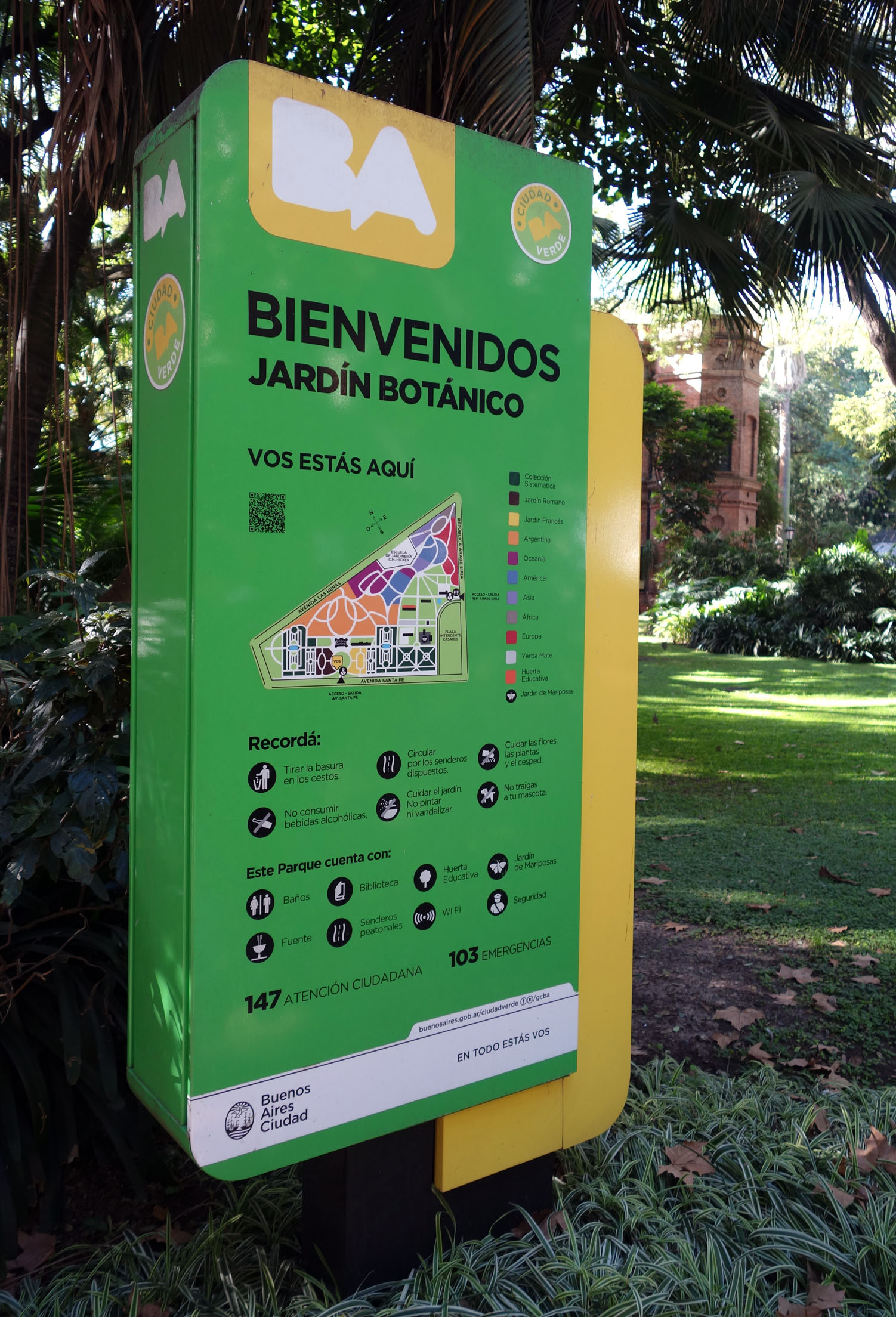
After withdrawing some cash from a bank, we walked to the Buenos Aires Botanical Garden (which is called the Jardín Botánico Carlos Thays in Spanish, but I think it is clearer for English audiences to use the English version of the name). Patricia introduced me to two of the workers at the garden, and one named Carolina said that if I came back the following day they could in the interim get me permission to collect some leaf samples, access to the greenhouses, and other similar access levels. Patricia and I then walked all around the garden spaces, which was actually bigger than I had thought it would be - that’s always a good thing, in my mind, as I can have extremely high expectations of botanical gardens!

By this time we were both hungry, so we had a late lunch in Quotidiano Bar de Pastas Palermo. I shared a pitcher of mint ginger lemonade with Patricia because she said it was her favorite. I didn’t dislike it, but it was weird! I don’t know if I will intentionally order it again, but perhaps. Then we walked to the Carrefour supermarket so I could buy some groceries. I was advised to buy drinking water since the locals avoid the tap water here, so I decided to get two giant containers of water and not really limit myself much on groceries either and then have them deliver it all for a $3 delivery fee. Despite being enormous, the Carrefour didn’t have as many items as I would expect, though - it’s frozen food selection was paltry, and it also had fewer fruits than I’d have liked. There are produce stores around, though, so I’ll probably try to stop in those when I can.

When we got back, I think it was around 5pm and we’d spent much of the preceding six hours on our feet walking! Patricia then took some time showing me maps of the area and helping me plan out the next few days. By 6pm, the grocery store delivery arrived and since she was still here, she helped me unpack it. Then she said goodbye, and I had a strong urge to sleep but put it off. Instead, I took a shower (and there was hot water! for the whole shower! this is unusual for traveling! but wonderful!) and then read a book for a couple hours, had a granola bar and some chips (I could not summon the energy to cook), and then went to bed right around 8:45pm. I slept until about 10:30am the next day!

The following morning I made myself breakfast and unpacked my suitcases. Patricia and I caught a bus to the botanical garden to start to acquaint me with the local bus system (el collectivo) which is altogether less organized than in other major cities in that there are no timing schedules and no signage. Patricia urged me to consider taking Ubers instead at least until I’ve taken the bus with her several times. Fortunately, an Uber to the garden is only around $1-$1.50, so that’s pretty reasonable especially since entrance to the garden is free for everyone (I assumed it would be free for me since I’m working there, but it’s unusual for such a big garden to be free for all). To walk from the house to the garden is - according to Google Maps - 33 minutes one way, so while I won’t mind doing that occasionally, I will probably not want to do that every time and unfortunately the house isn’t near a metro station.
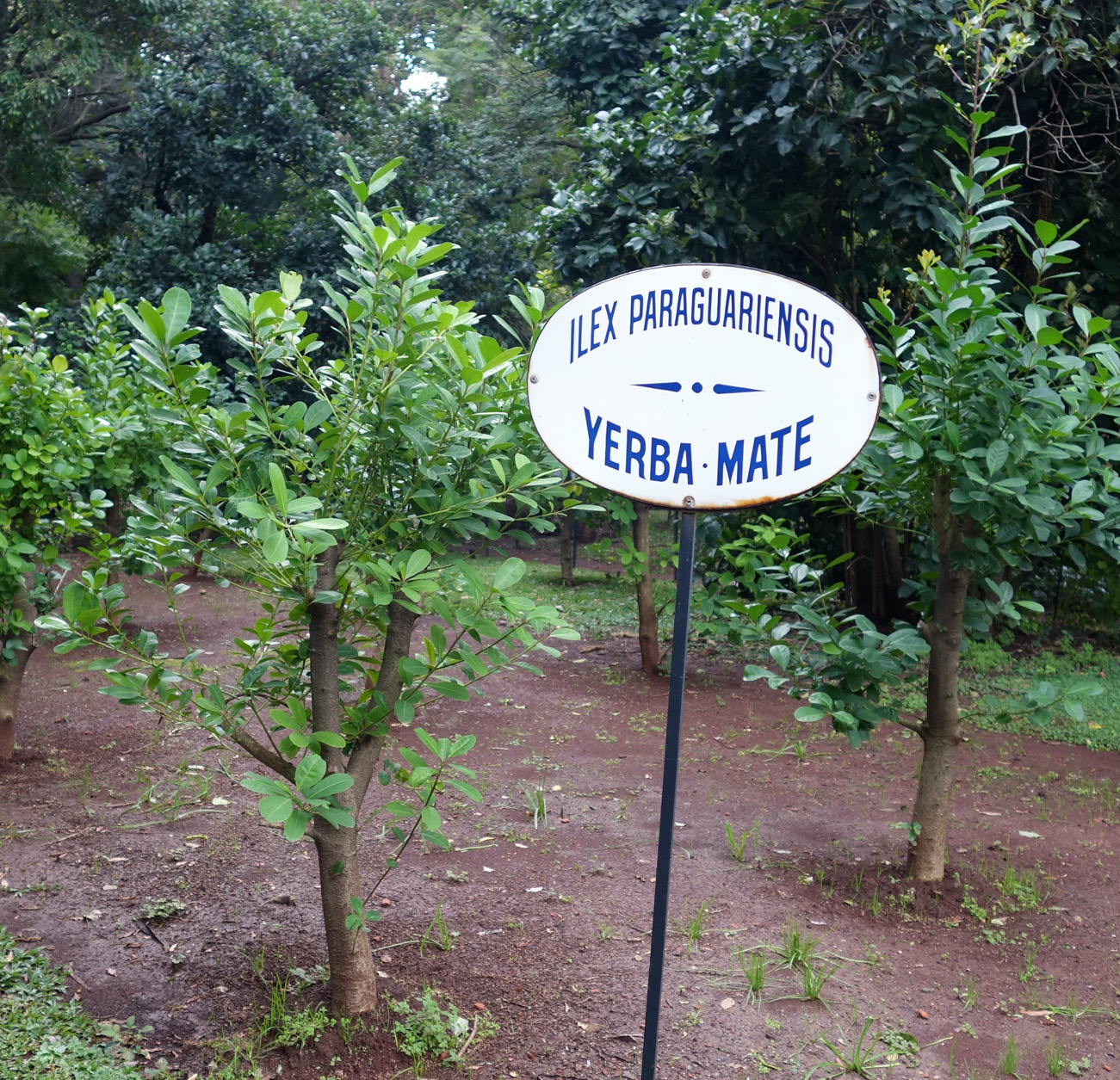
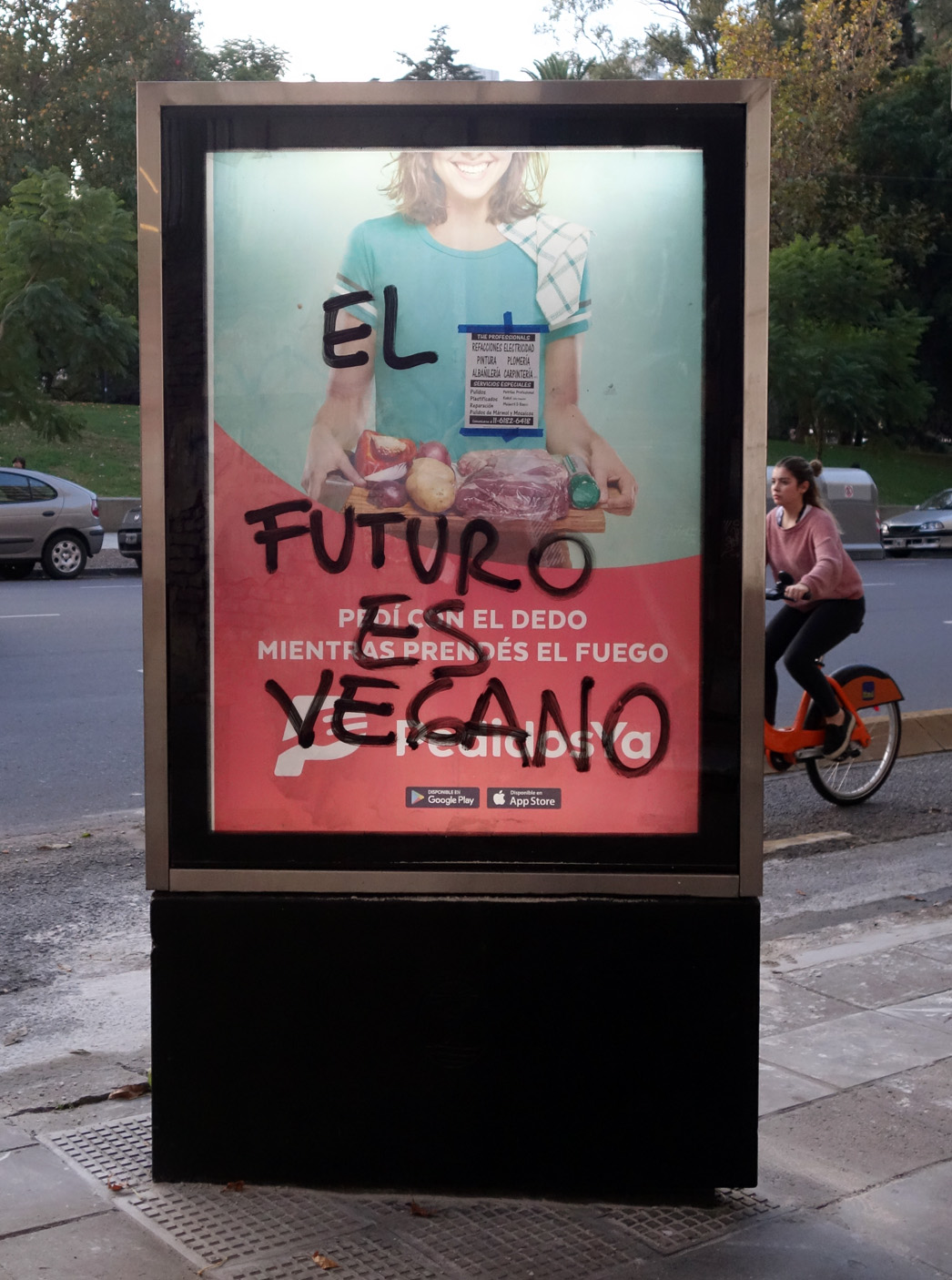
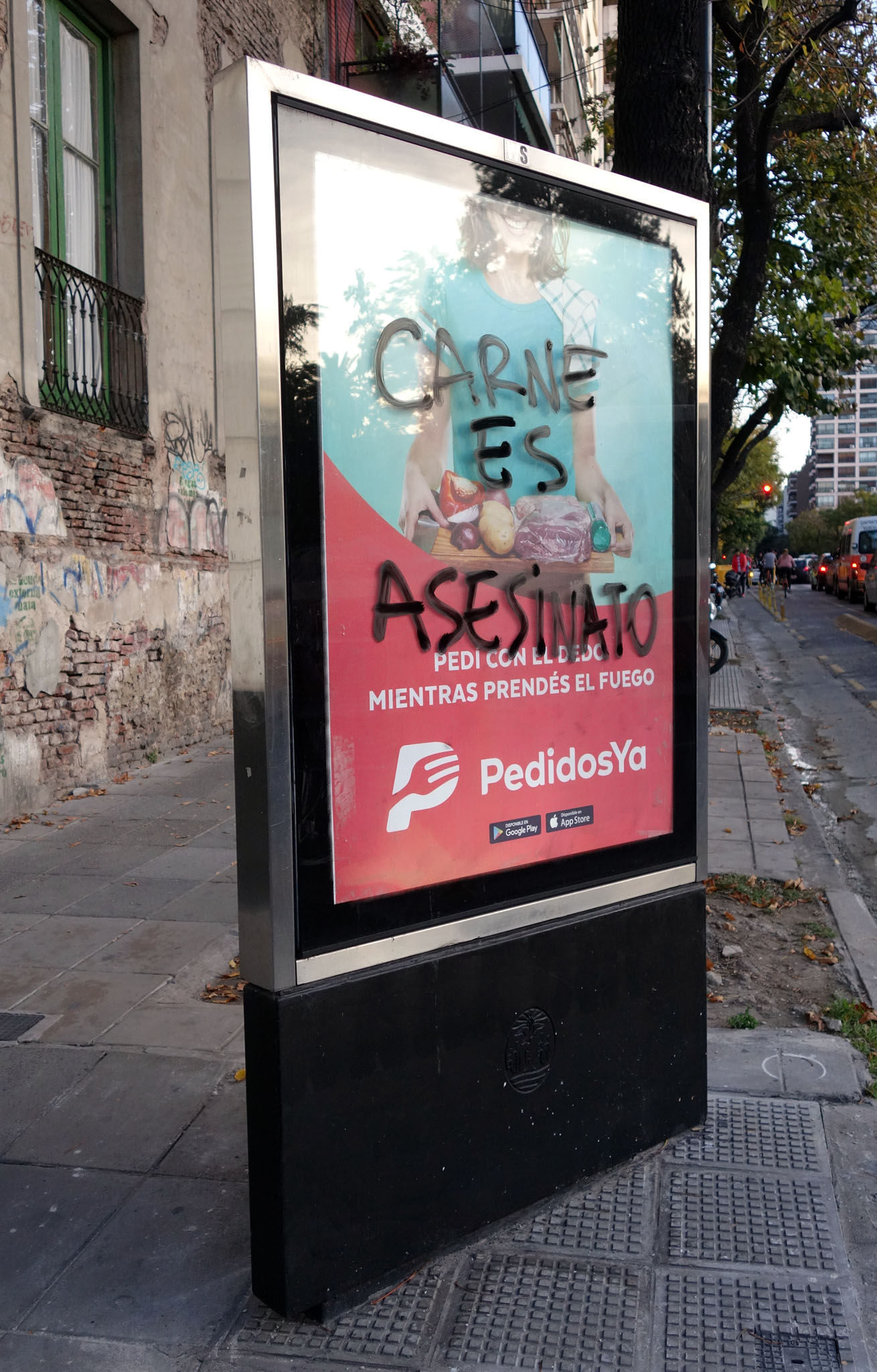
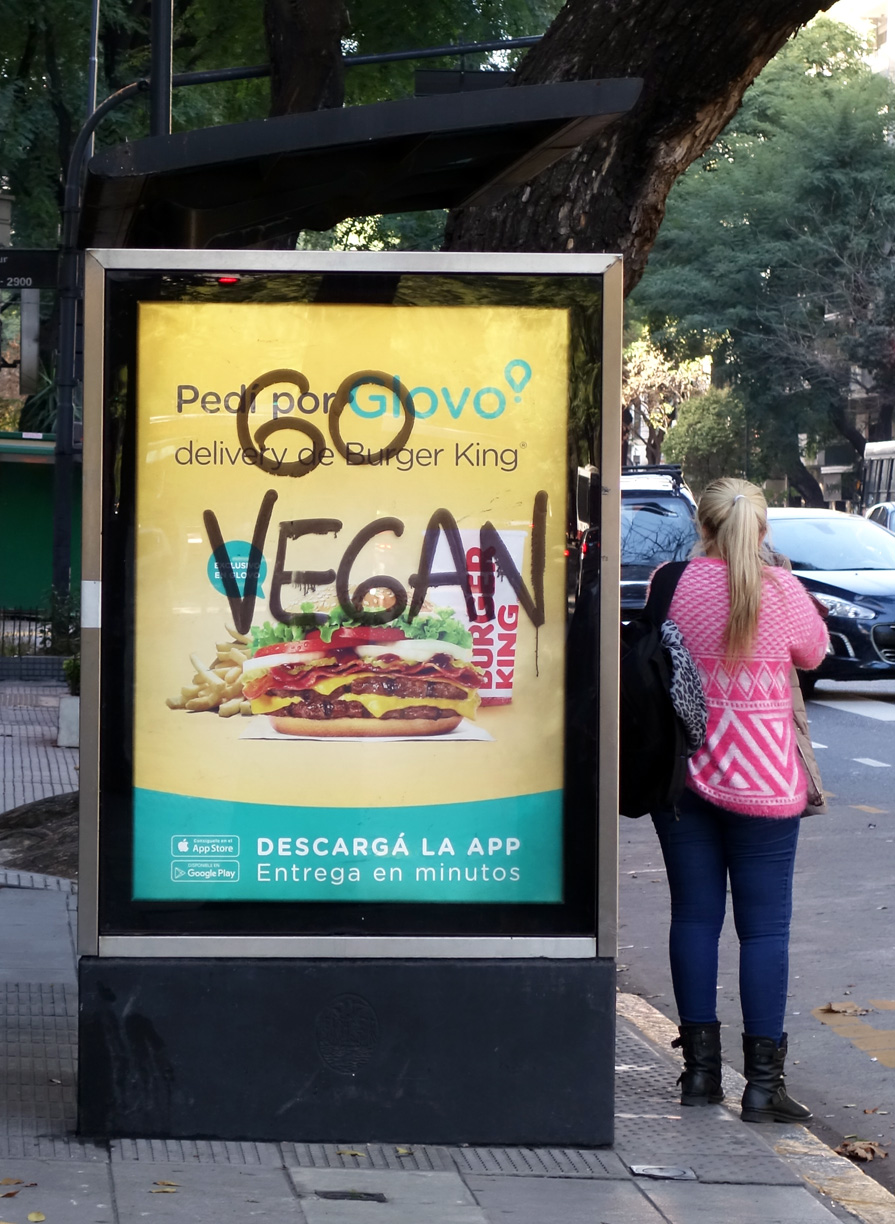
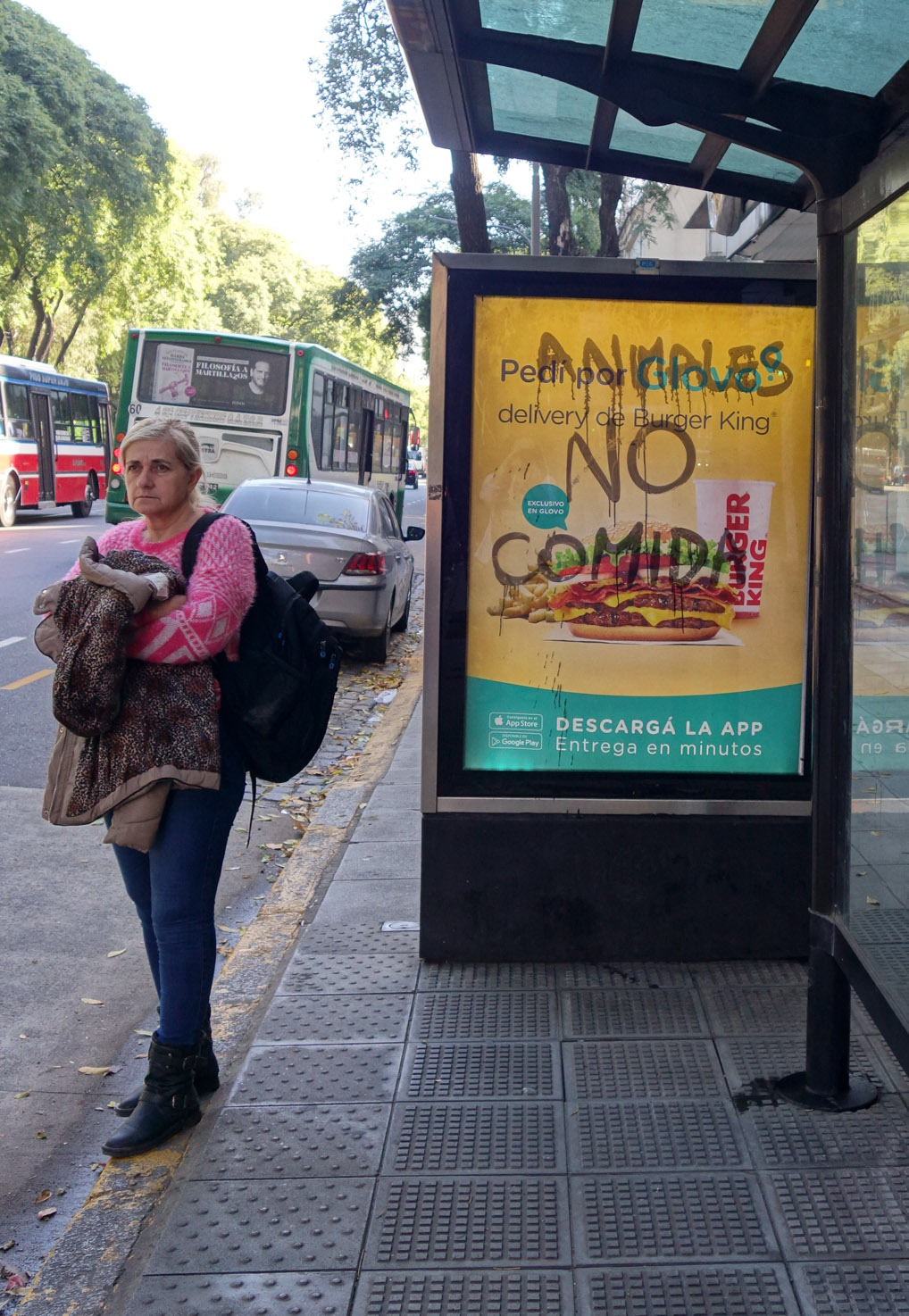
At the garden this time I met by myself with both of the workers from the day before, but also with three new-to-me workers as well. I was provided with a vest that proclaims me to be a garden volunteer, so as to deflect annoyance at my gathering of some leaves, and also had the opportunity to be shown quickly through the tropical greenhouse. I spent a couple hours there, taking photos and a few leaves, and then left for a very late lunch. I looked up restaurants nearby on my phone, and found a vegetarian one not too far away so I headed there! It turned out to be in a mall food court which I only found out upon arriving, which is not the best for ambiance nor food quality, but it was pretty decent fare nonetheless. Then I considered catching an Uber back but figured it would probably be good to walk back to learn the lay of the land a little more. I also found a series of vegan graffiti - there was probably more in the vicinity - which I found really interesting. Argentina is known for meat and barbecue, but there is a growing worldwide interest in healthier lifestyles - both for the consumer as well as for the planet. After all the walking the day before and this day, too, my feet were quite sore! I spent the evening prepping in the studio and making dinner.

Human-Led Environmental Devastation in the News Again

I’m not sure if it was possible to not hear about the horrific recent United Nations assessment on wildlife decline and extinction as it made front page news all over - but if you missed it, here’s one of the many stories covering its findings.

Relatedly, here’s an article discussing how meat consumption plays a huge role in climate change and needs to decrease by 90%. Of course, that’s only one of a multitude of corporate and cultural changes we would have to make…