Karnaluks OÜ

New Artwork: Woven Thresholds

I’ve been painting red flowers lately, and I intentionally chose to continue that trend since I was building around a component I planned to use from the start: a jacquard folk pattern trim I picked up at Karnaluks OÜ in Tallinn. Once I saw a stand of vivid tulips, the rest of the composition came together..

The process differed from Between Worlds. Here, I painted the floater panel and tulips first, then laid down plastic and painted the lace pattern on top of it. After removing both those layers, I worked through a wide range of compositional options before settling on this angled, mirrored lace overlay. From there I secured the lace, added the trim, then cleaned up and secured the back. This was the second piece I started, but the third to finish! The delay was due to the sequential steps I needed to complete, each of which involved drying/curing periods.

Iconographically, tulips function as shields, threshold filters, and barriers across multiple traditions, a symbolism rooted in their nyctinasty: they close their petals tightly at night or on cloudy days, sealing their core away from cold, damp, and nocturnal threats. That self-protective habit is part of why tulips are believed to draw in positive energy while keeping poverty, bad luck, and hostility from crossing into the home, and why they carry associations of safety within oppressive environments. The lace adds a further veil over the tulips, while the mirrored, overlapping composition contributes a sense of movement and dissonance.

The outer border carries its own layer of meaning: it is a traditional Baltic woven band steeped in regional folklore and protective symbolism. Its color scheme has historically represented life, fire, and an active shield against negative energy. The pattern combines two ancient Baltic symbols: the Cross of Māra, tied to the Latvian goddess of earth and home and read as a sign of grounding and stability, and the hourglass motif, which represents the rhythm of time and the meeting point of the spiritual and physical worlds.

This is Woven Thresholds, acrylic, lace, and jacquard trim on wooden floater panel, 14x11x.5”, 2026.
Shelby Prindaville’s mixed media lace painting of tulips on a floater panel with Baltic jacquard trim.

My First Days in the Baltics - Helsinki, Tallinn, western Estonia

I flew into Helsinki, Finland; when I was looking at my flights, I saw they all routed through Helsinki to Tallinn. Since I knew I wanted to visit it during my stay, I figured I’d save on time and ferry costs if I just landed in Helsinki to begin with and then ferried down to Tallinn after a couple of days.

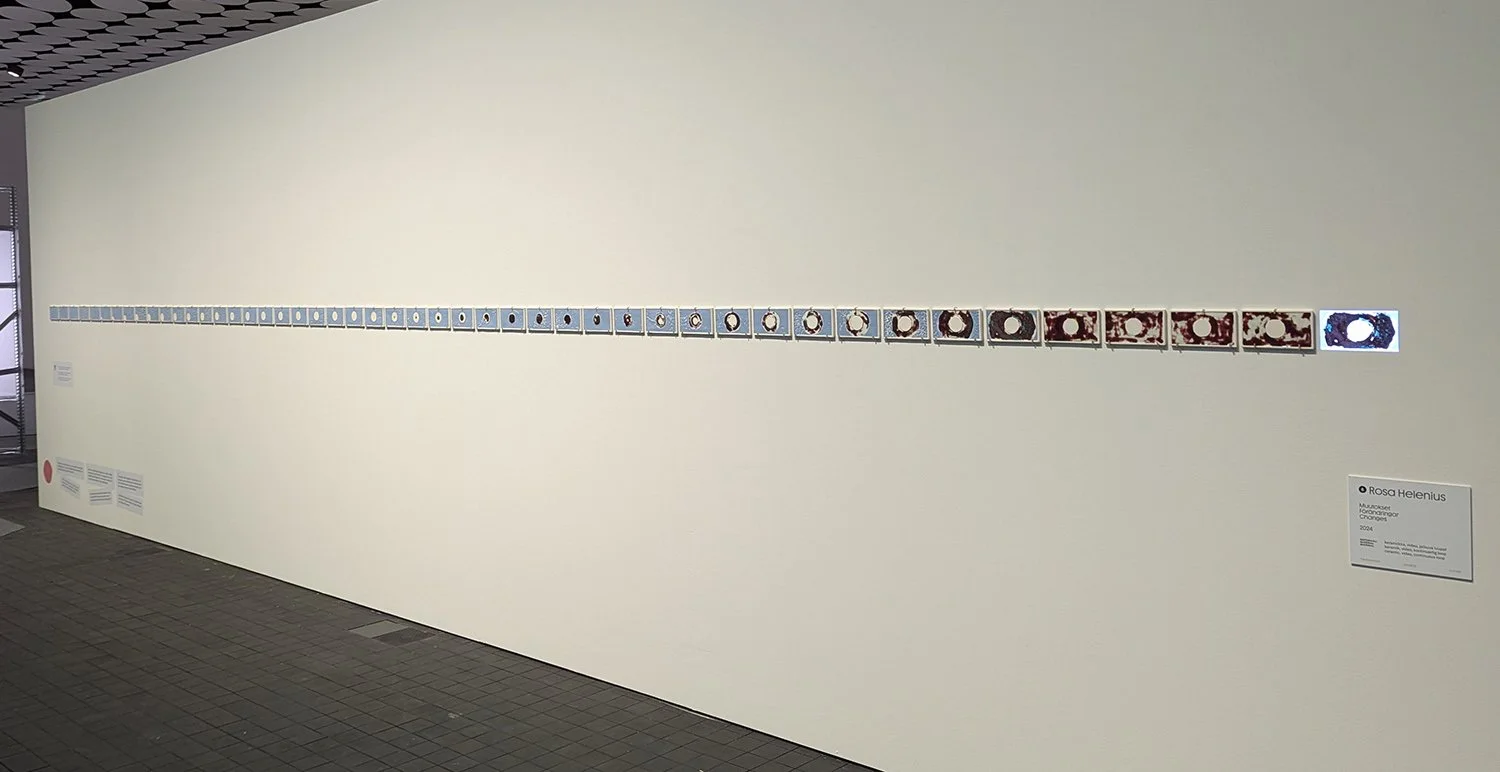
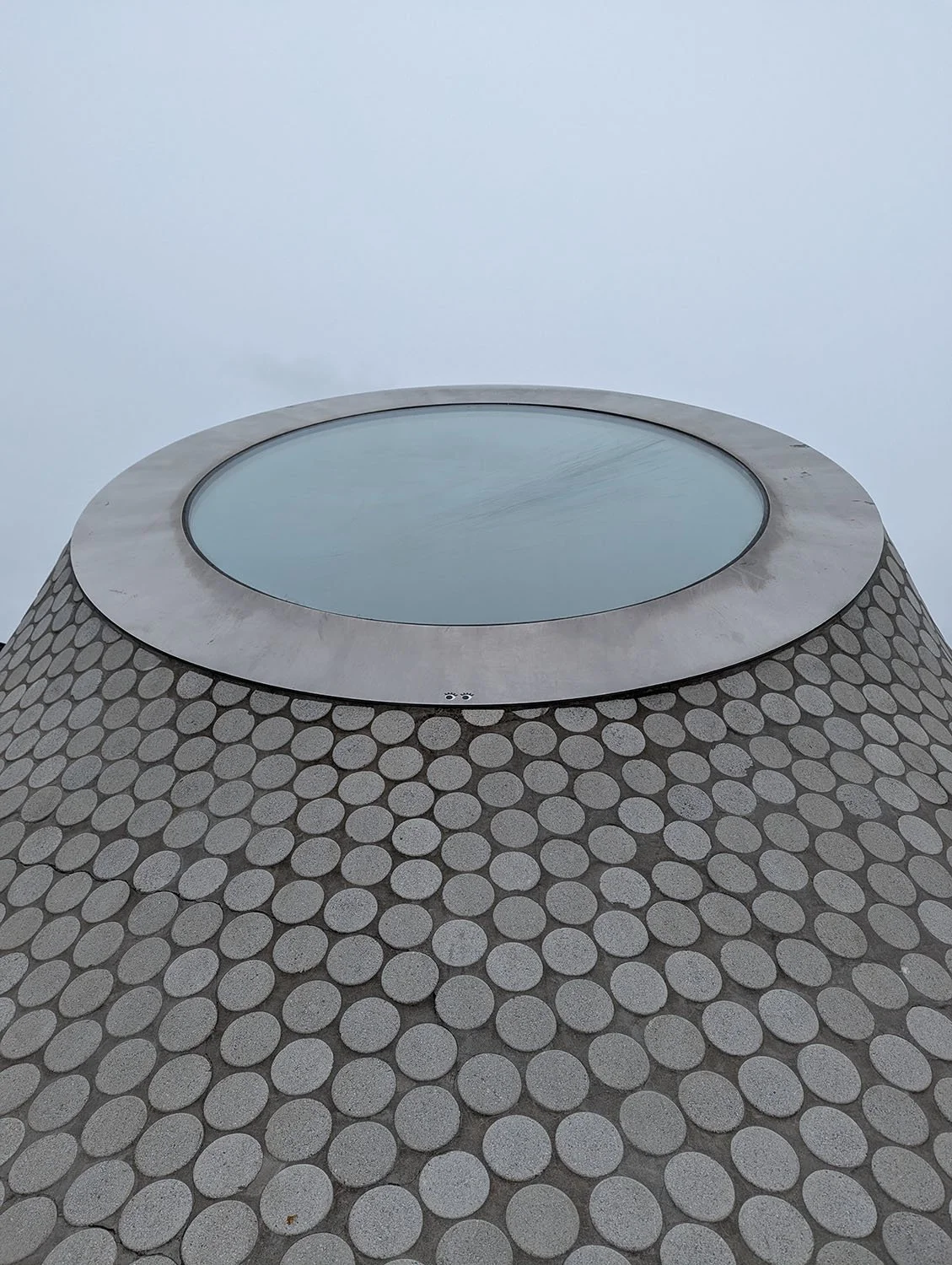
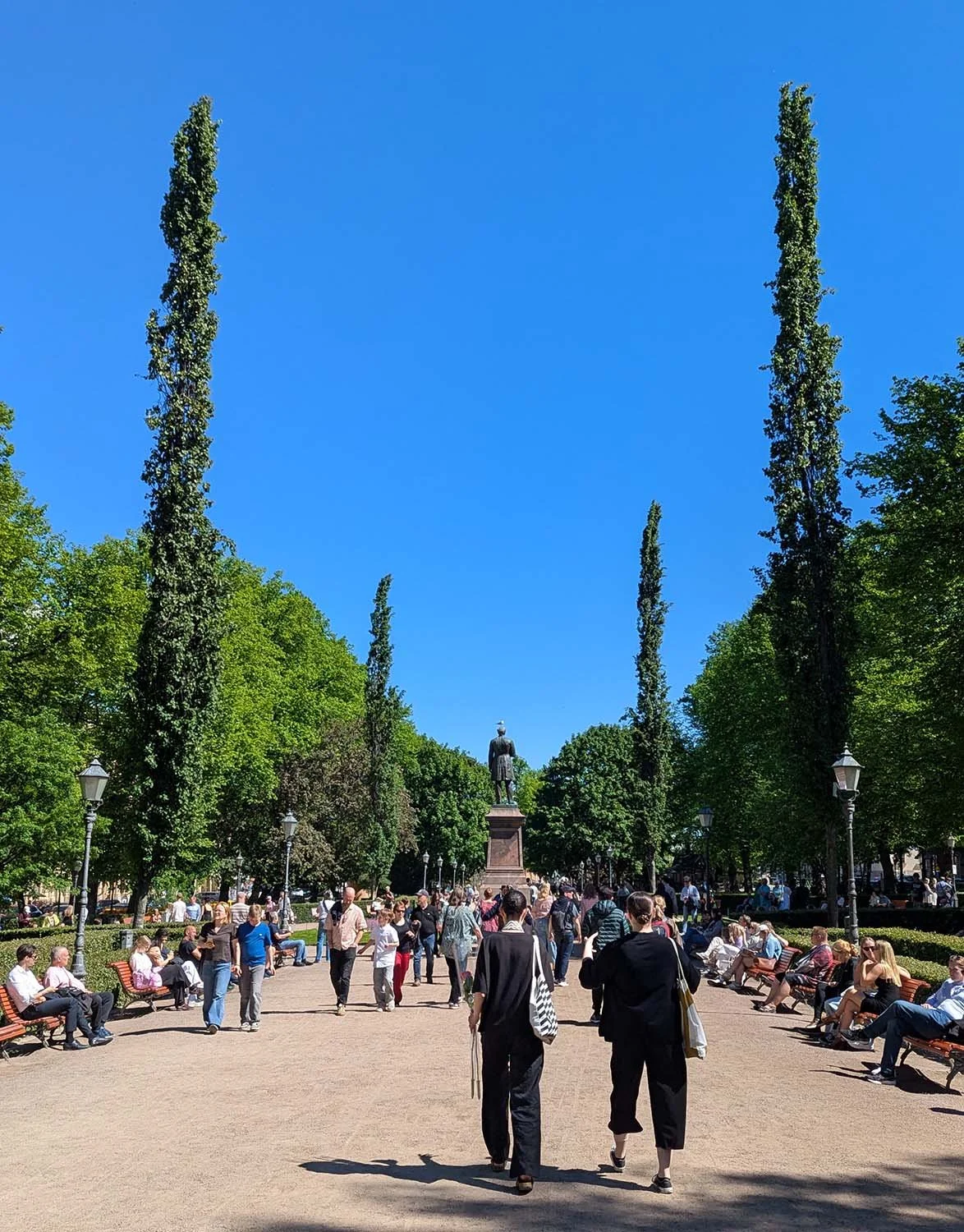
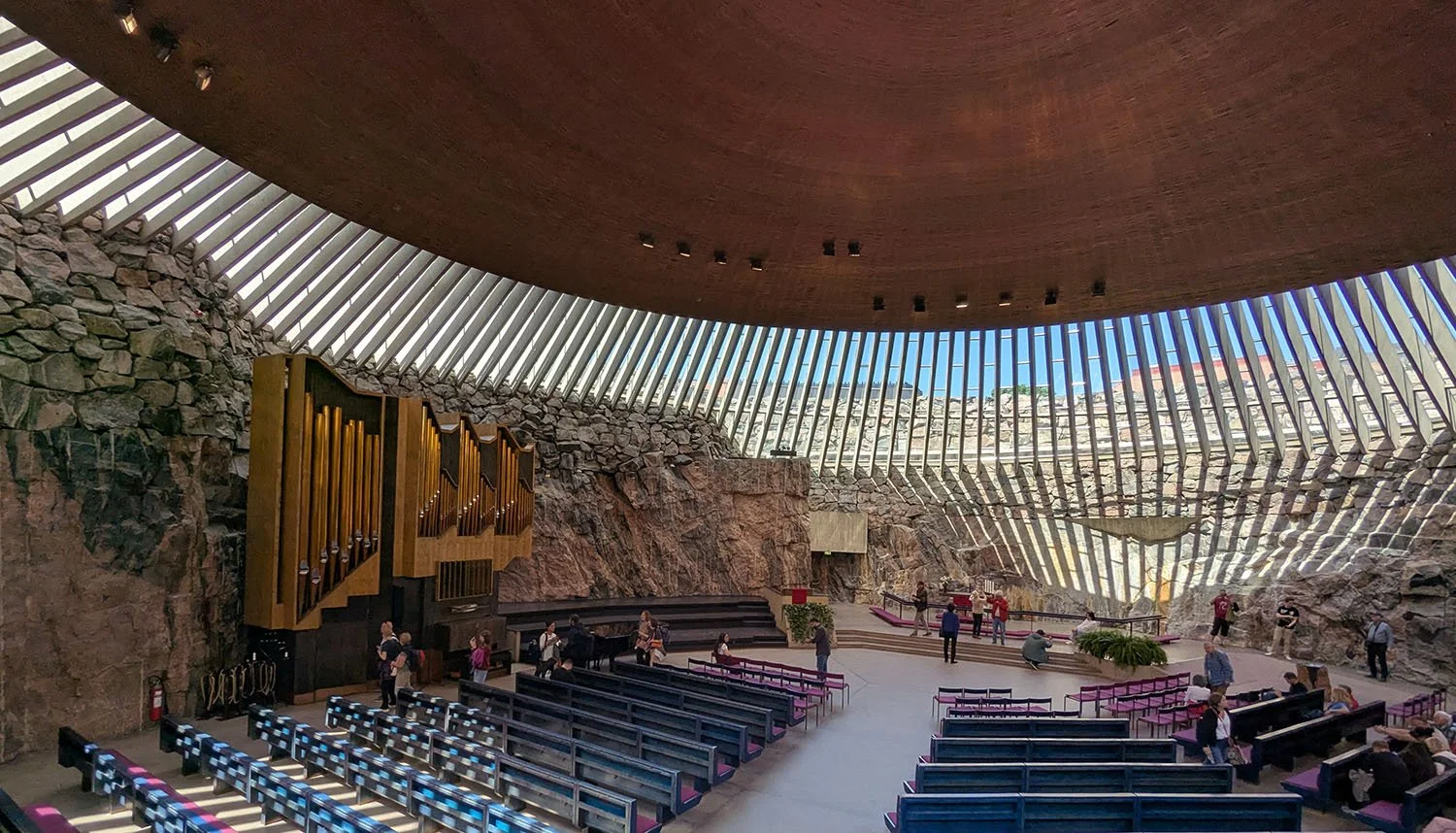
In Helsinki, I visited two different museums (the Architecture and Design Museum and Amos Rex), Temppeliaukio Church, and checked out Hietalahti flea market, Market Square, Old Market Hall), and the Design District. I was lucky enough to get to visit Amos Rex with a former student of mine who was also in Helsinki, so that was quite cool! As I was seeing all the arts and crafts, I noted how much knitting, crocheting, fiber arts, fabrics, and fashion are a part of the design landscape here - particularly that of women. I decided I want to lean into that for my own artwork.

Some general takeaways from Helsinki - the downtown and all associated destinations felt more contained and smaller than I anticipated. There is pretty clearly a decent vegan and vegetarian scene. The tram system is really nice. For whatever reason, Helsinki is like Japan wherein they give you the smallest of cups even for water, so you have to ask for refills constantly. Or you just outright have to pay for water, and even then it’s a tiny bottle. I much prefer the US’s large glass of free tap water approach.

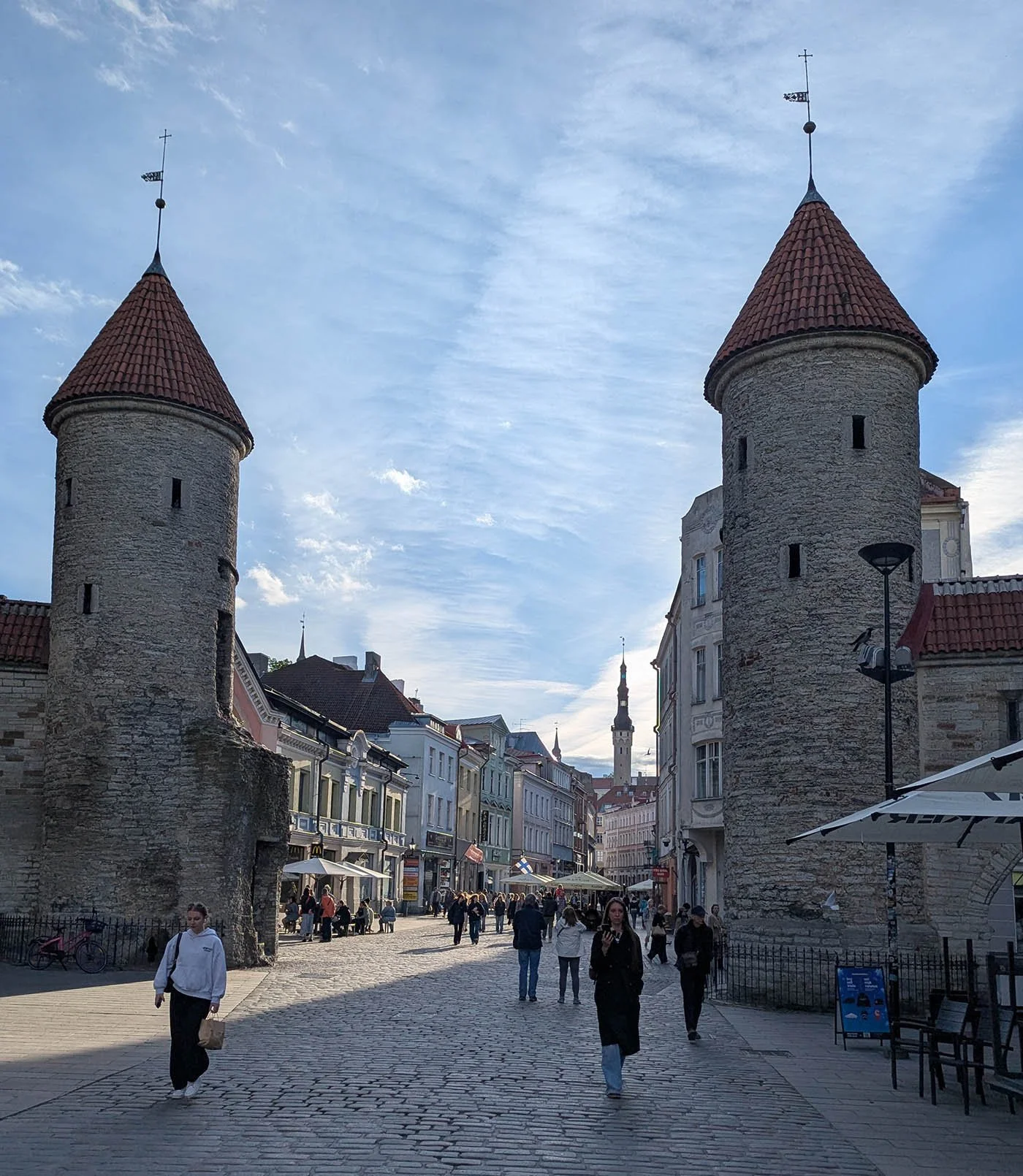
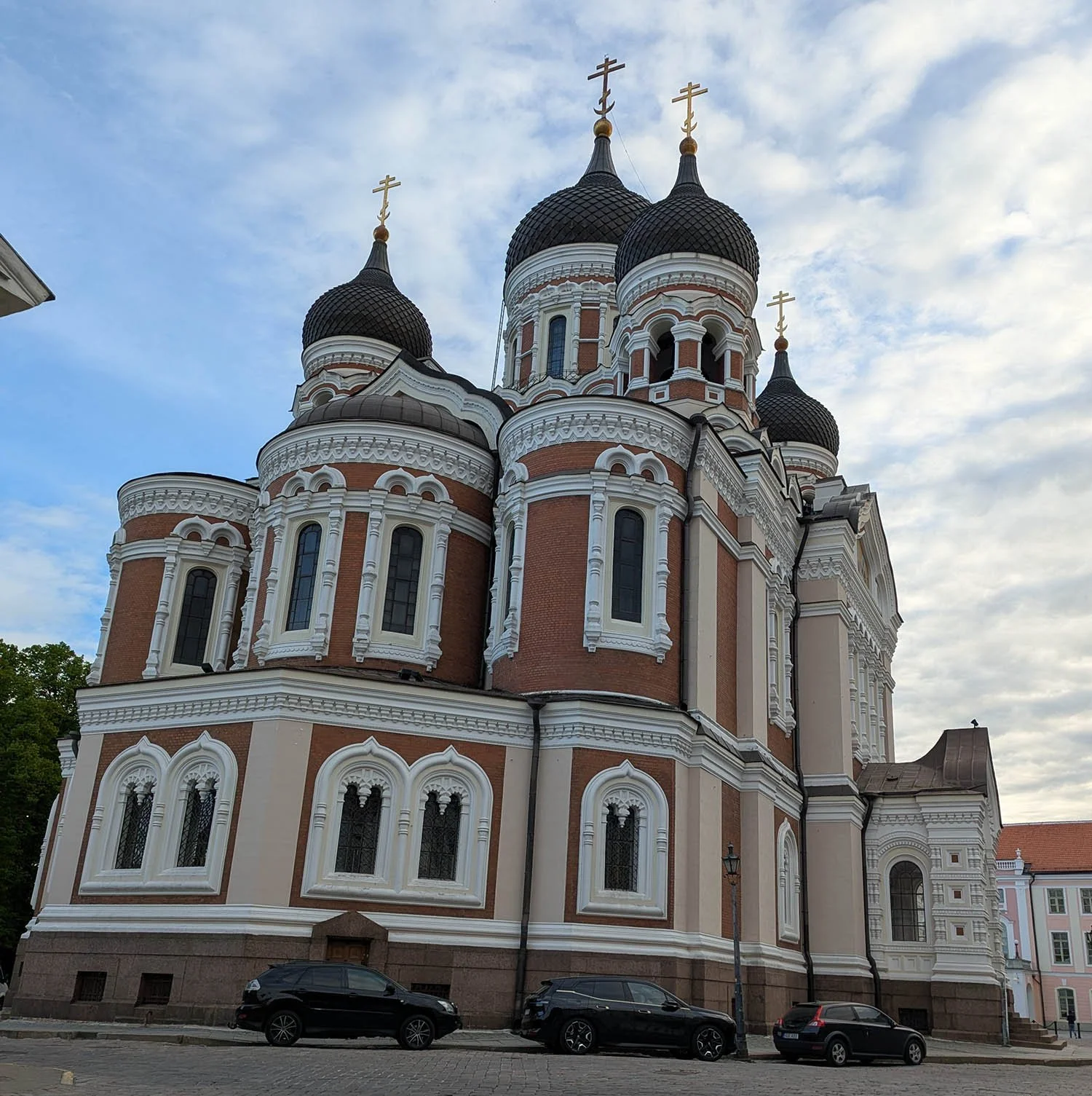
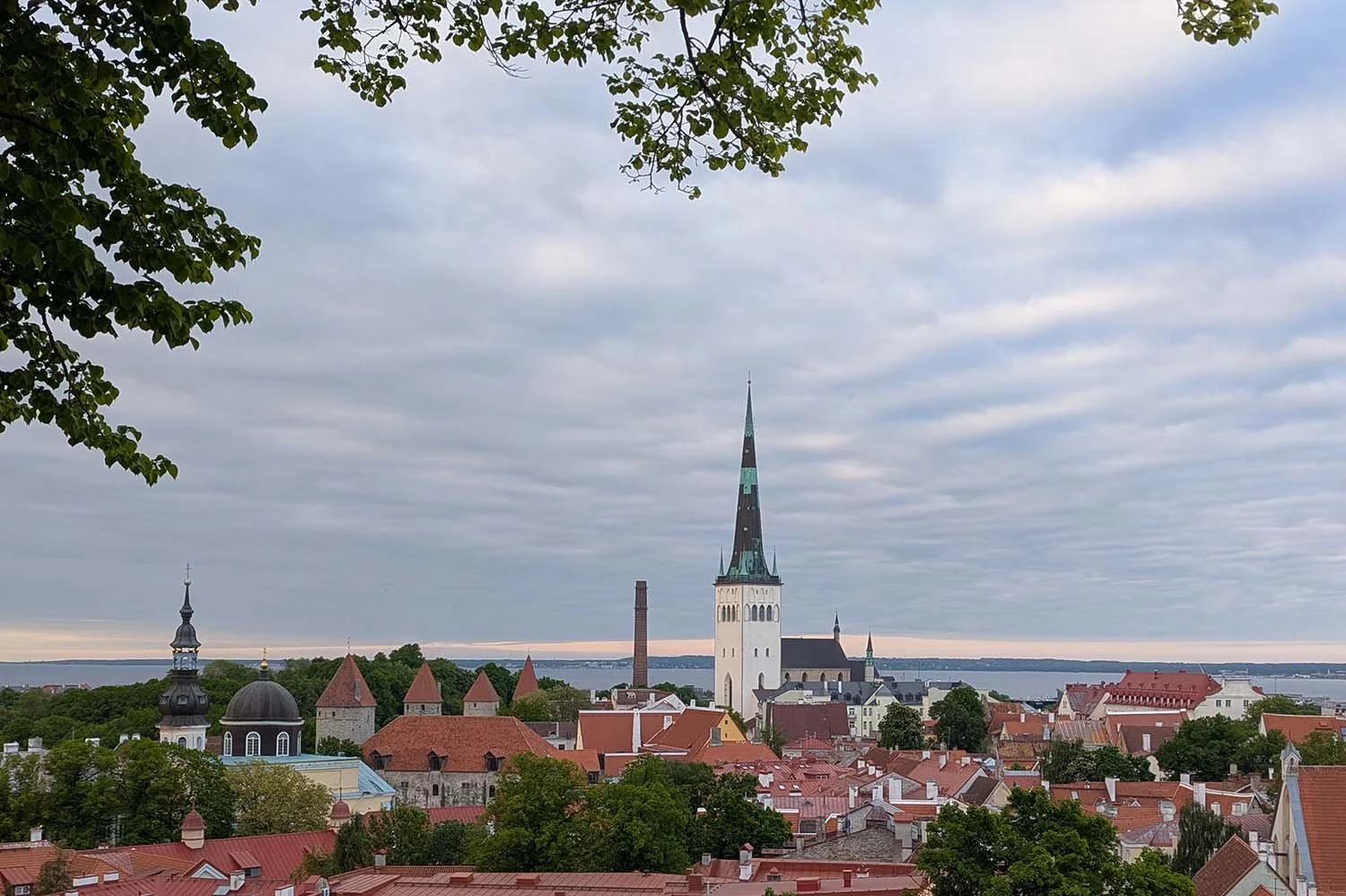
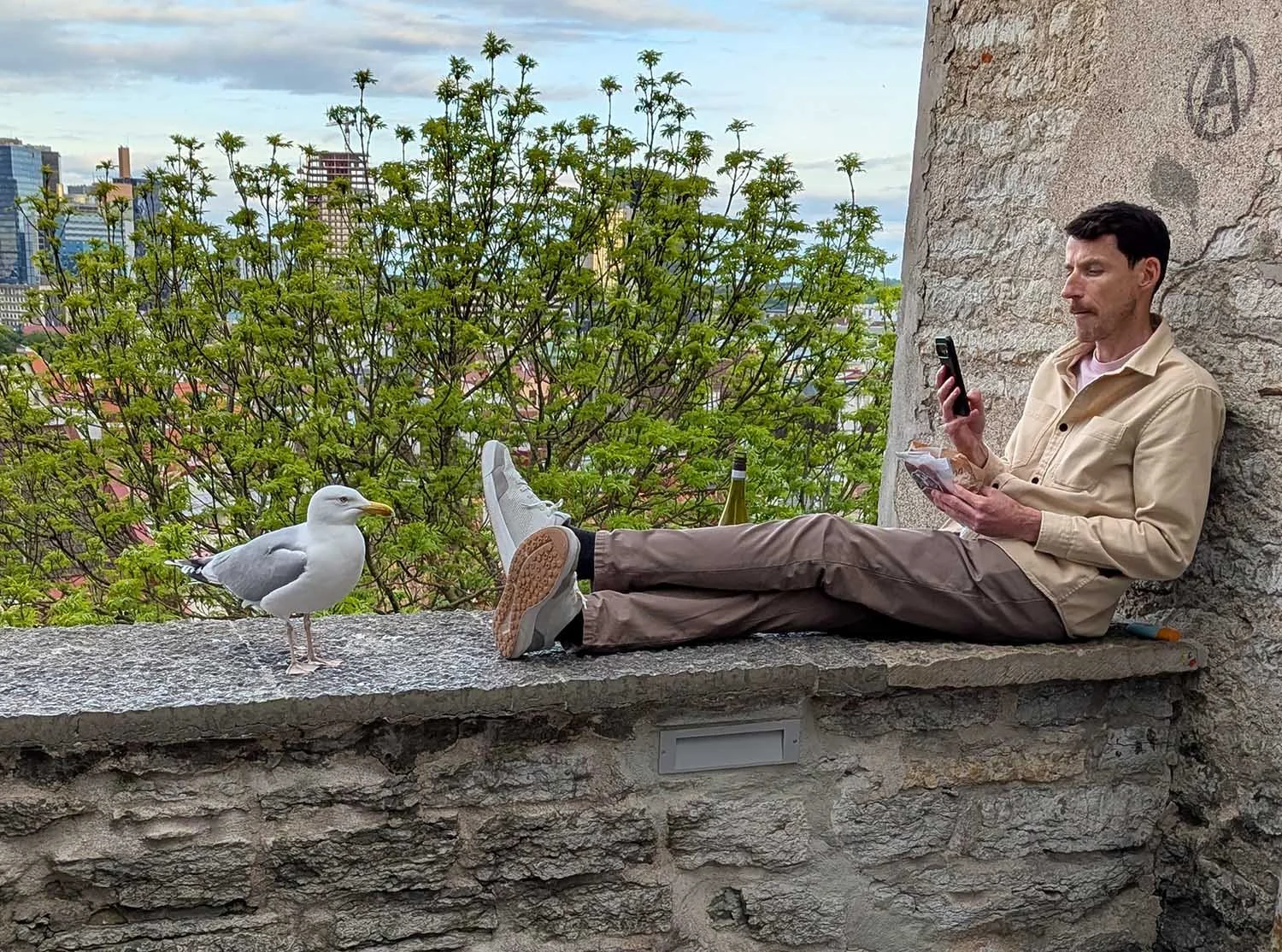
After I was done touring Helsinki, I took the Tallink ferry down from Helsinki to Tallinn, Estonia. The ferry was absolutely enormous, and fortunately it did not set off any significant motion sickness. Once in Tallinn, I hauled my luggage from the port terminal to my hotel and set off on an evening walking loop of the Old Town. Note the seagull-man standoff; they were arguing about whose dinner it was that the man was trying to consume.

The next morning, I headed to Karnaluks OÜ to check out fabric and ribbon options, and had lunch in Tallinn before catching a bus down to Pärnu. After I arrived, I met with the residency directors Taje Tross and Al Paldrok, and they showed me the ins and outs of the residency and nearby neighborhood. I popped out to grab some groceries and then met up for dinner with Marko Poolamets, a Renaissance man. Amongst his many professions, he serves as a nature photographer and tour guide; I had booked the next day with him and his gear. He is also a university professor of marketing, an oral history interviewer, sits on the board of two museums, does environmental science work…

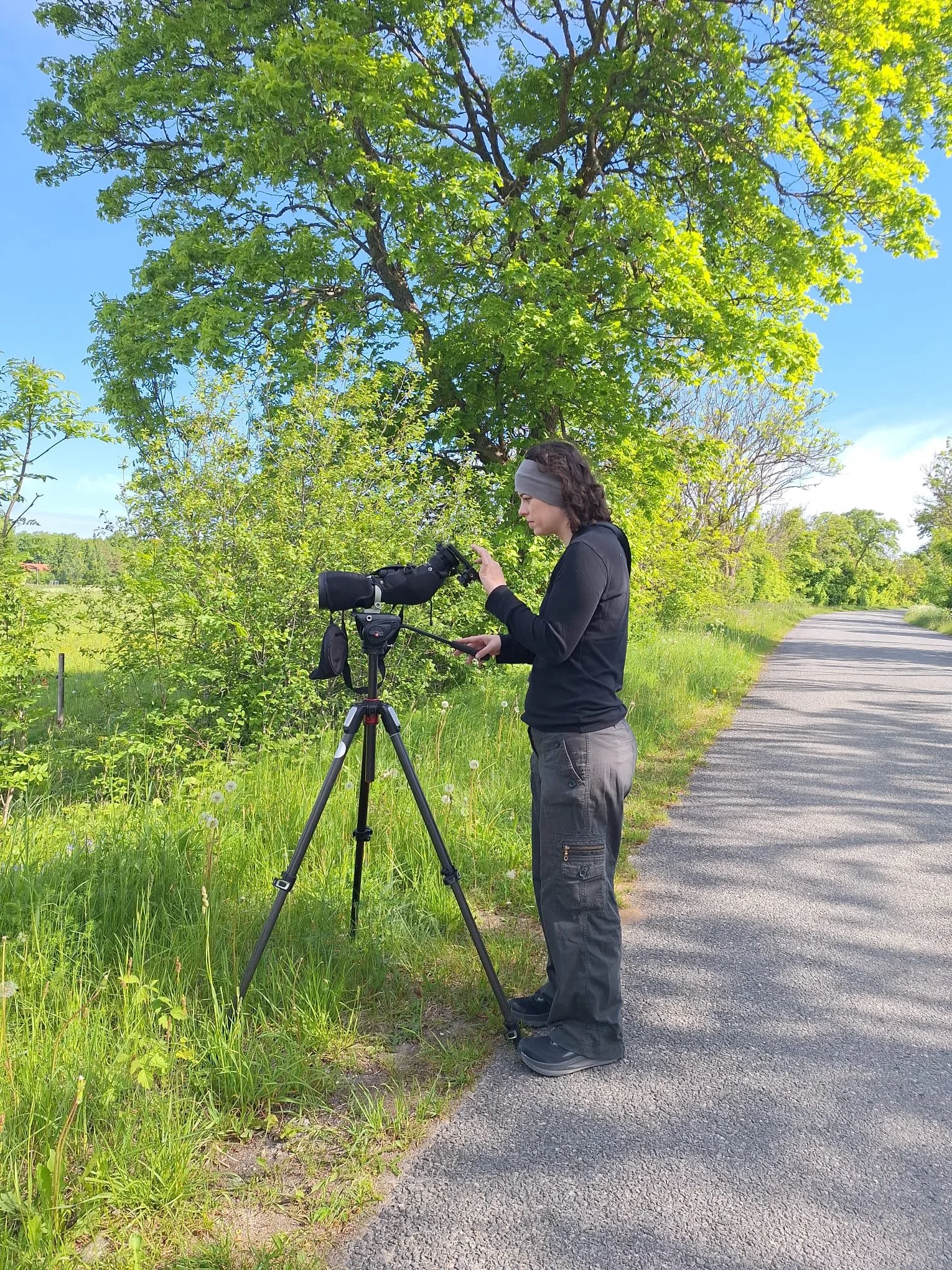
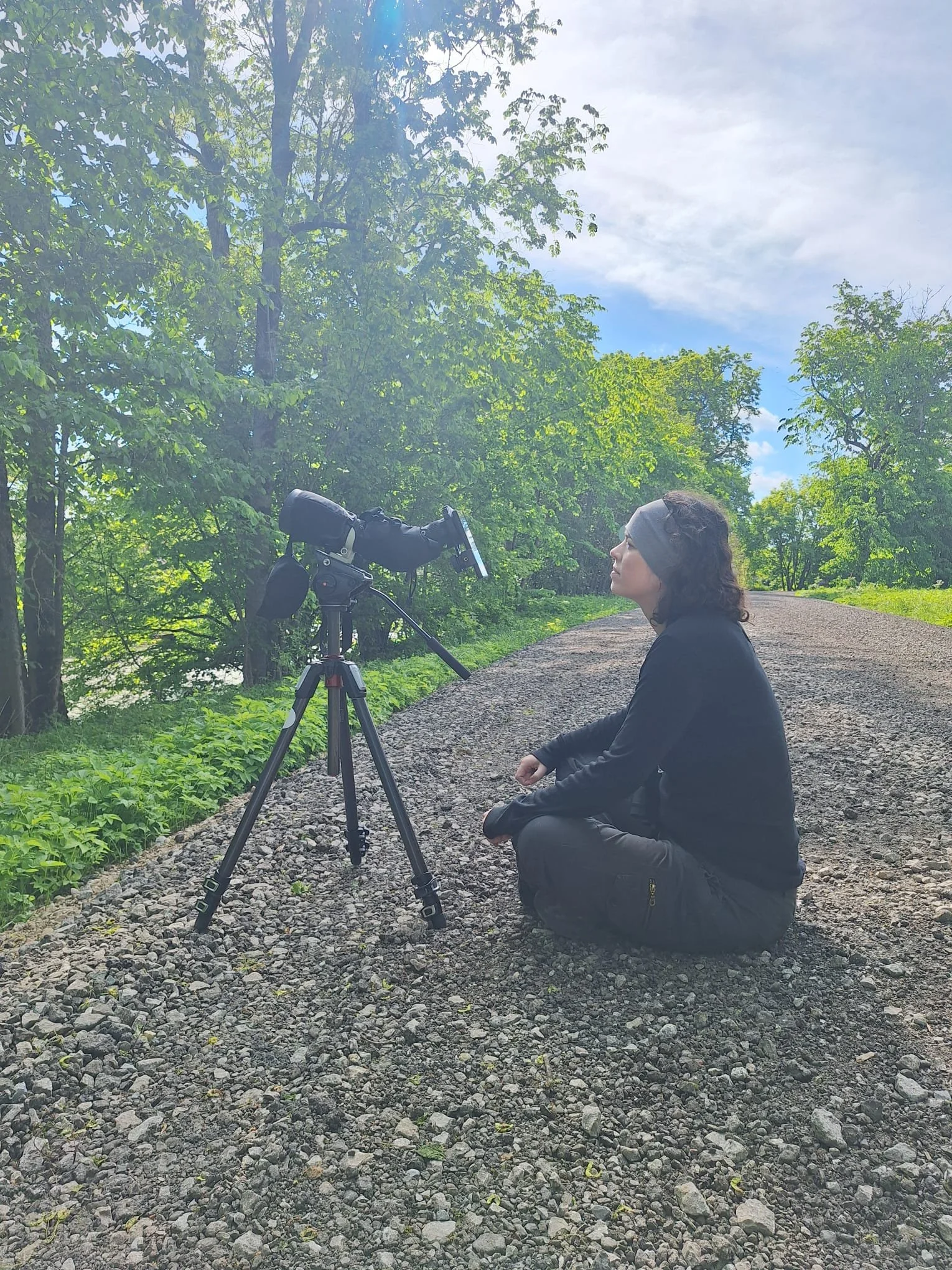
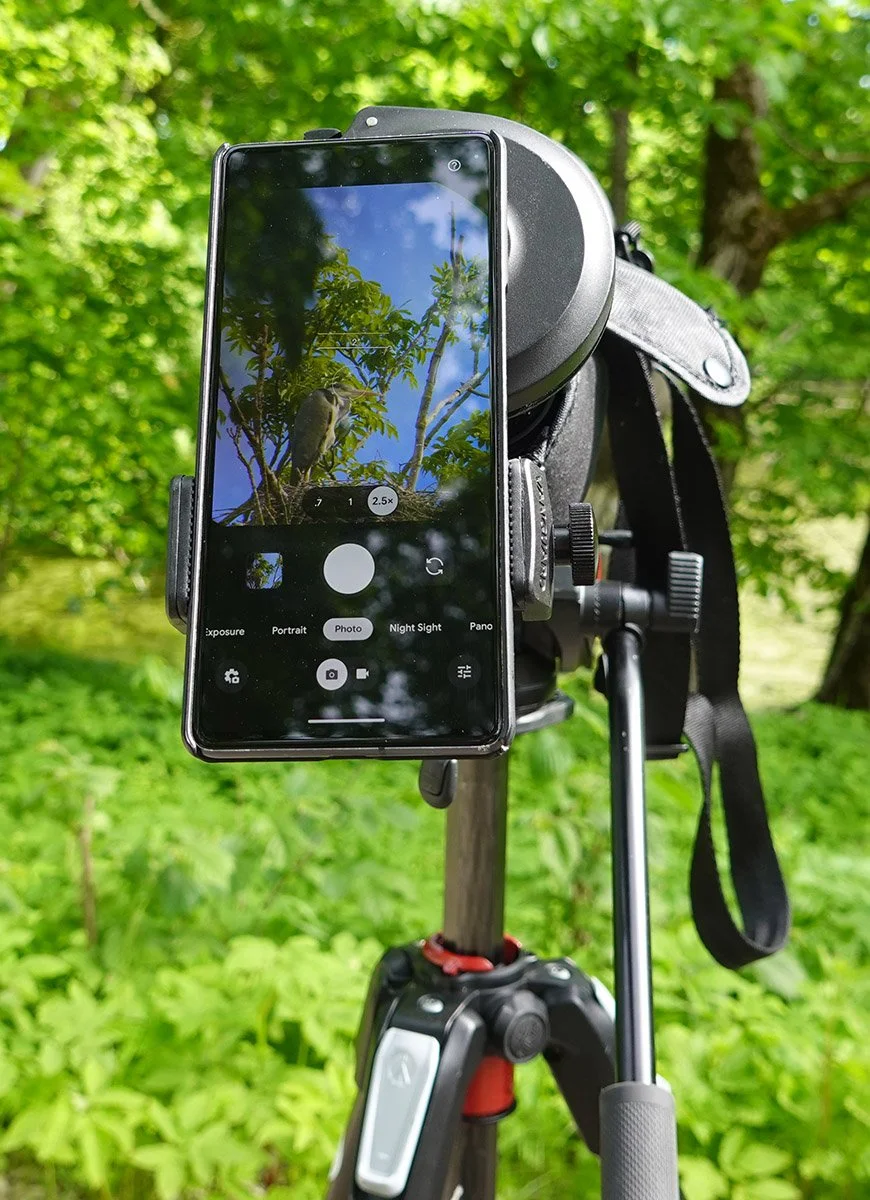
The next morning, Marko and I woke up quite early and went out for a long, delightful day of mostly birding (we were open to other species too, but the birds are plentiful here!). It was lovely to work with him and to get to borrow his gear, including his spotting scope with phone attachment. We spent a full twelve hours touring around a chunk of western Estonia including Matsalu and Haapsalu.

Then the rest of that first week I spent in the studio!