Loovlinnak Creative City Artist Residency

New Artwork: Surveillance

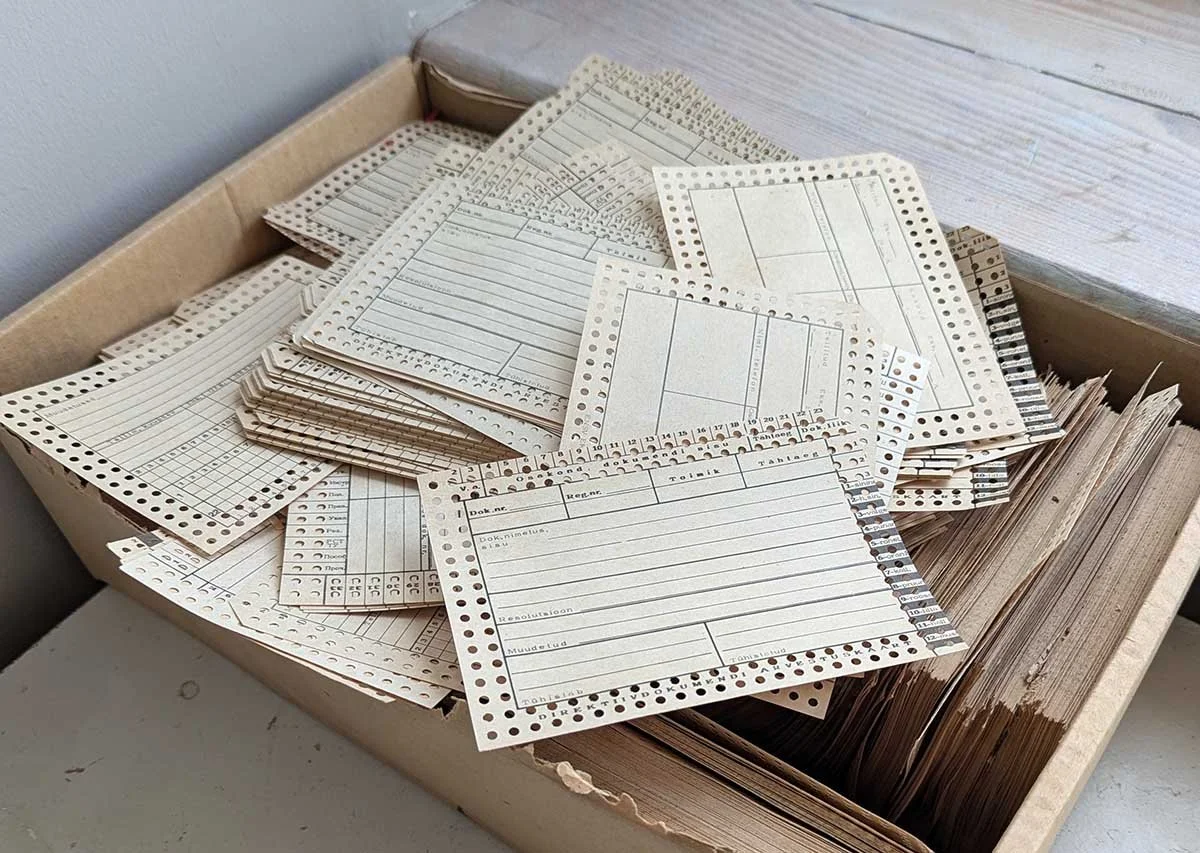
I took a departure from my textile mixed-media paintings for this piece. When I arrived at Loovlinnak Creative City Artist Residency, directors Al Padrok and Taje Tross generously gave me access to their tools and supplies, including several stacks of paper. Most of it was unremarkable: construction paper, printer paper, and graph paper. But one small stack caught my eye immediately. I could tell it was old and somehow related to typewriters or early computers, and when I asked, I learned it dated to the Soviet occupation. I adopted all of it, just four sheets, one of which had some math scribbled across it in pen.

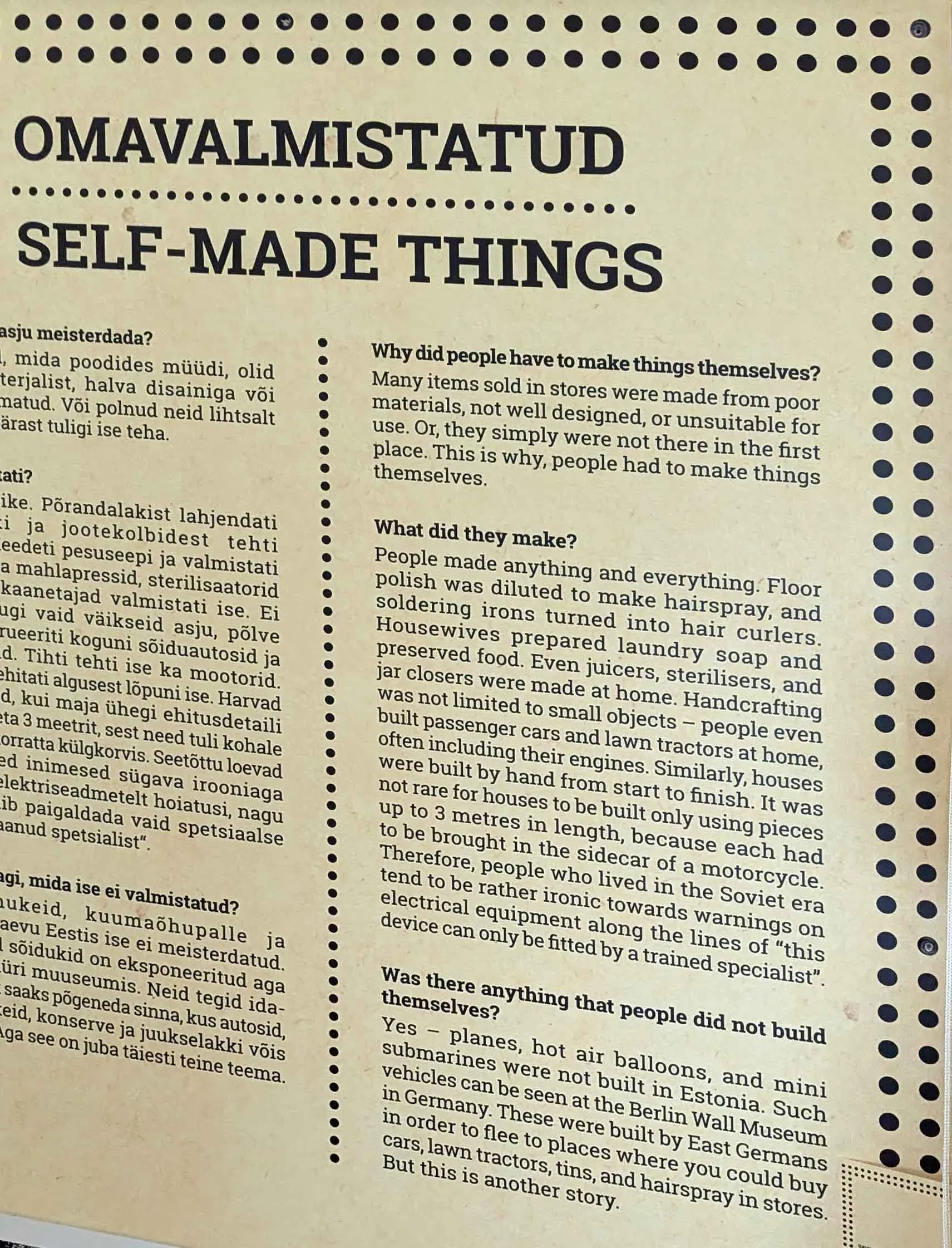
Research revealed that it is Soviet-era perfokaart: stiff punch cards with holes in specific positions that fed instructions and data into mainframe computers before modern digital storage existed. From the 1970s through the 1980s, Soviet-bloc computing relied heavily on this technology, running the economic planning, industrial control, and record-keeping systems of the USSR, including in occupied Estonia.

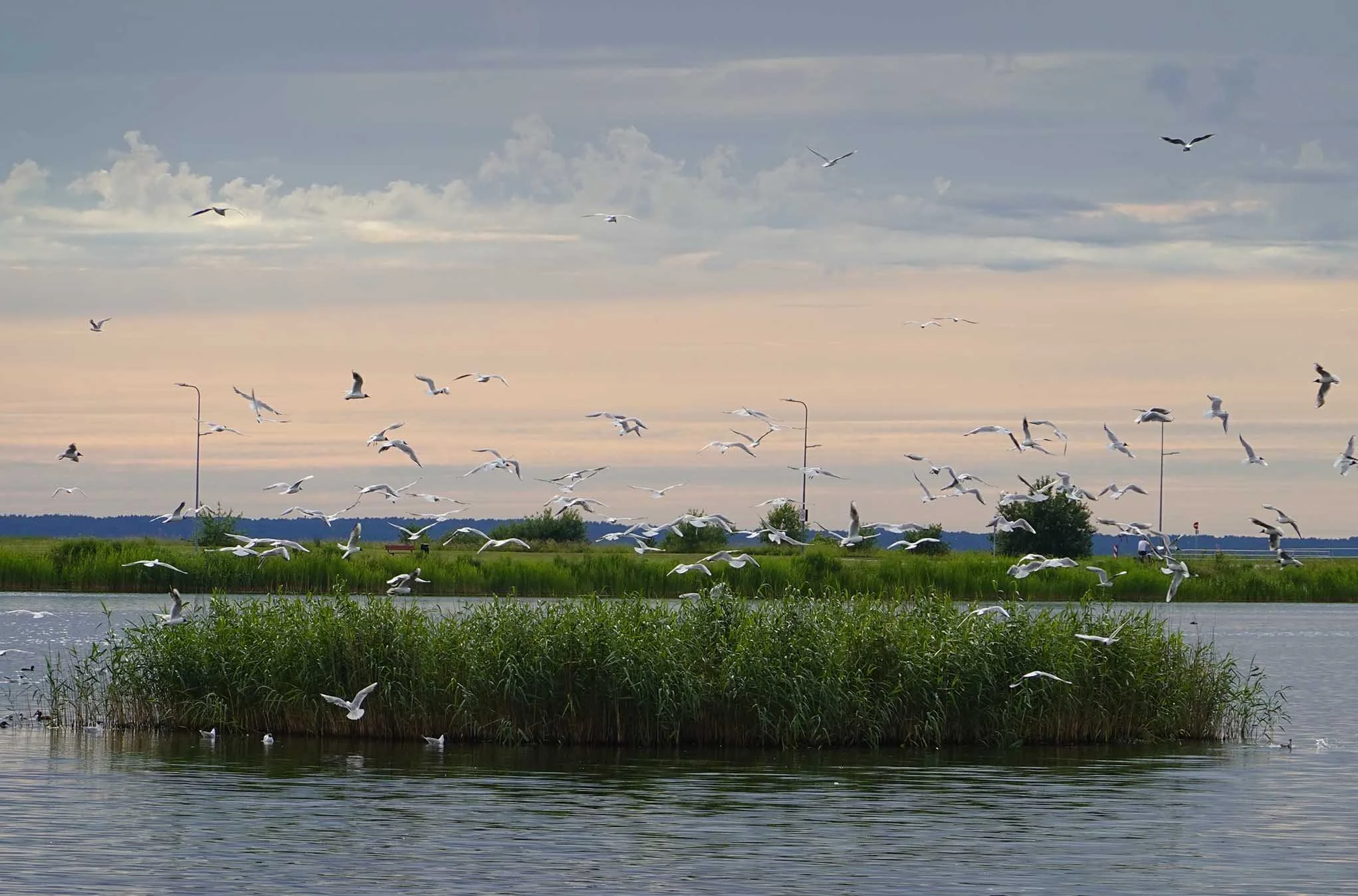
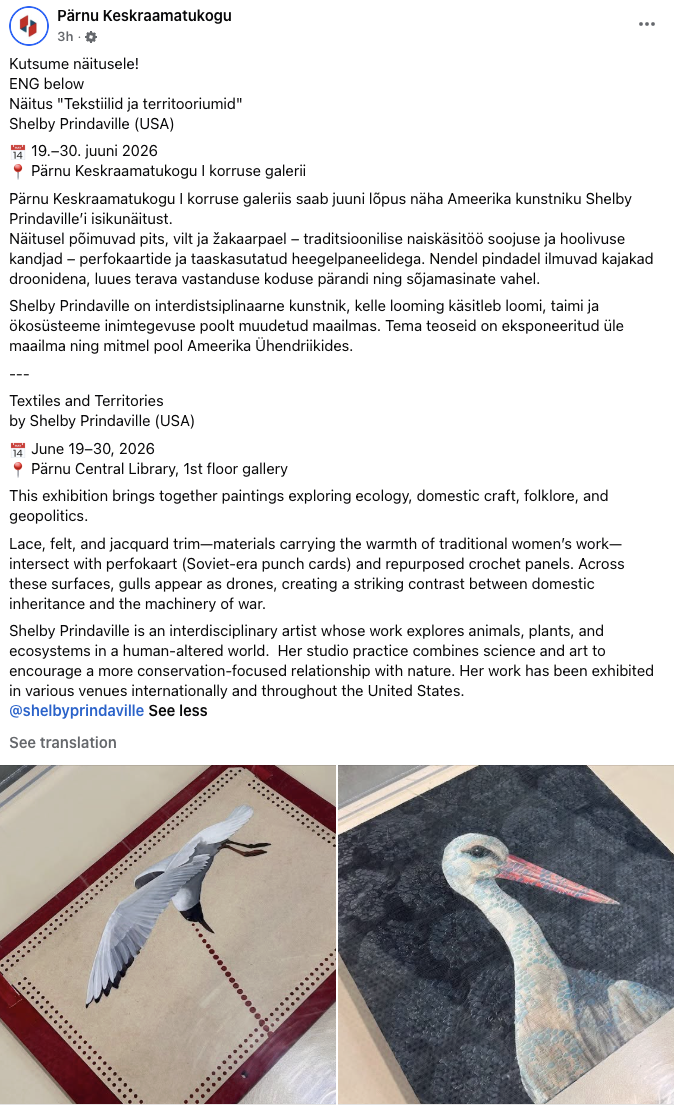
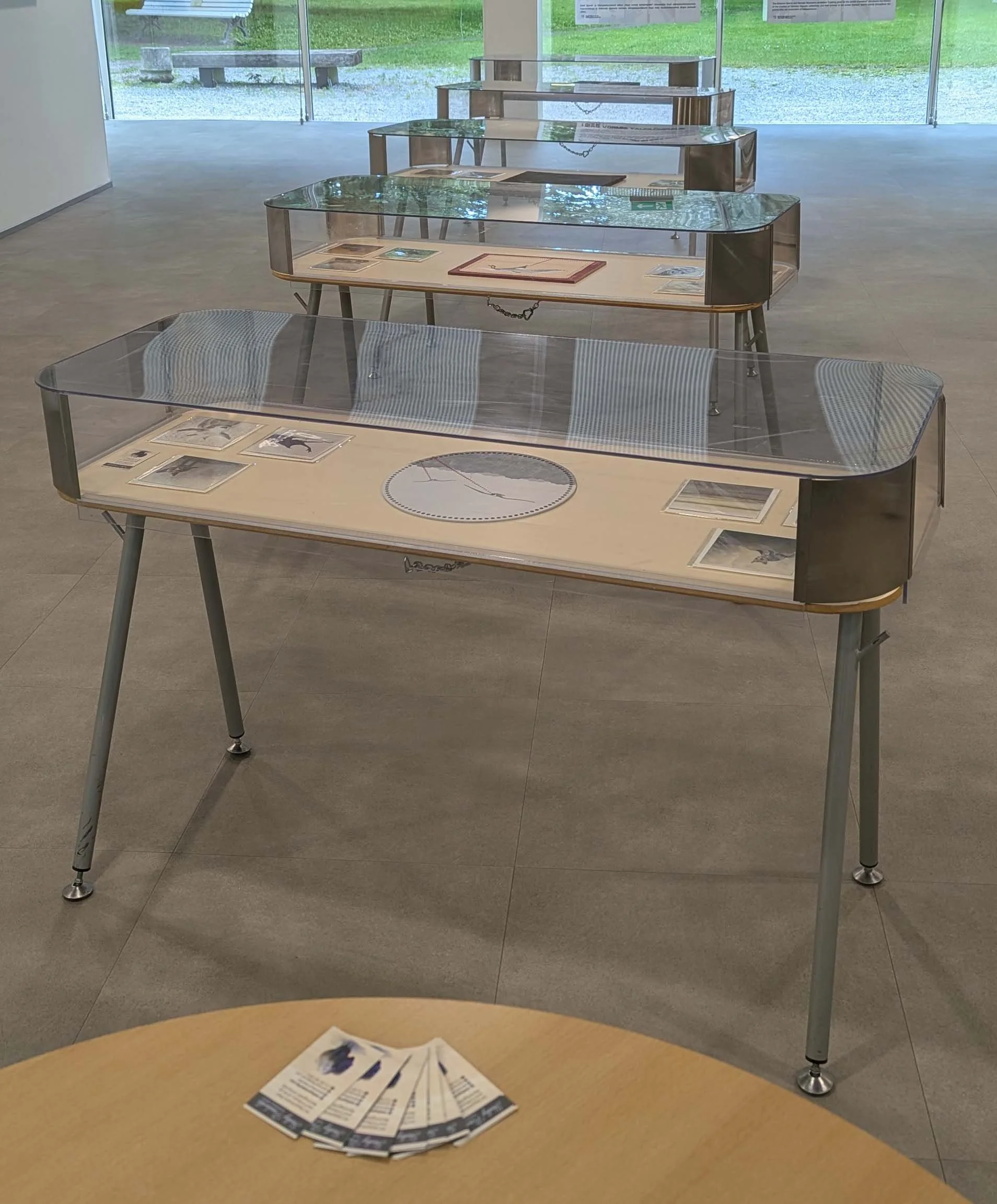
I'd already been planning work that referenced Soviet propaganda posters, so the cards were a natural substrate. I cast a black-headed gull (Chroicocephalus ridibundus) as a drone after photographing many of them in flight. The species' limited, high-contrast palette and missile-like profile suited the graphic style of Soviet propaganda posters.
I sketched a range of compositions that played off the perfokaart's holes and contours while keeping that propaganda energy, and landed on a gull flying high, firing a dotted laser beam down into the punched border. I used the scribbled-on card as a stencil for the laser dots.  I kept the first as-is, and then scaled the rest up so the beam widens from a point near the gull into an even band.

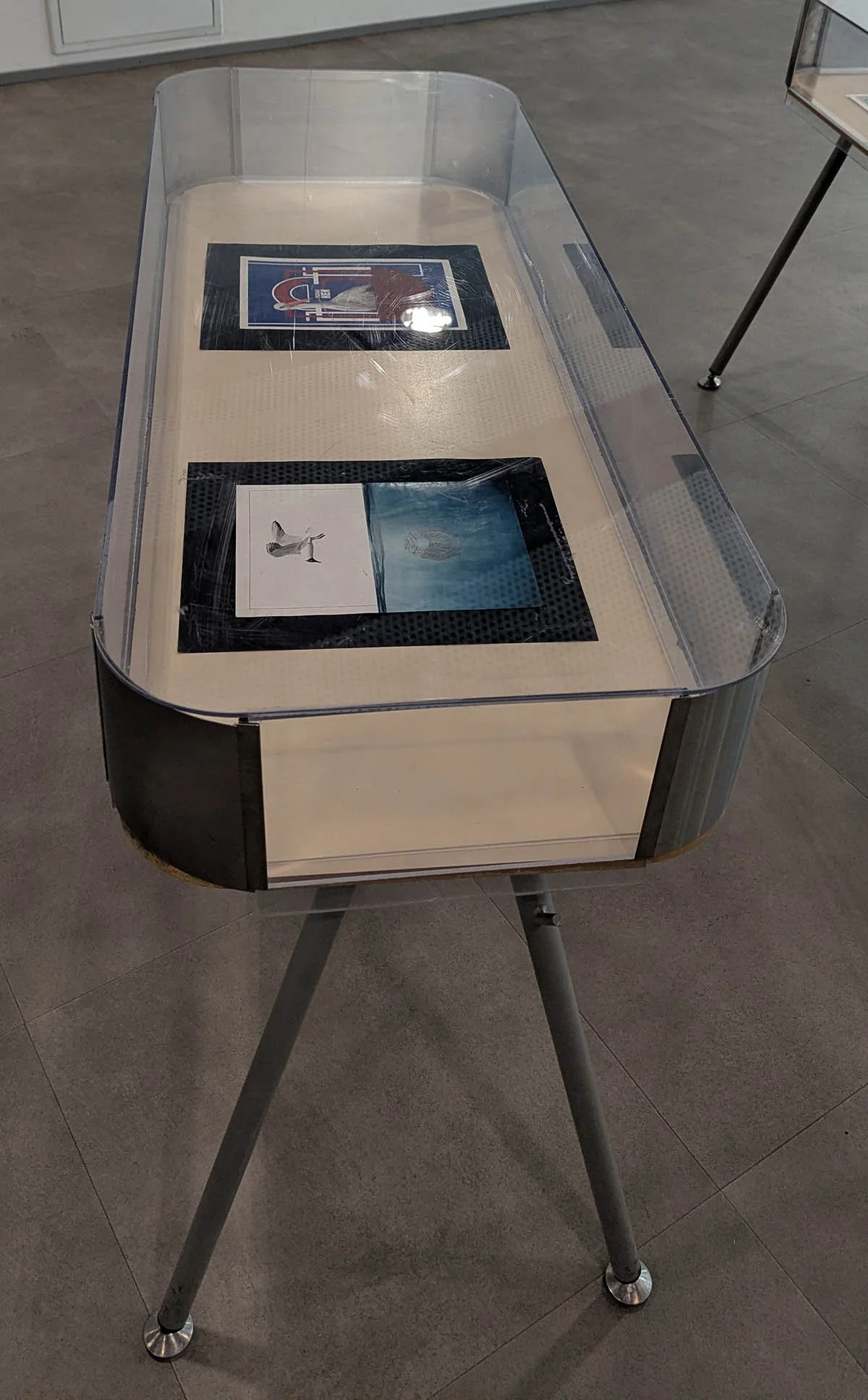
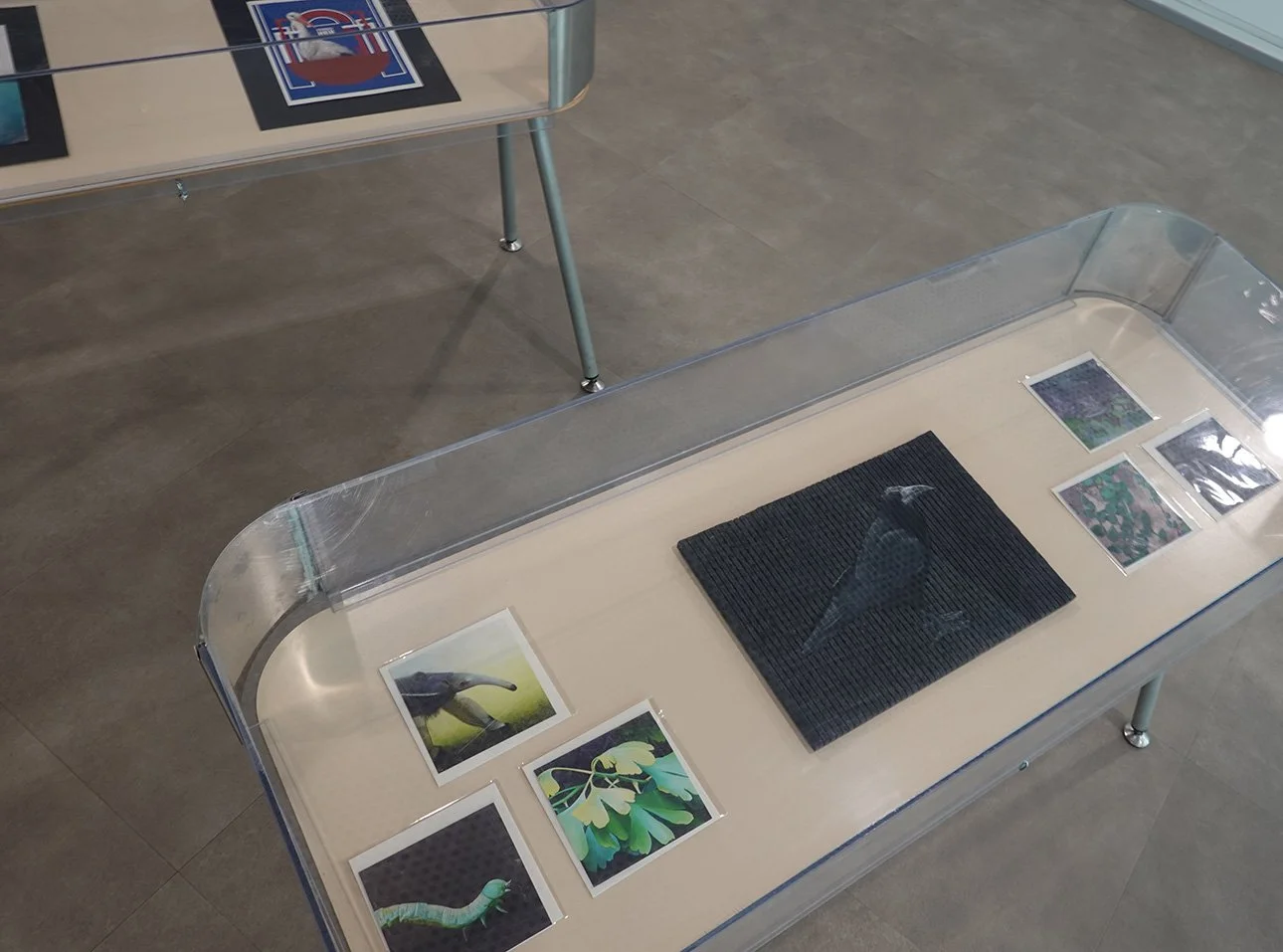
This is Surveillance, acrylic on Soviet-era perfokaart (punch card) c. 1978, 8.2x11.75”, 2026.

Shelby Prindaville's painting of a gull cast as a drone on Soviet-era perfokaart.

Pärnu

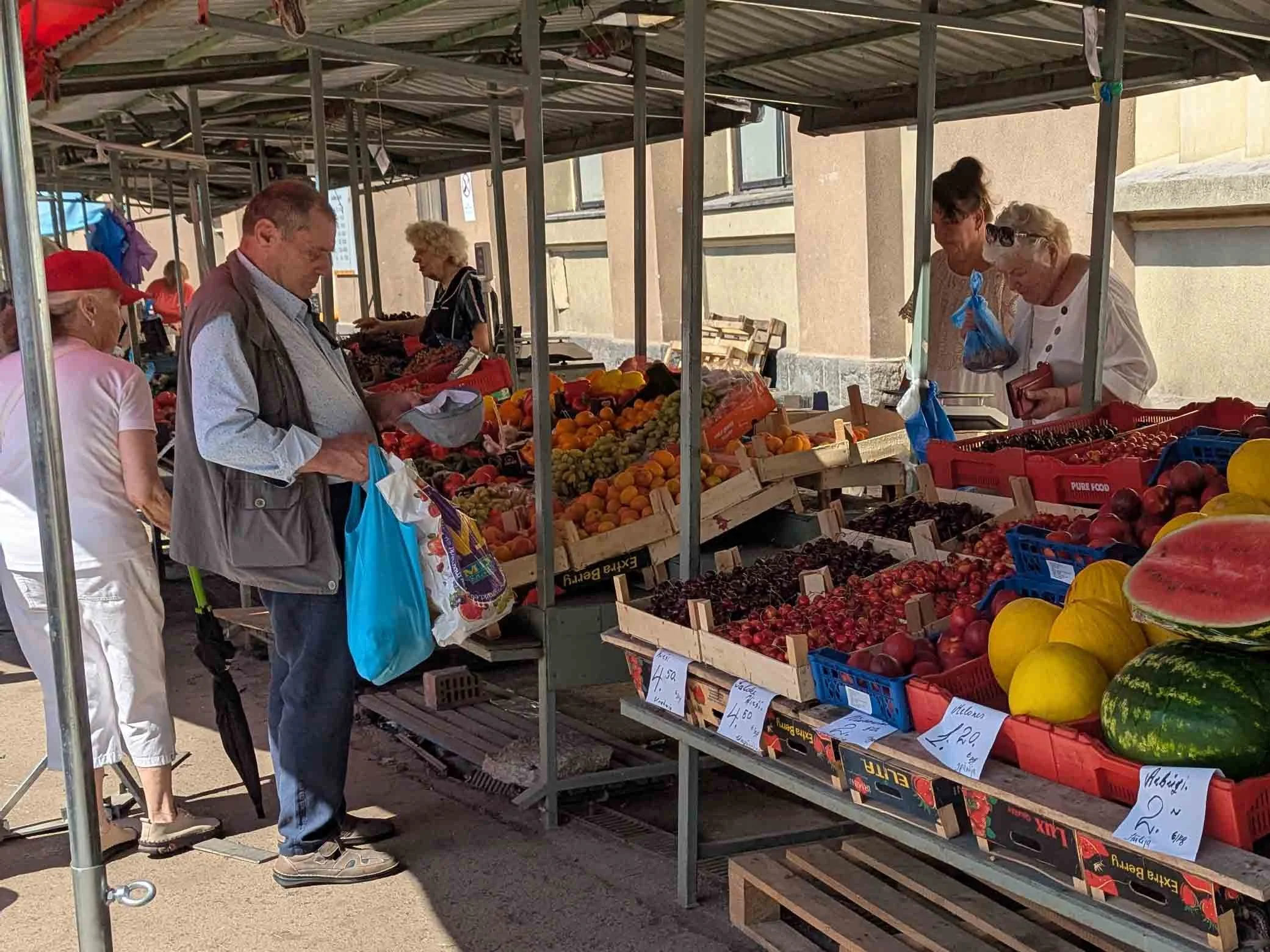
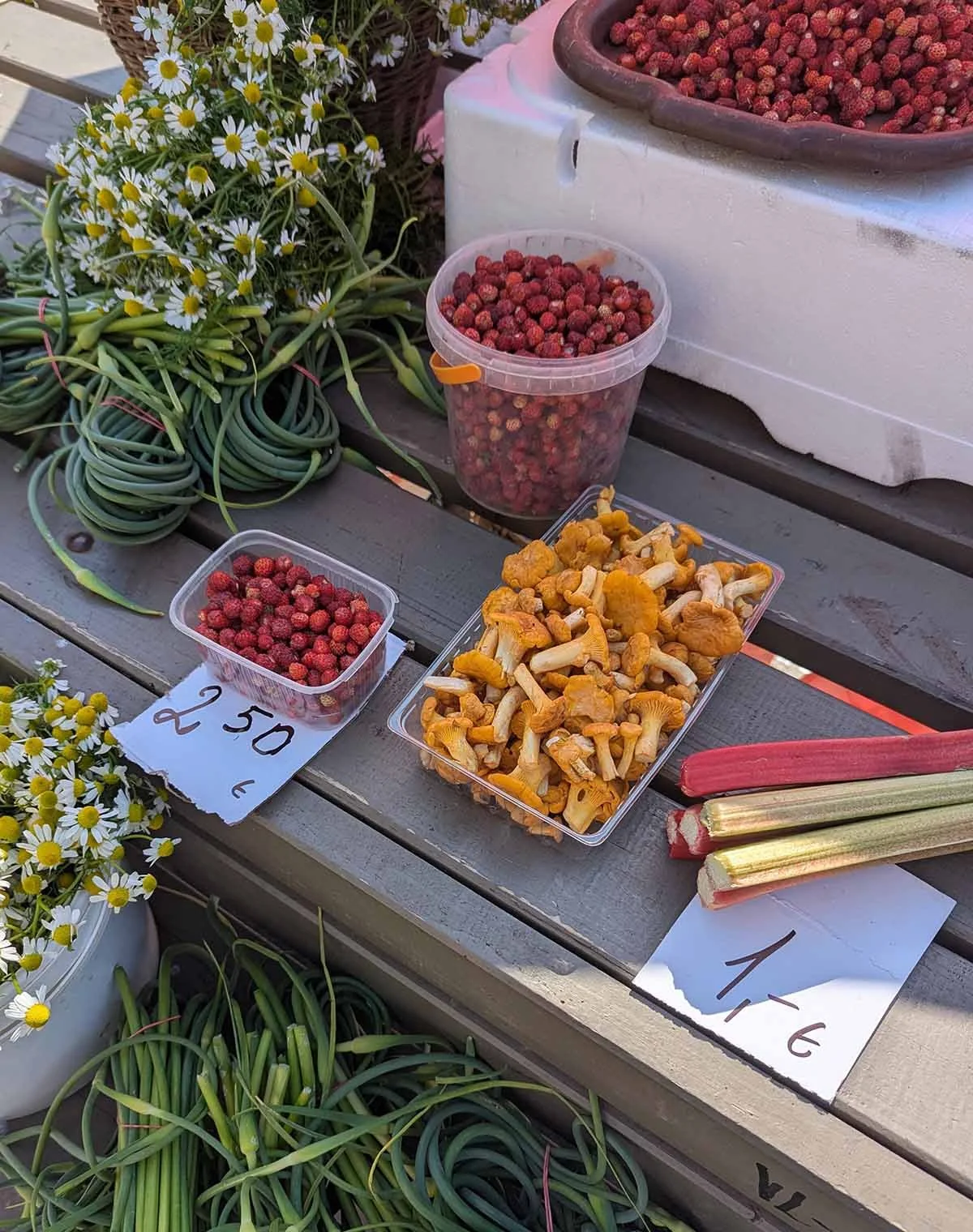
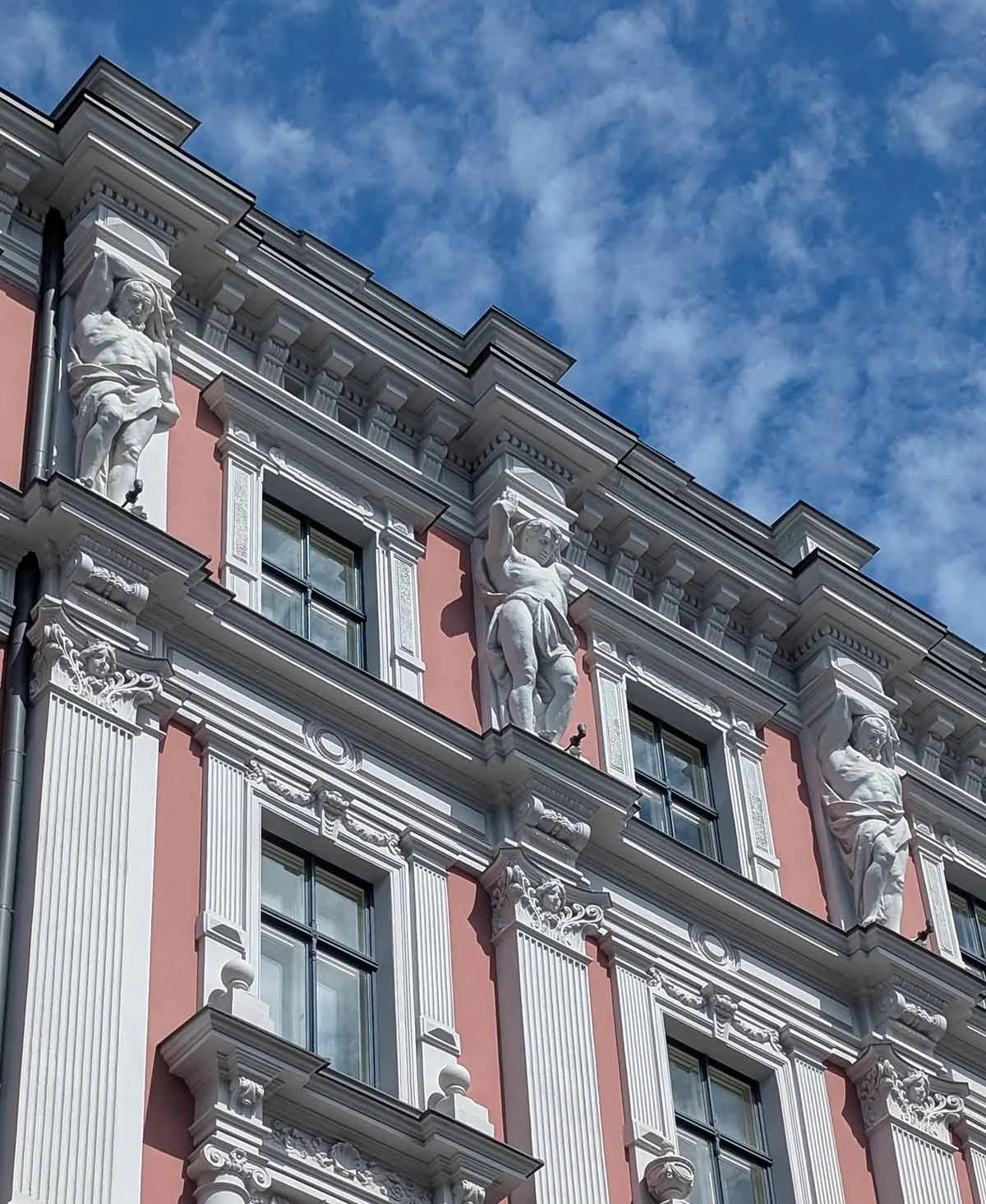
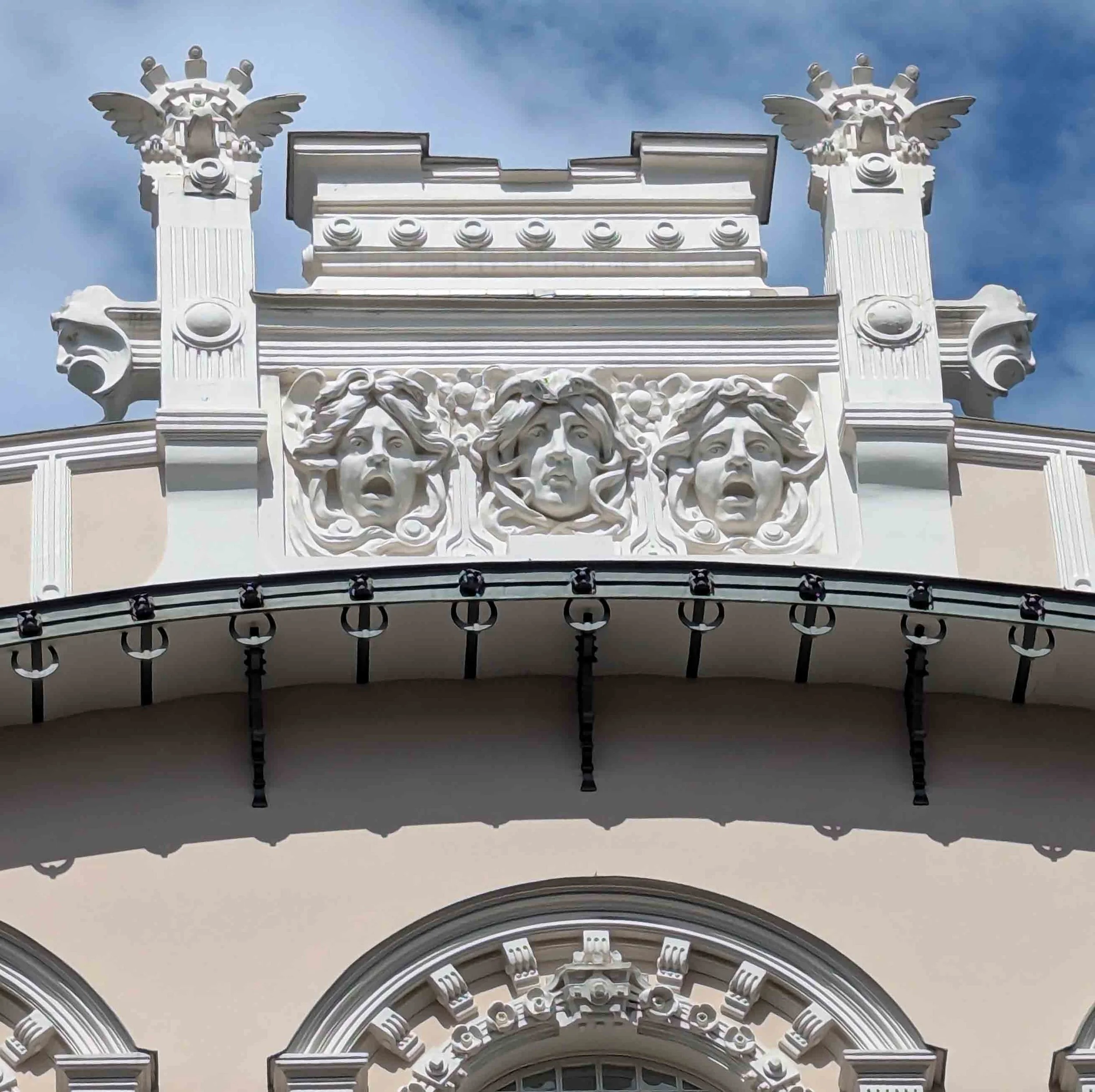
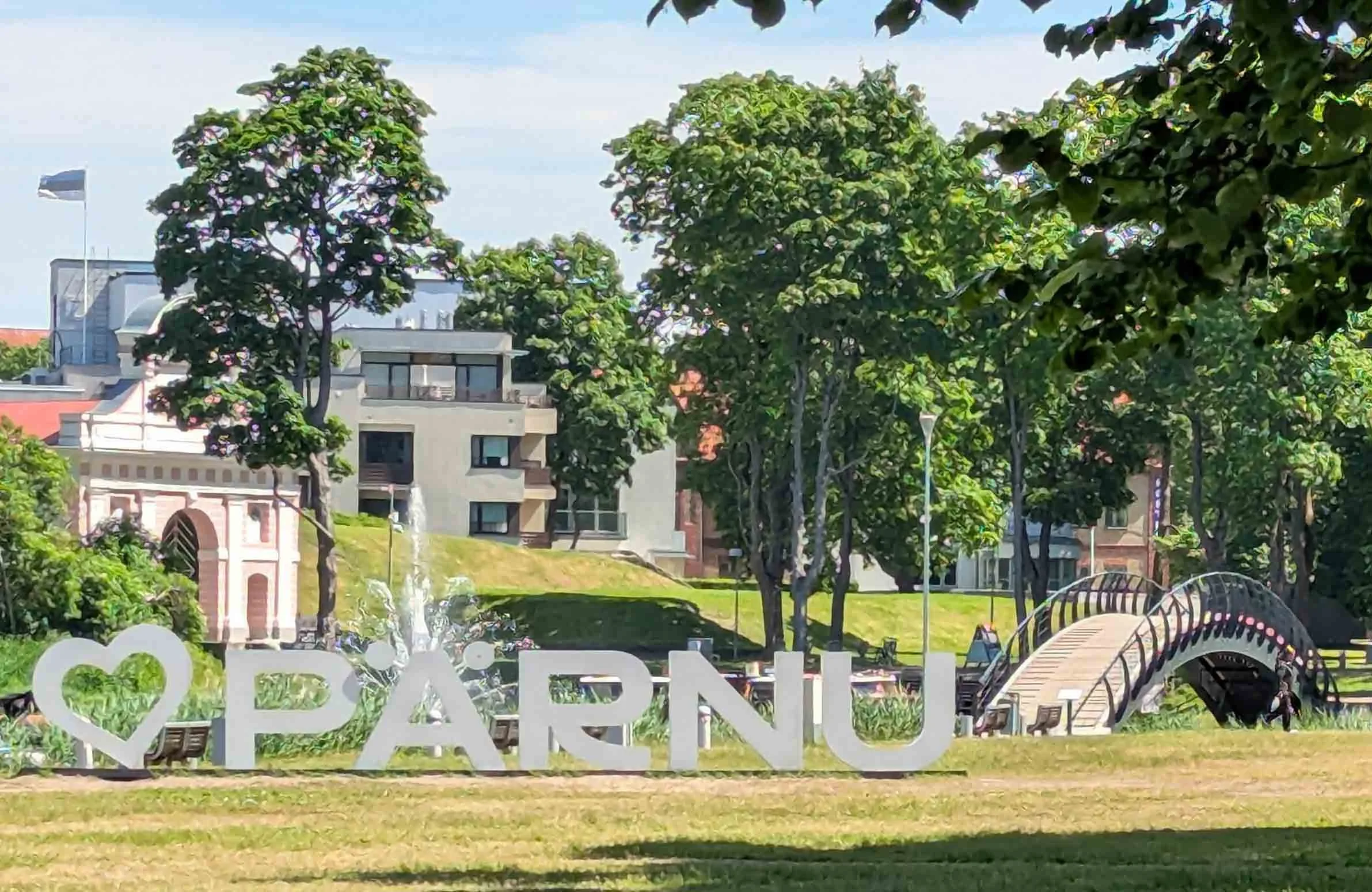
After my excursions on my nature and birding tour with Marko Poolamets and my trip to the Applied Arts Fair in Riga, I stayed in Pärnu for the next couple of weeks. While that meant a lot of studio time, it also meant a lot of long walks exploring everything Pärnu has to offer - which is a lot!

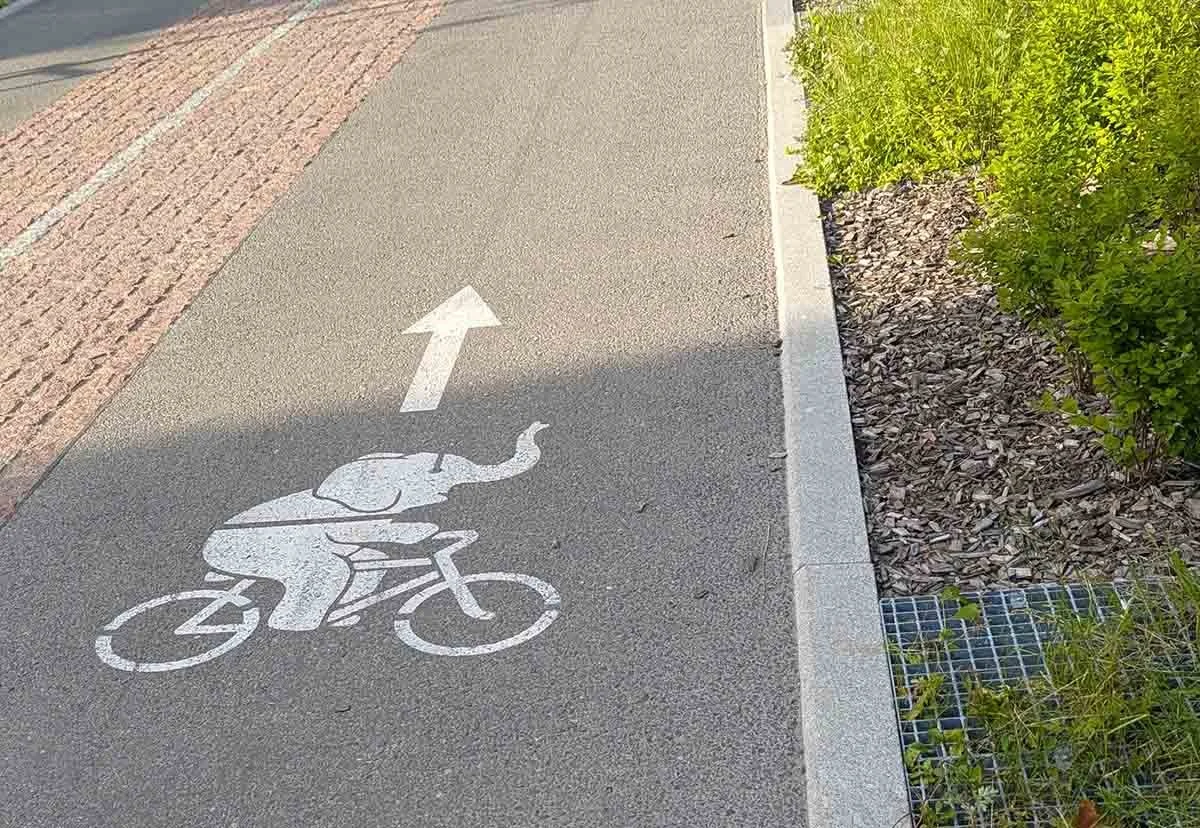
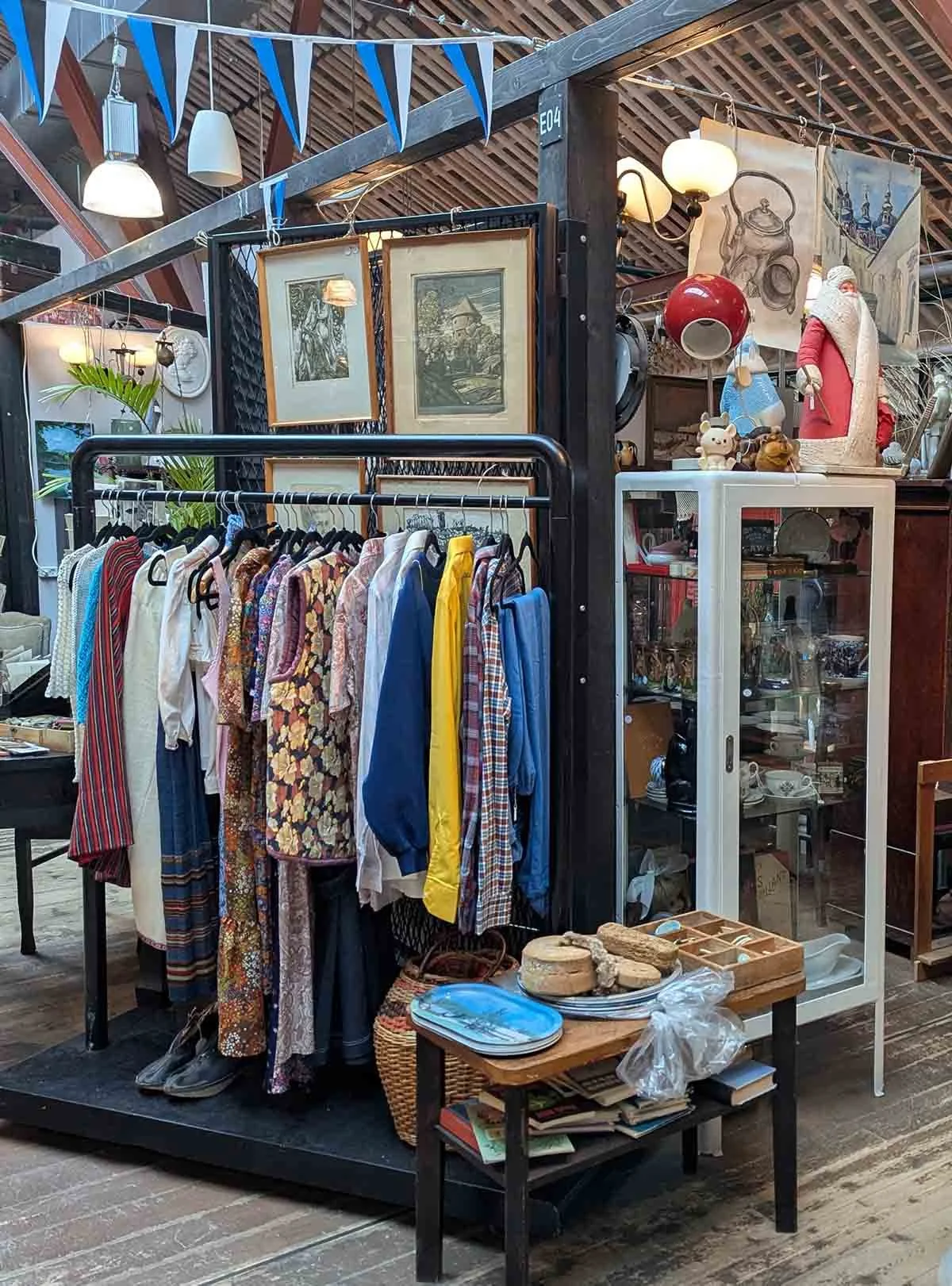
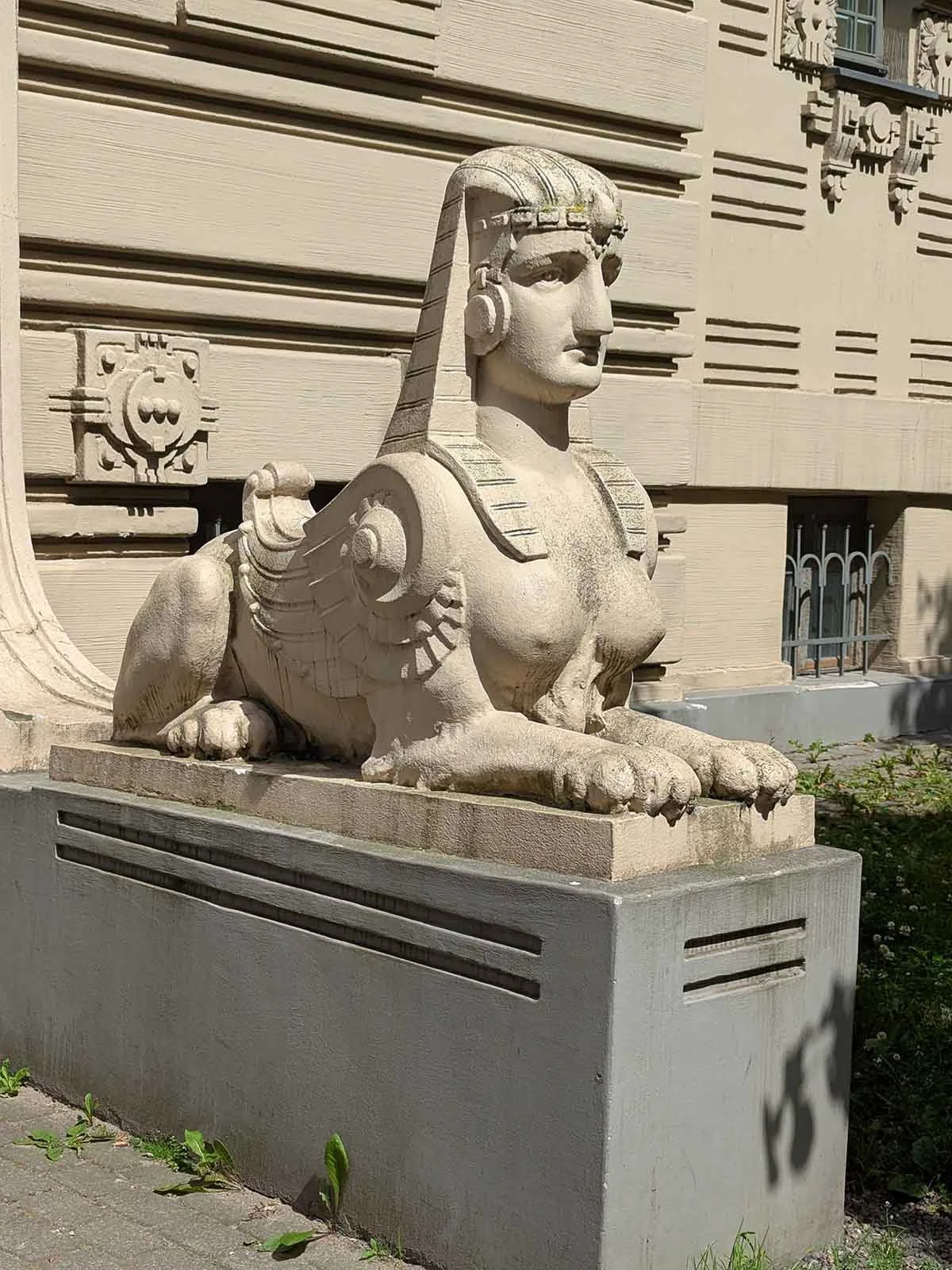
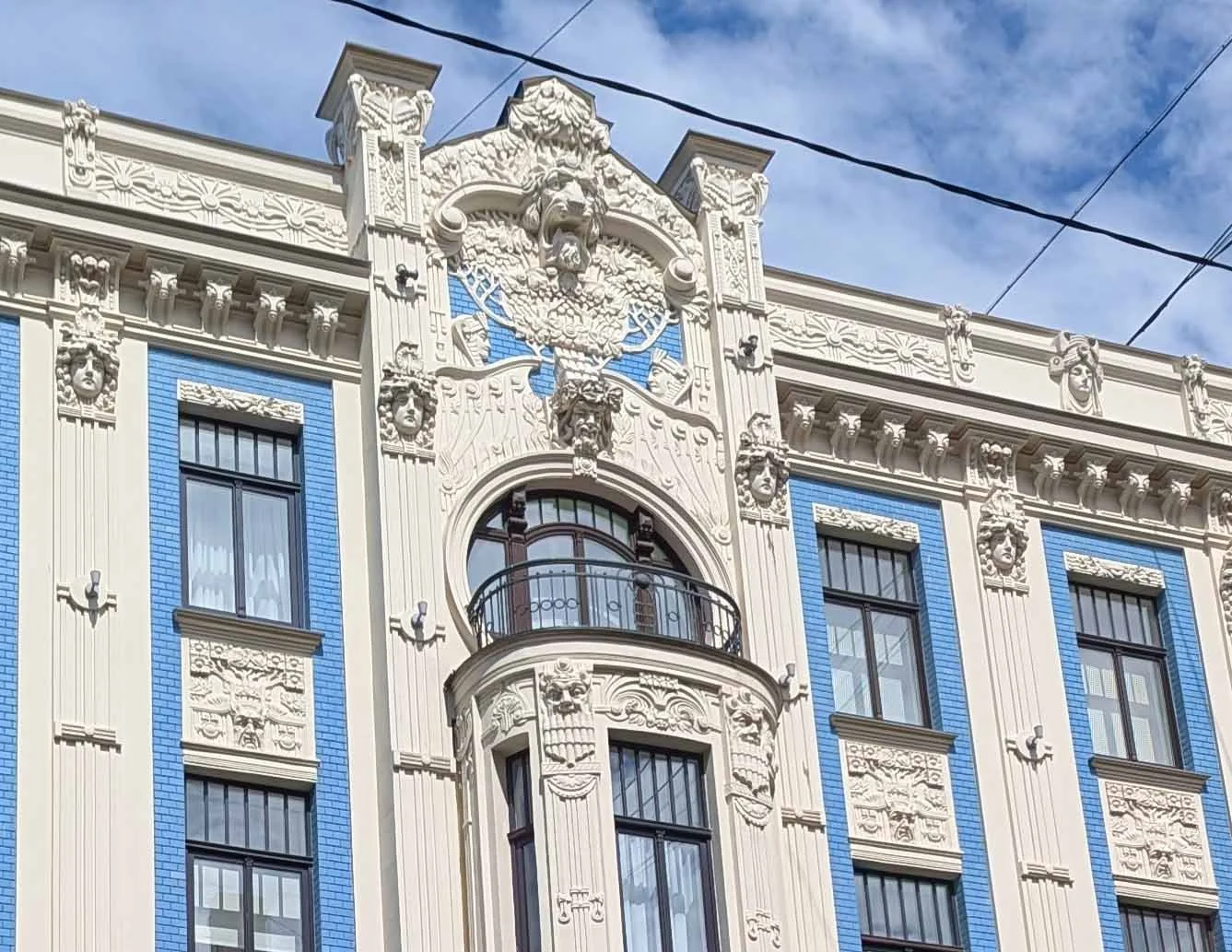
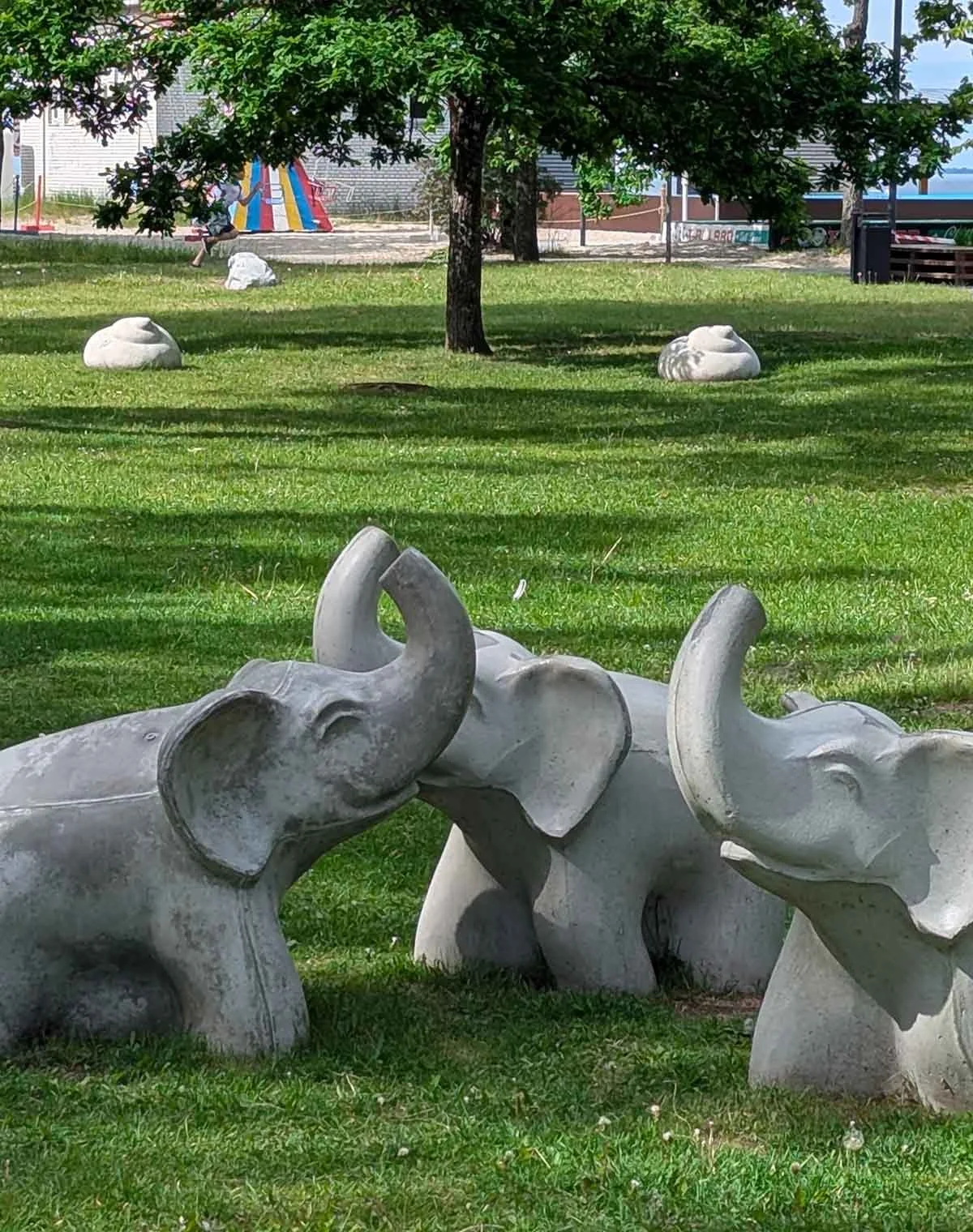
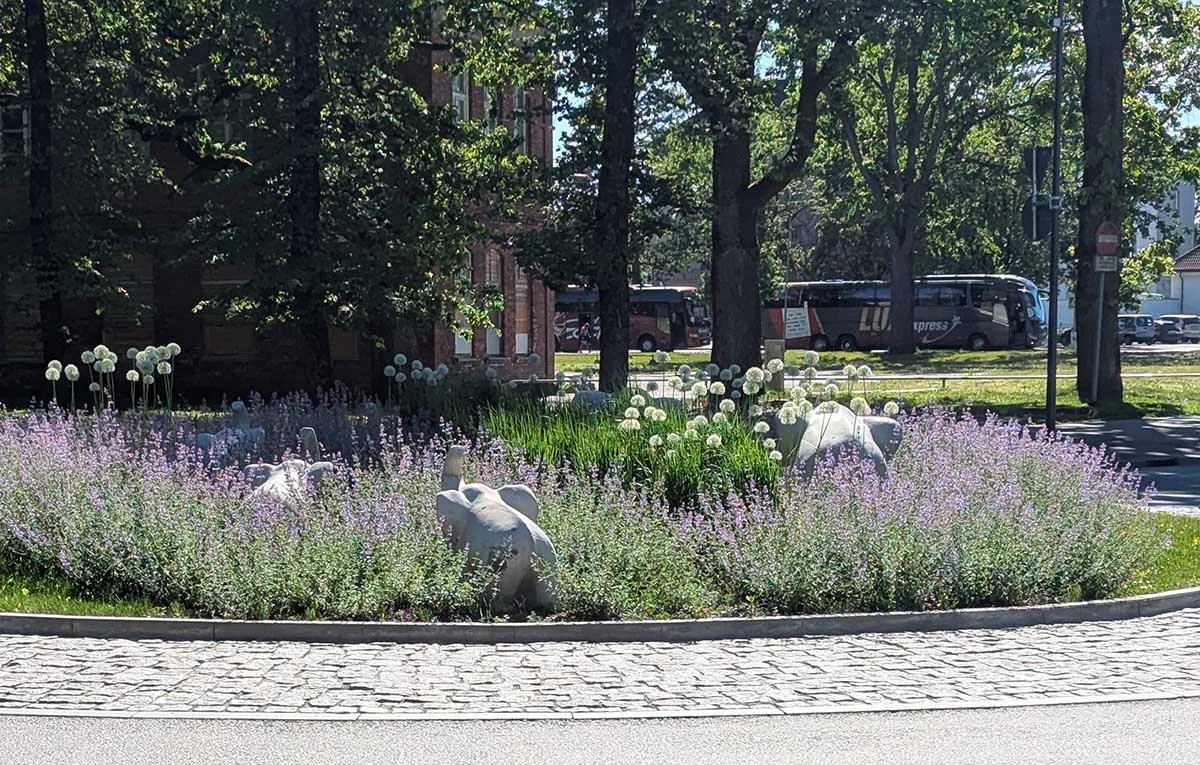
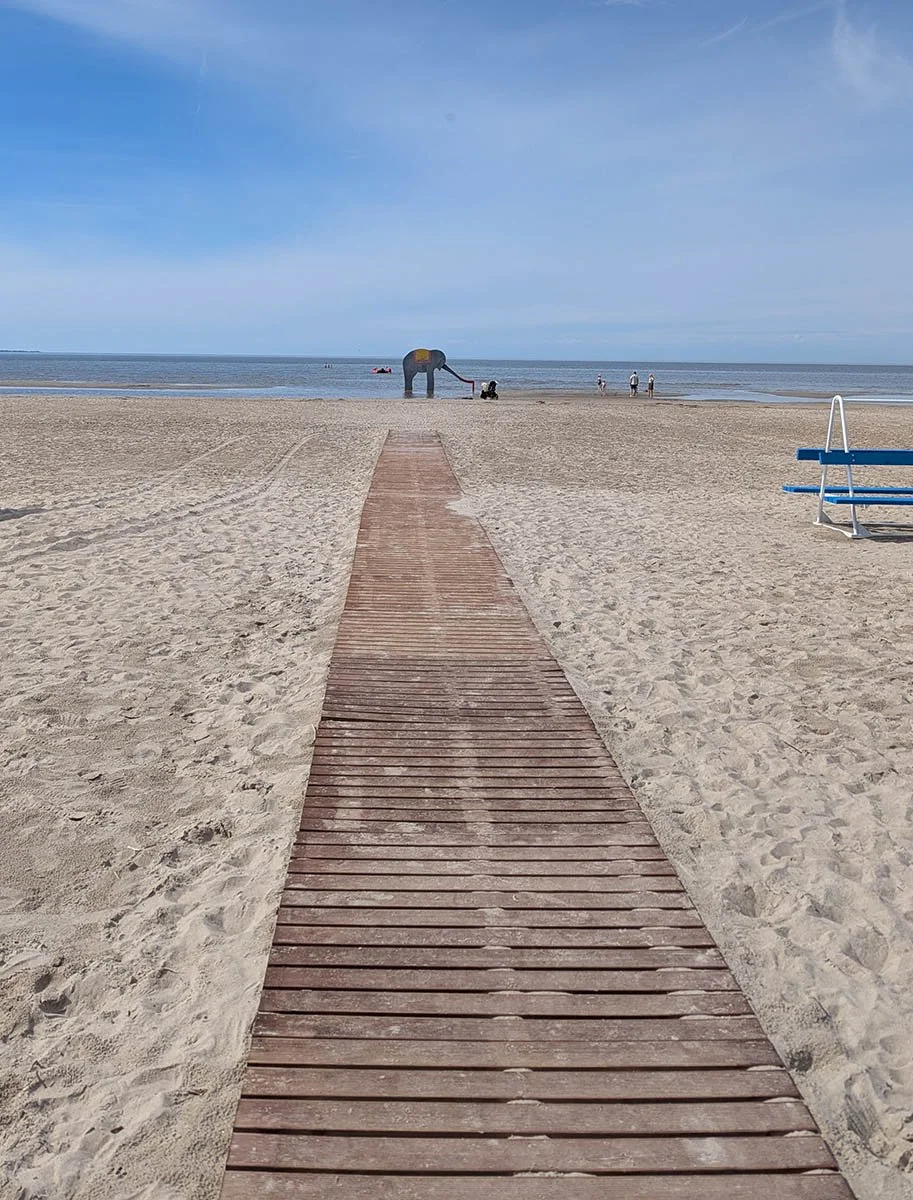
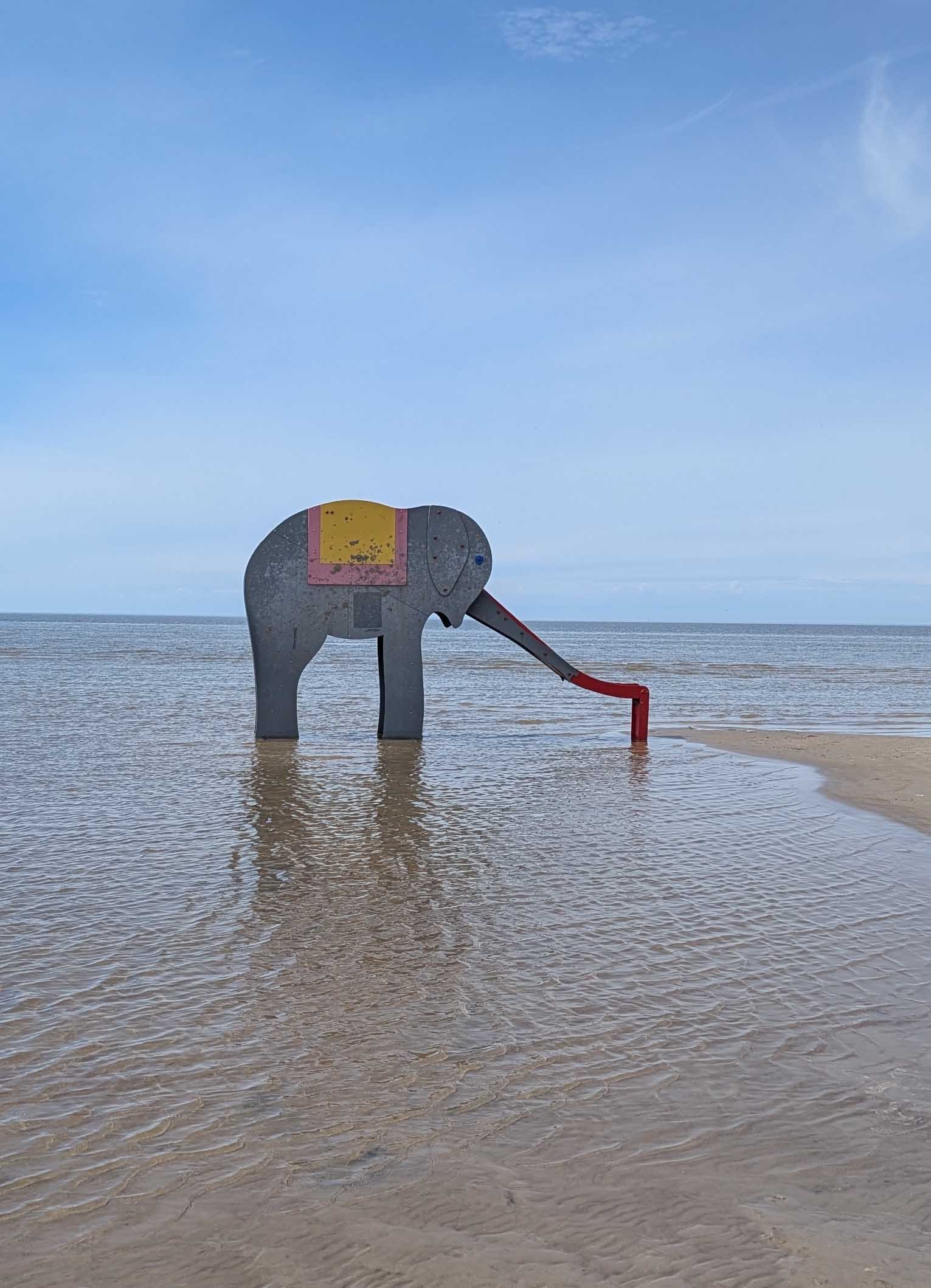
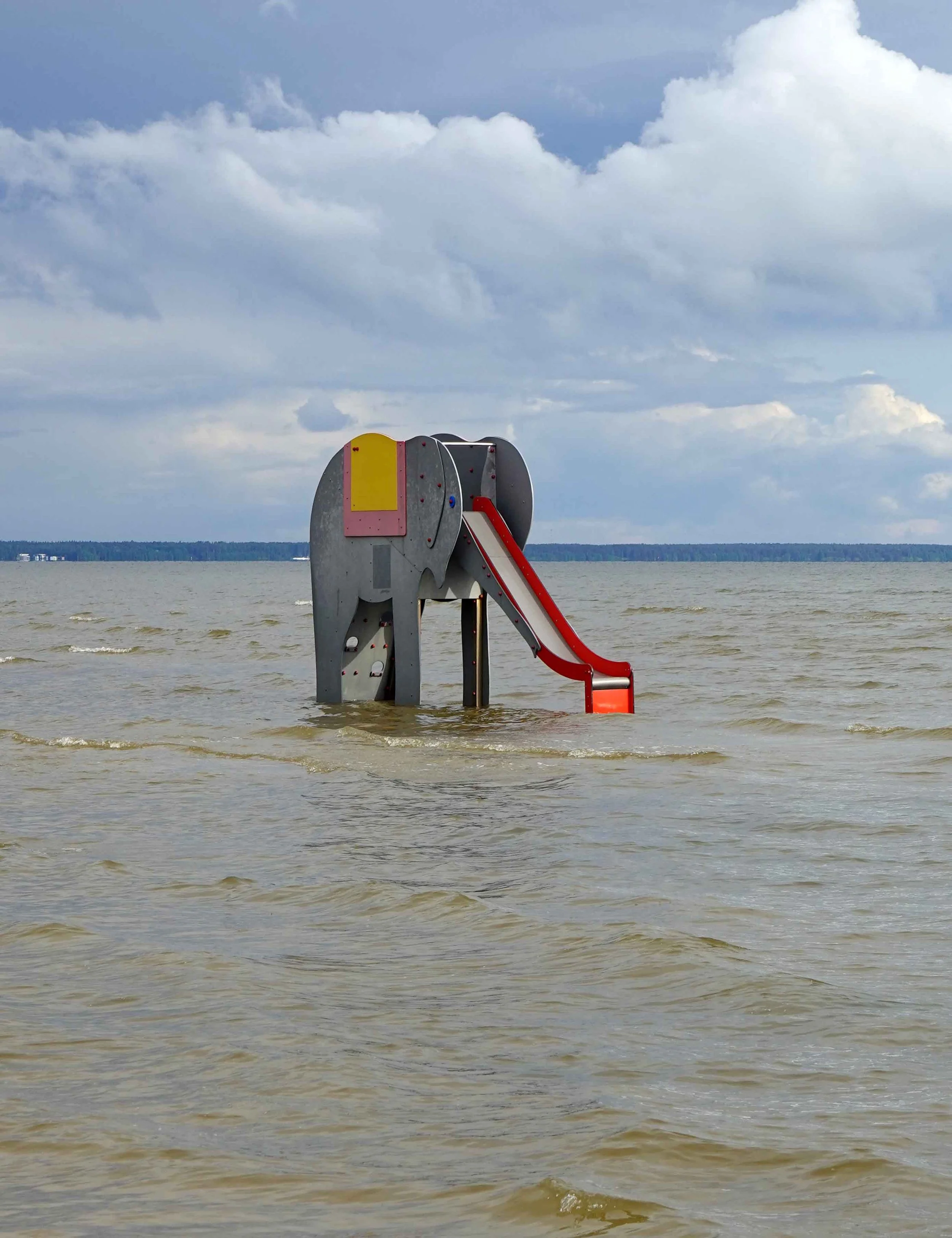
On the touristic side, Pärnu’s city symbol is the elephant, and there are concrete elephants strewn throughout the parks and roundabouts, and a large elephant slide is in the sea. There is a quaint Old Town, filled with souvenir stores, fashion shops, and restaurants. My favorite restaurant is a little vegan cafe called Liana Kohvik, but there are a lot of other nice options! There are also multiple malls, where you can get groceries, high end clothing, restaurant meals, and so forth. There are quite a few retailers outside of Old Town, including fabric stores, outlets, and secondhand and vintage shops.

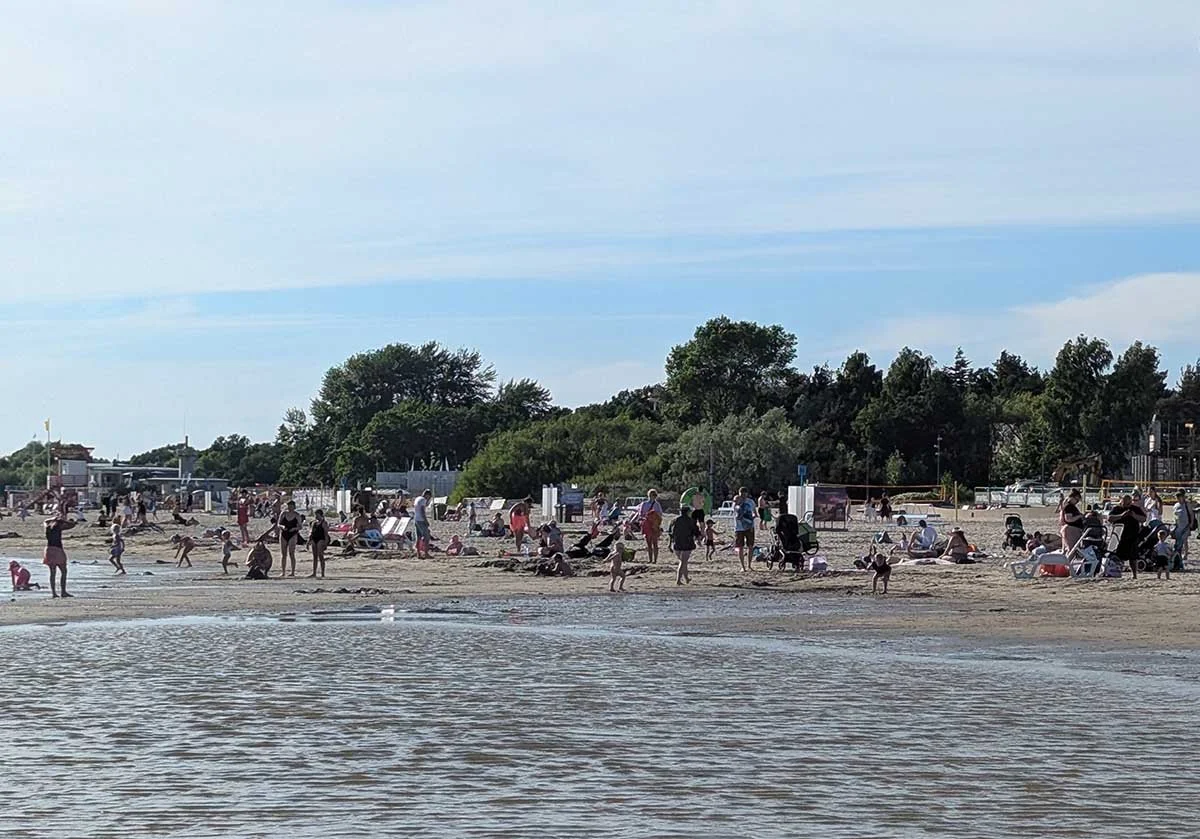
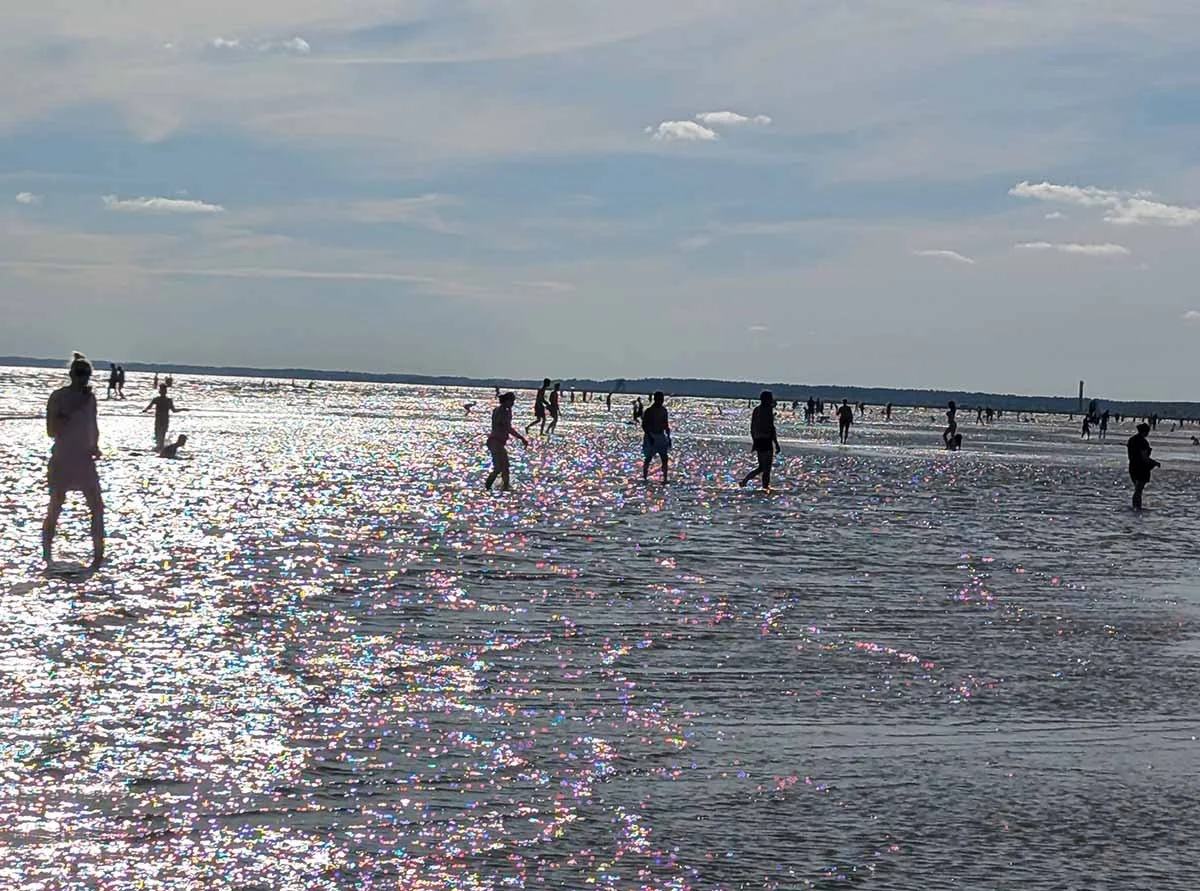
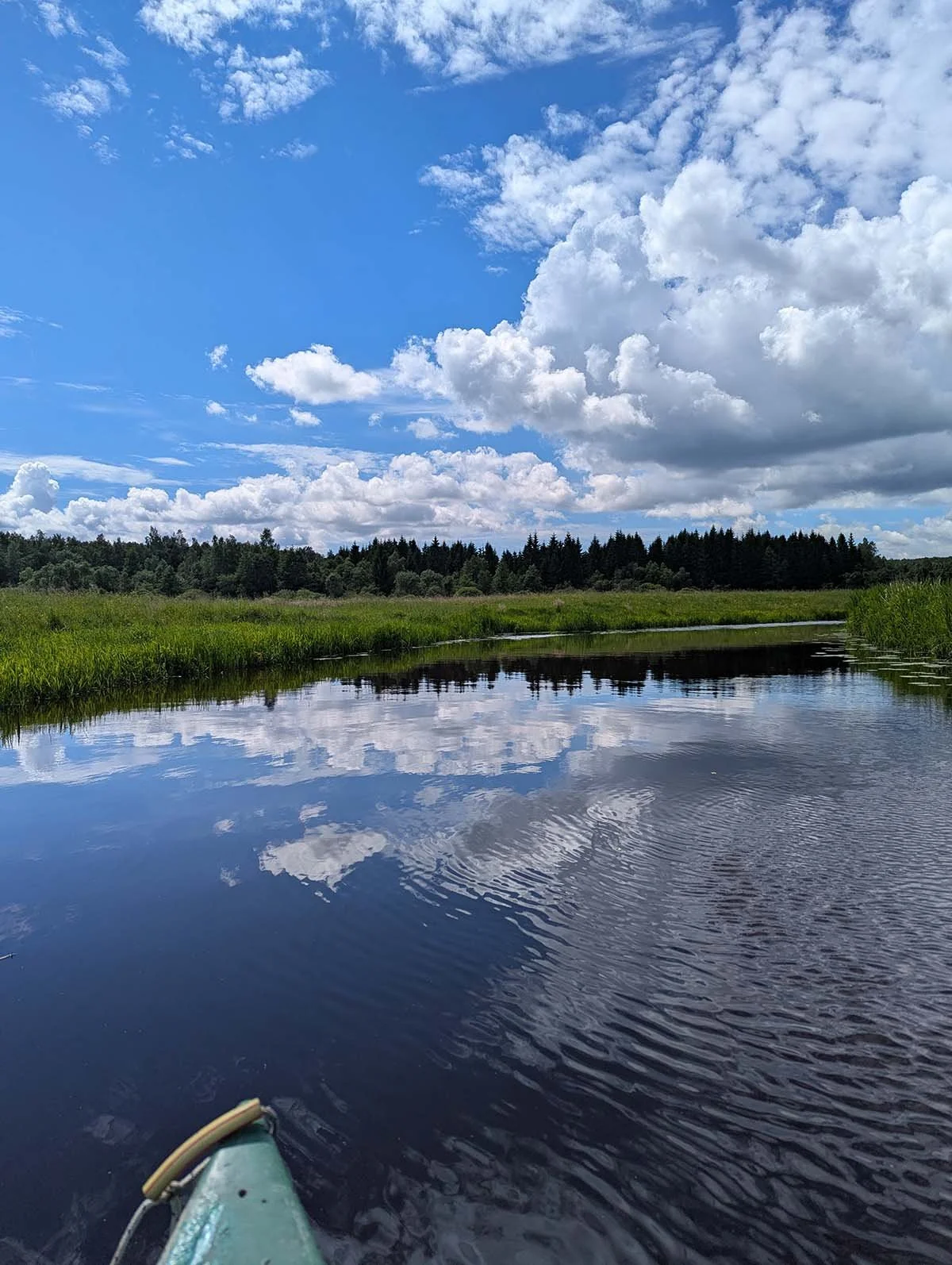
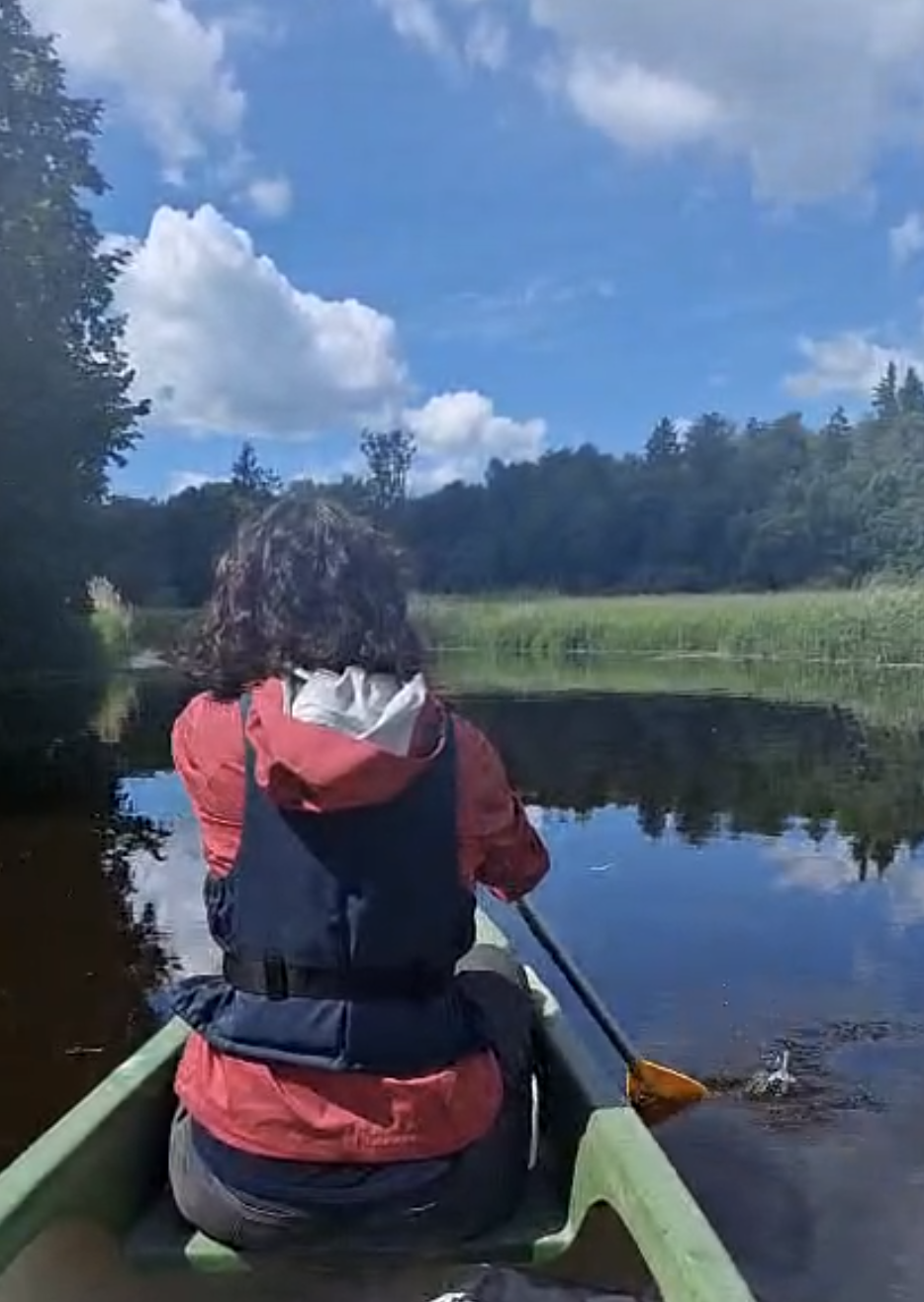
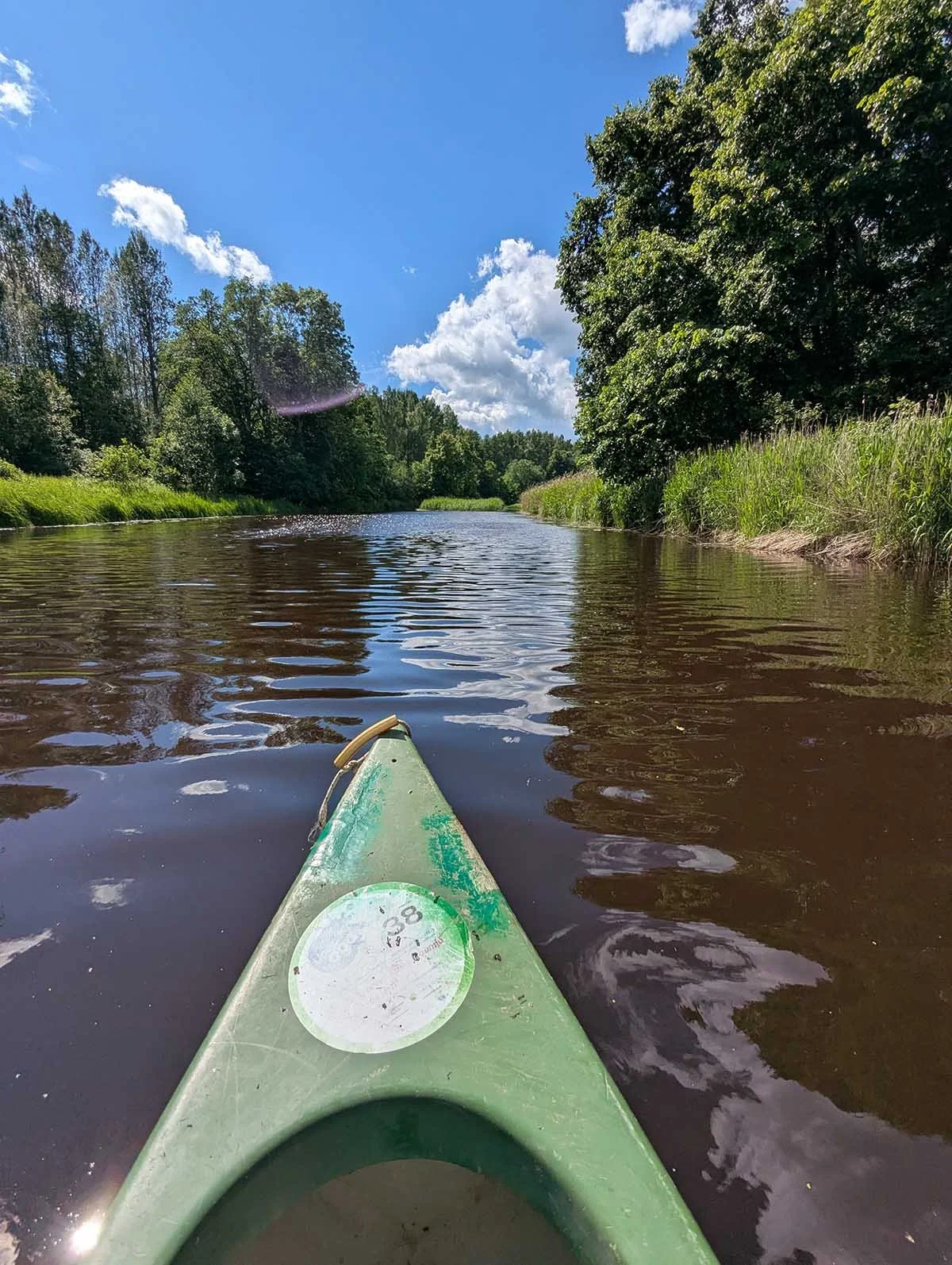
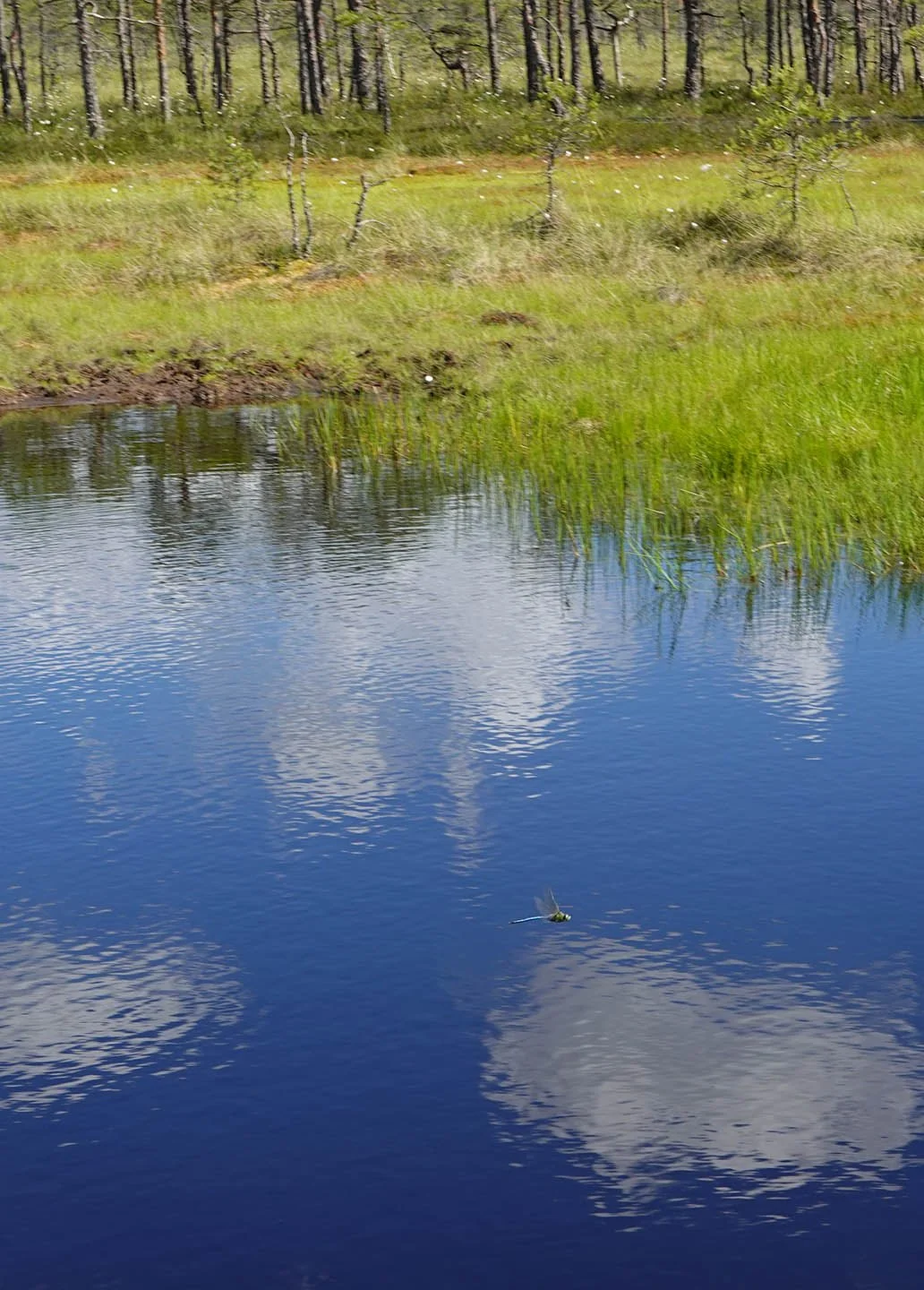
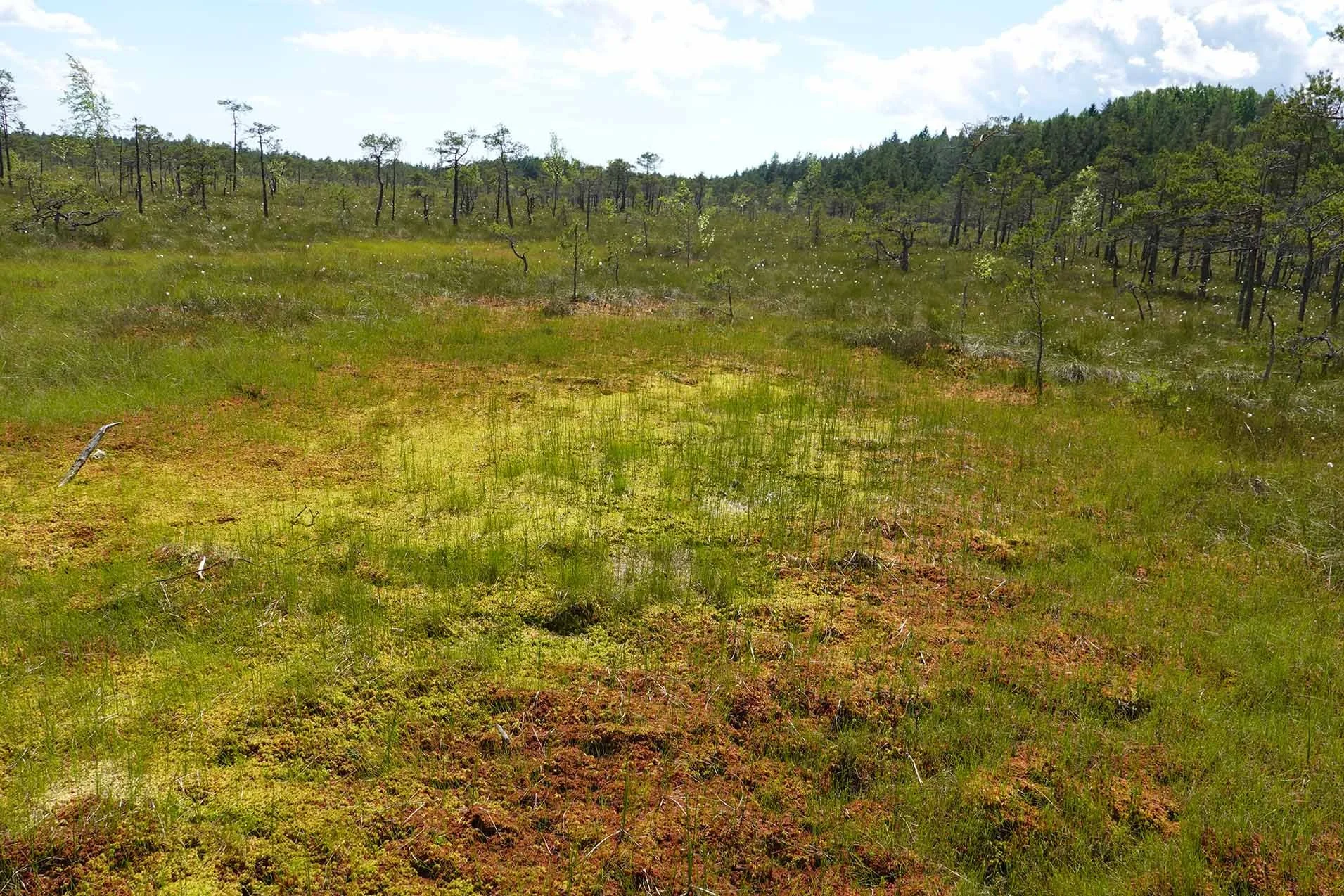
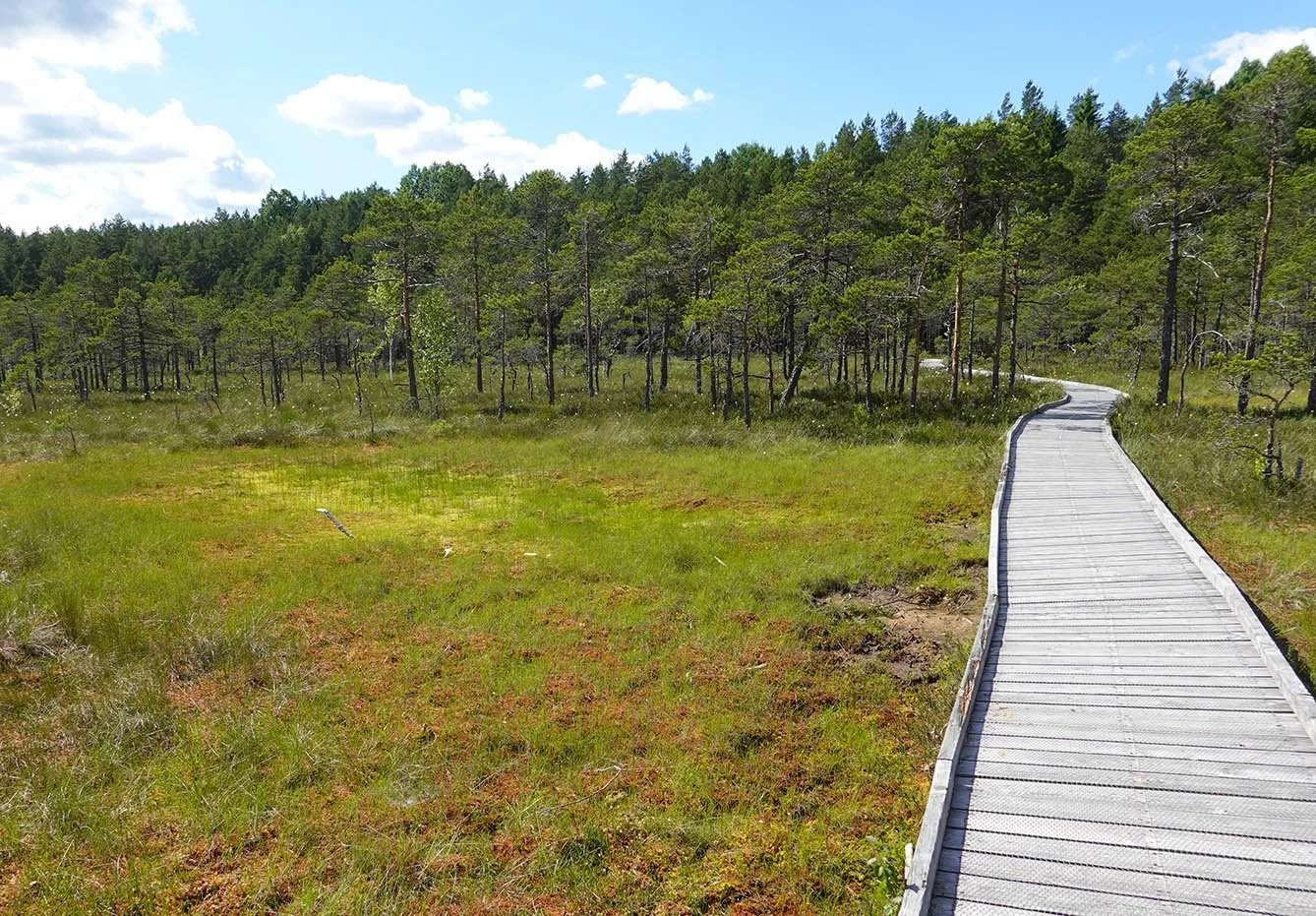
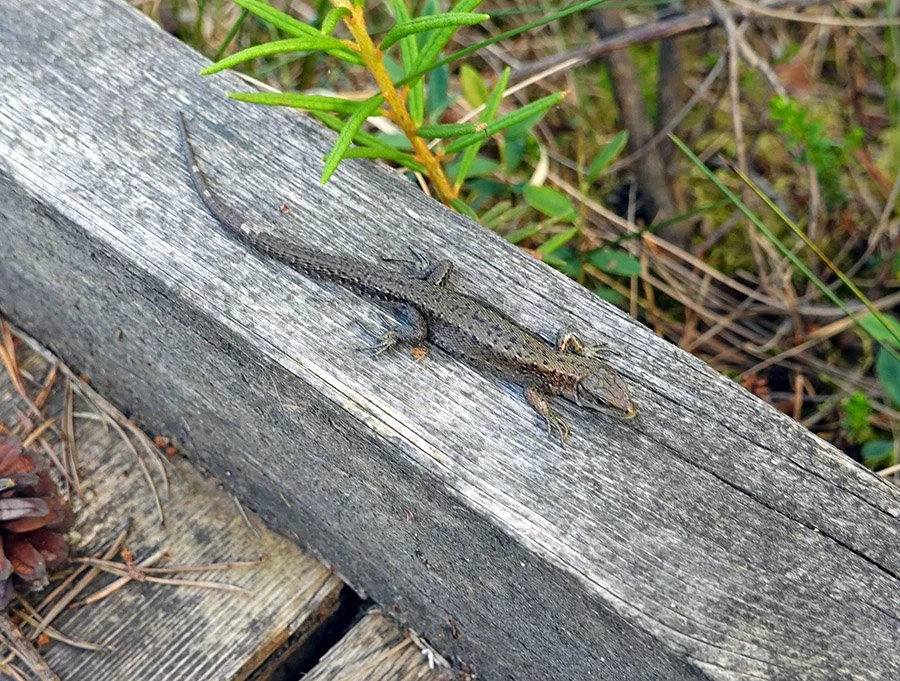
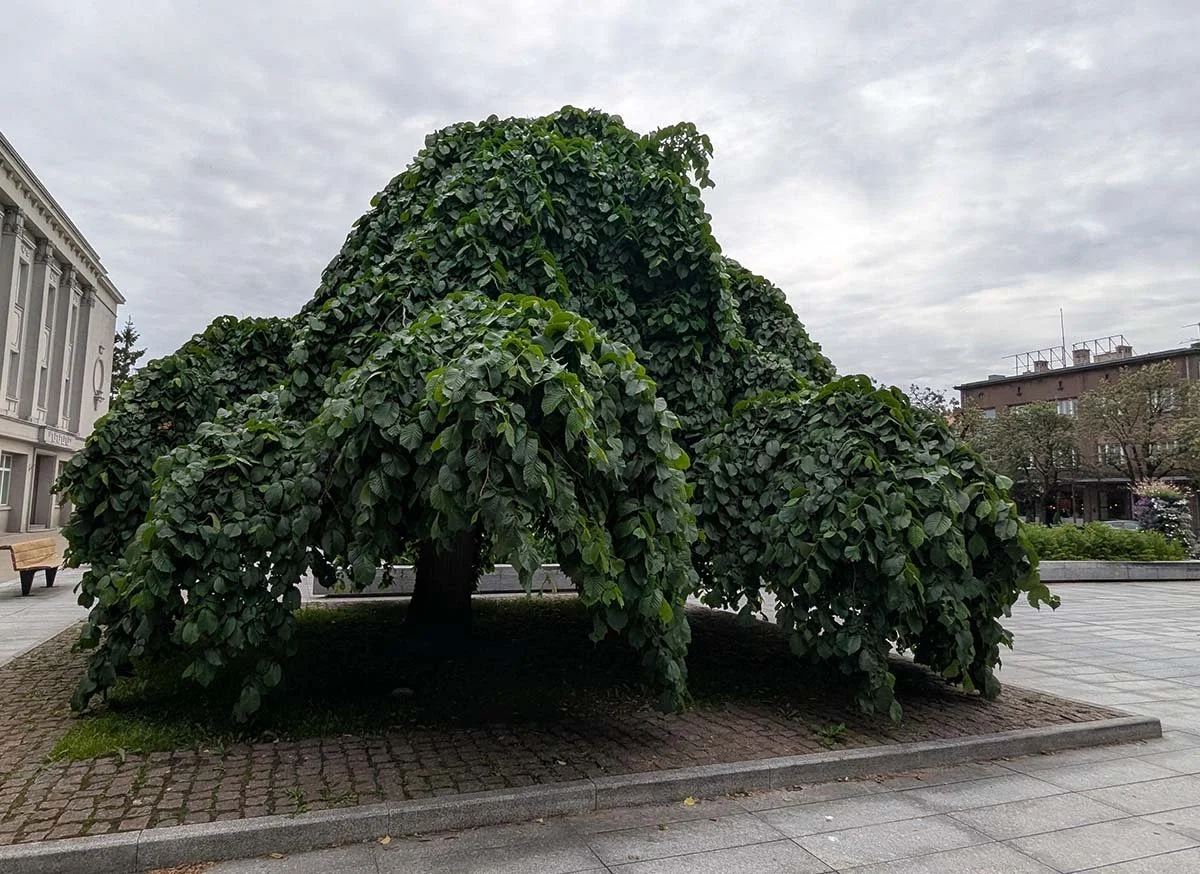
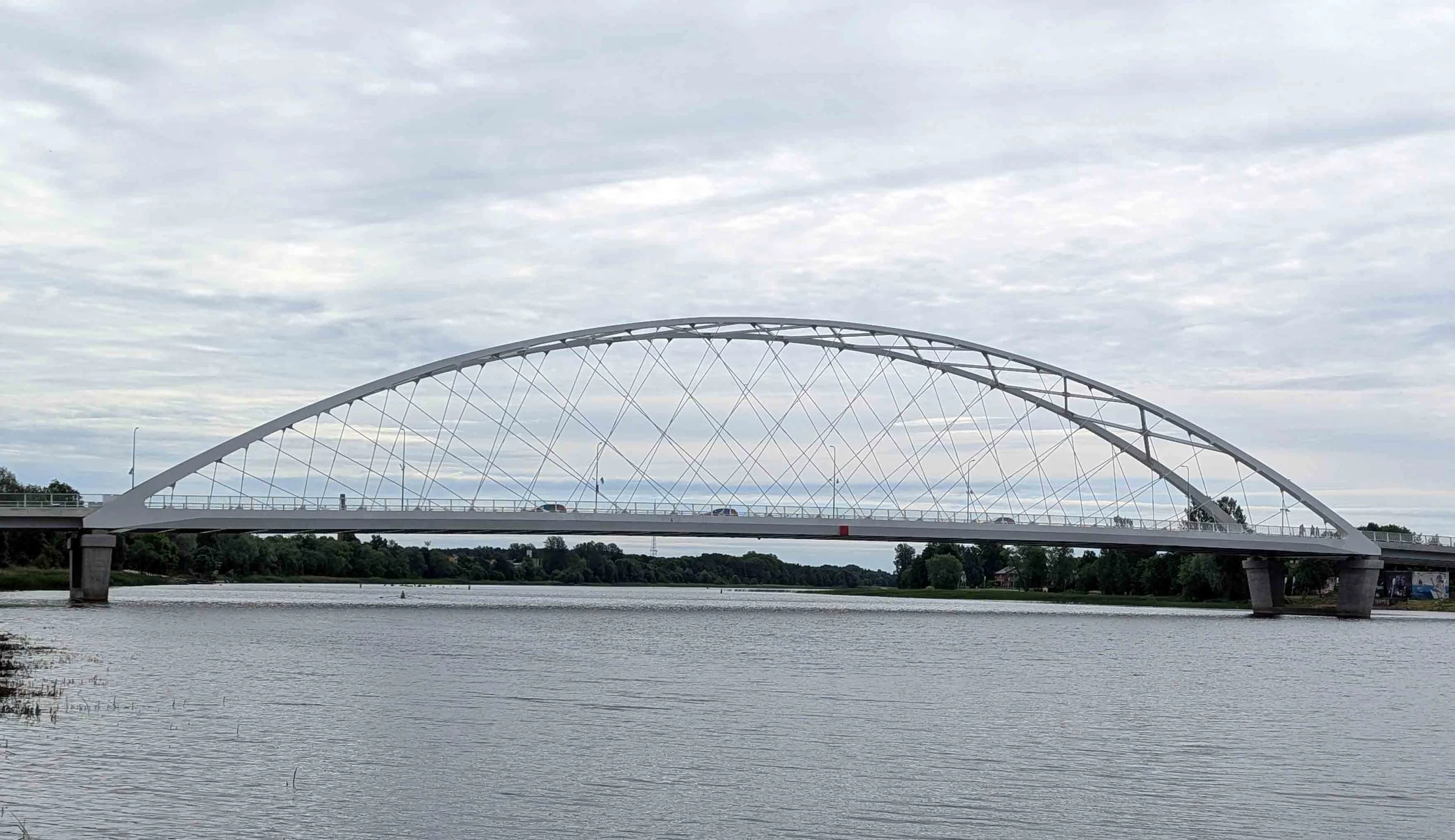
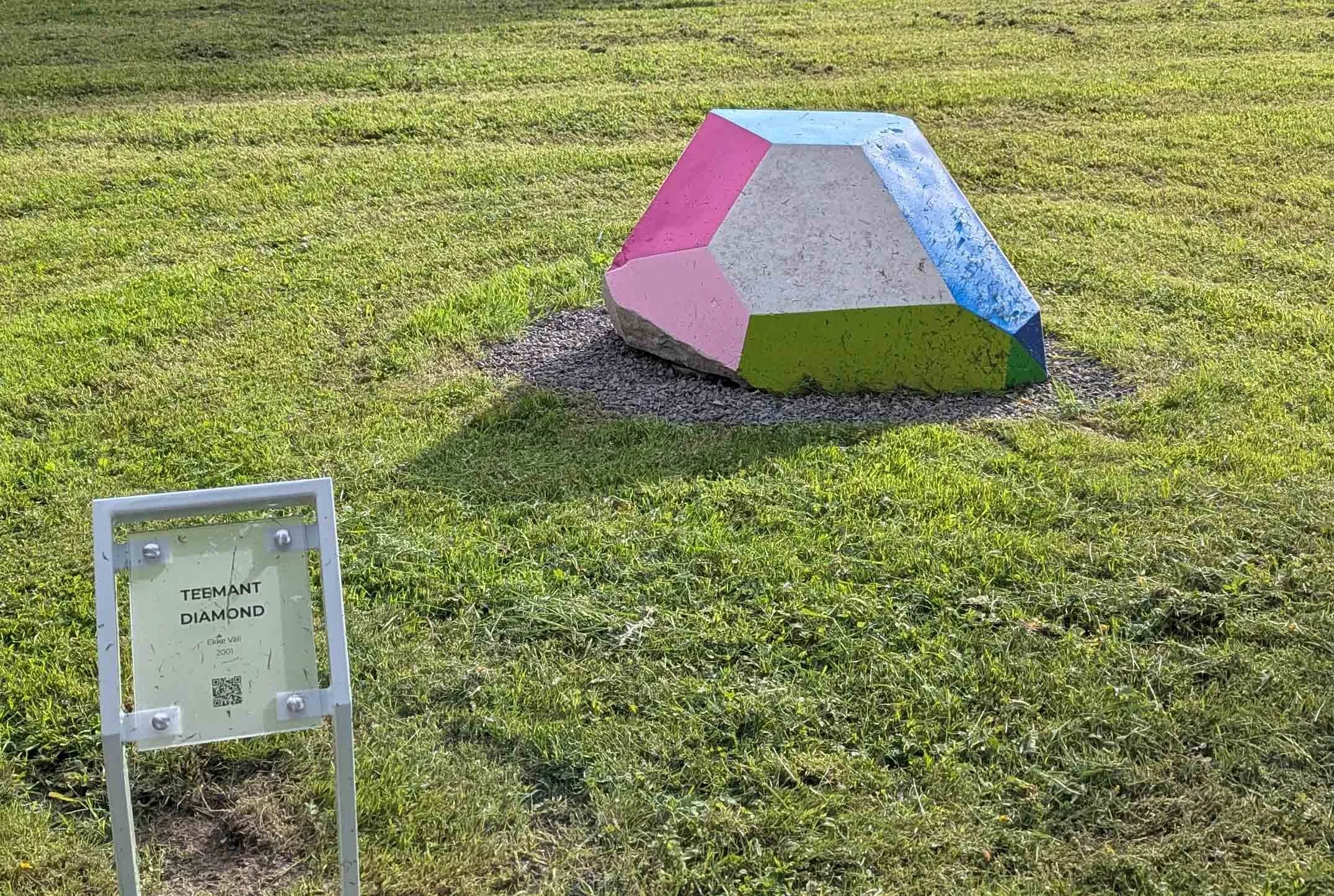
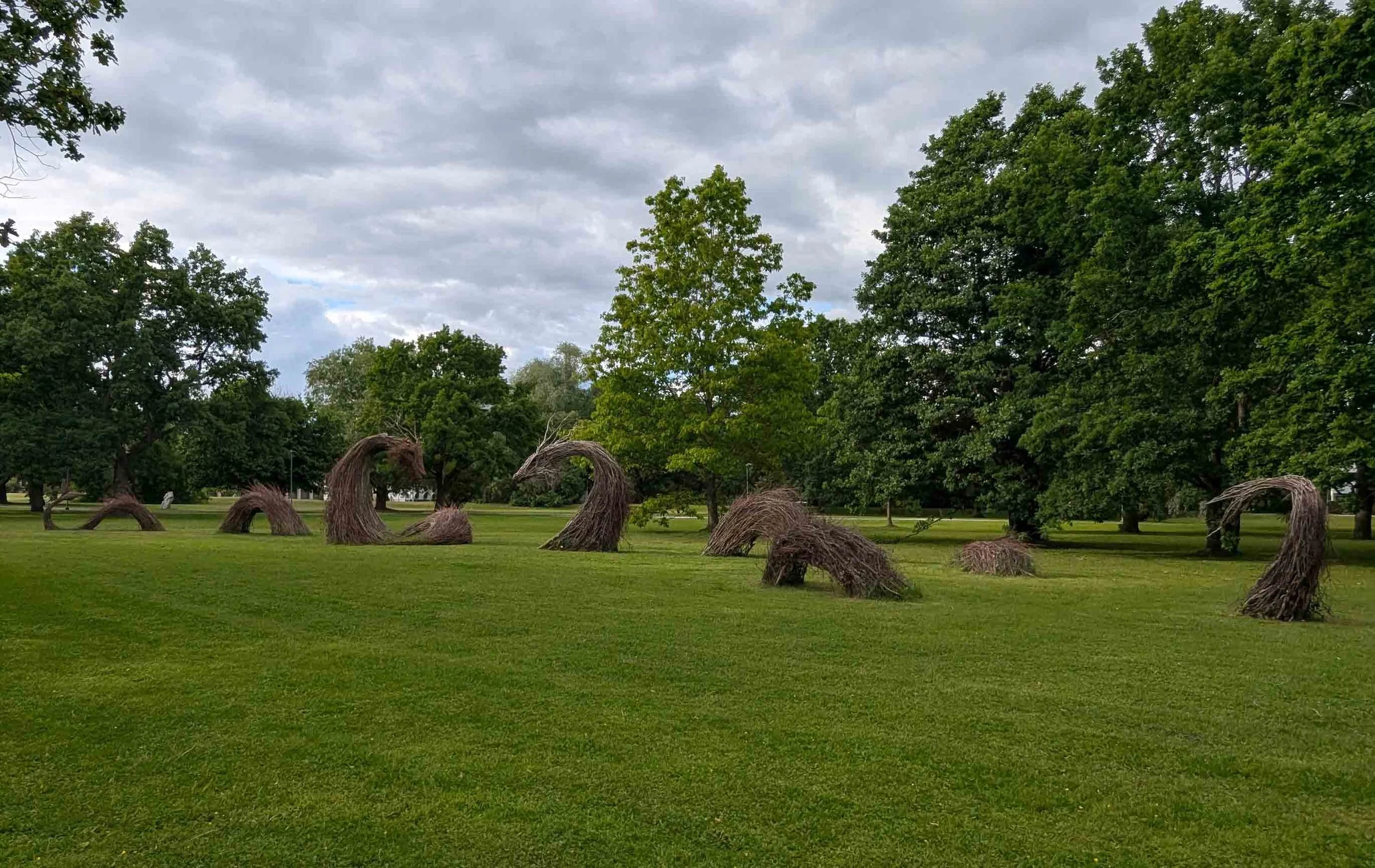
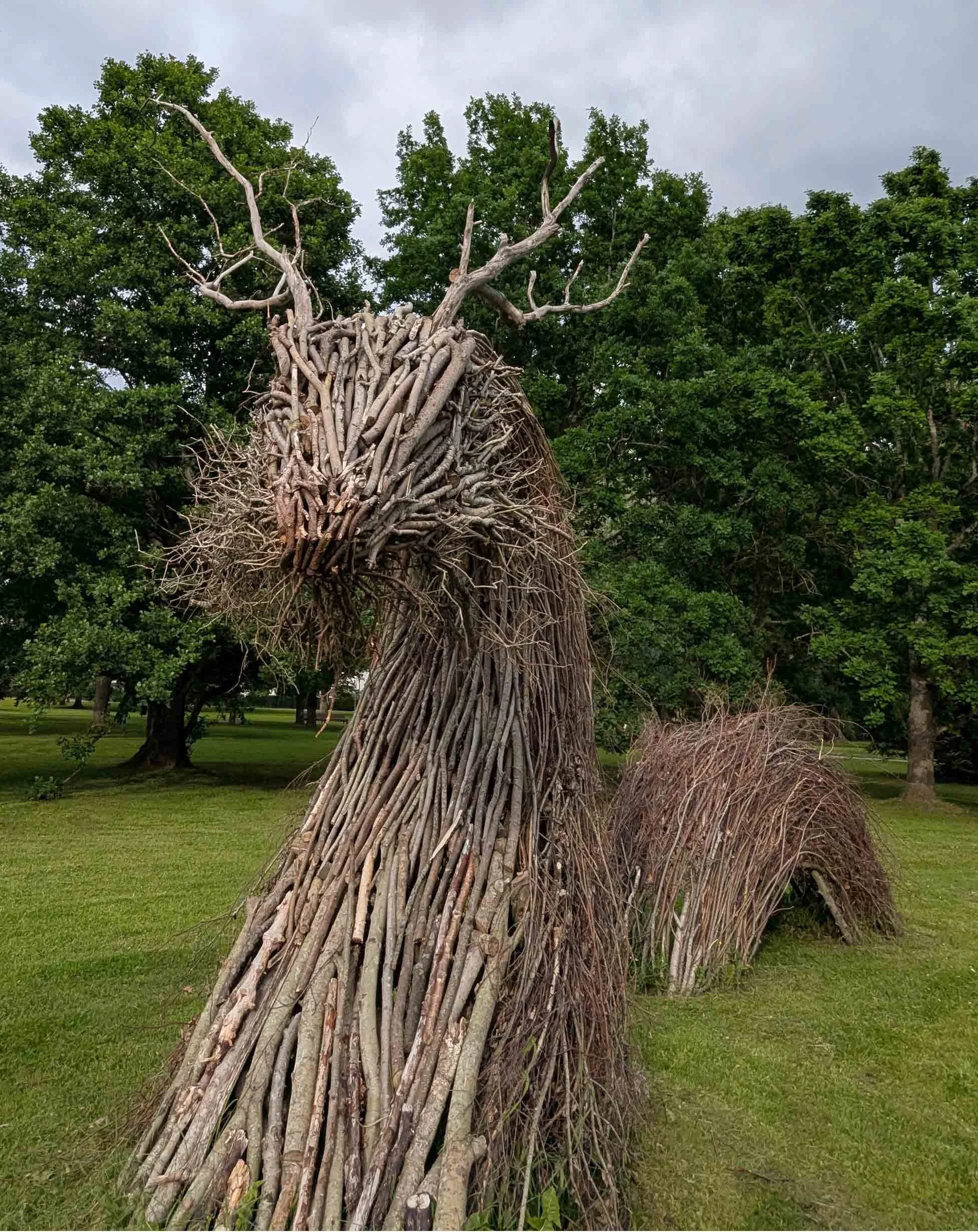
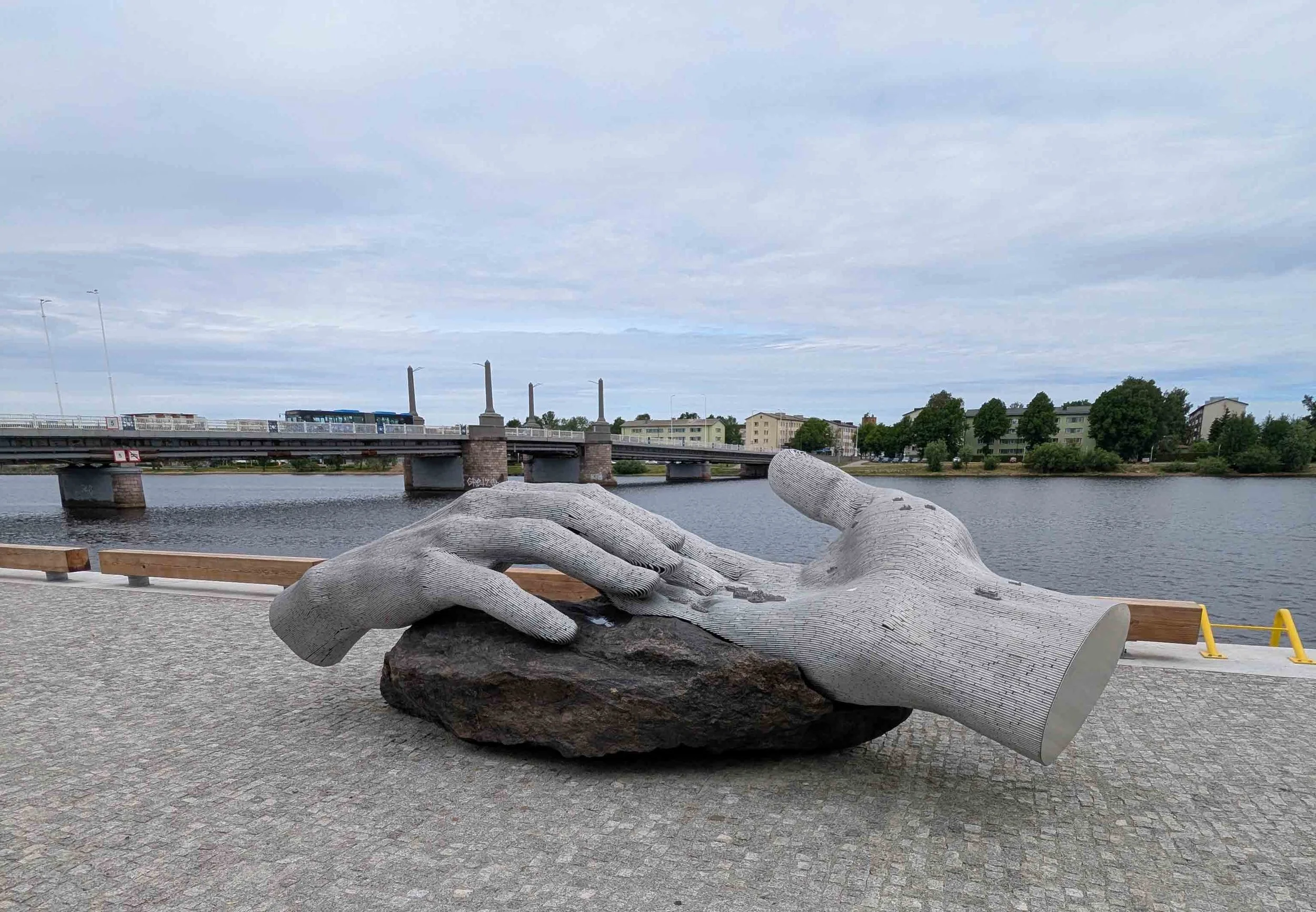
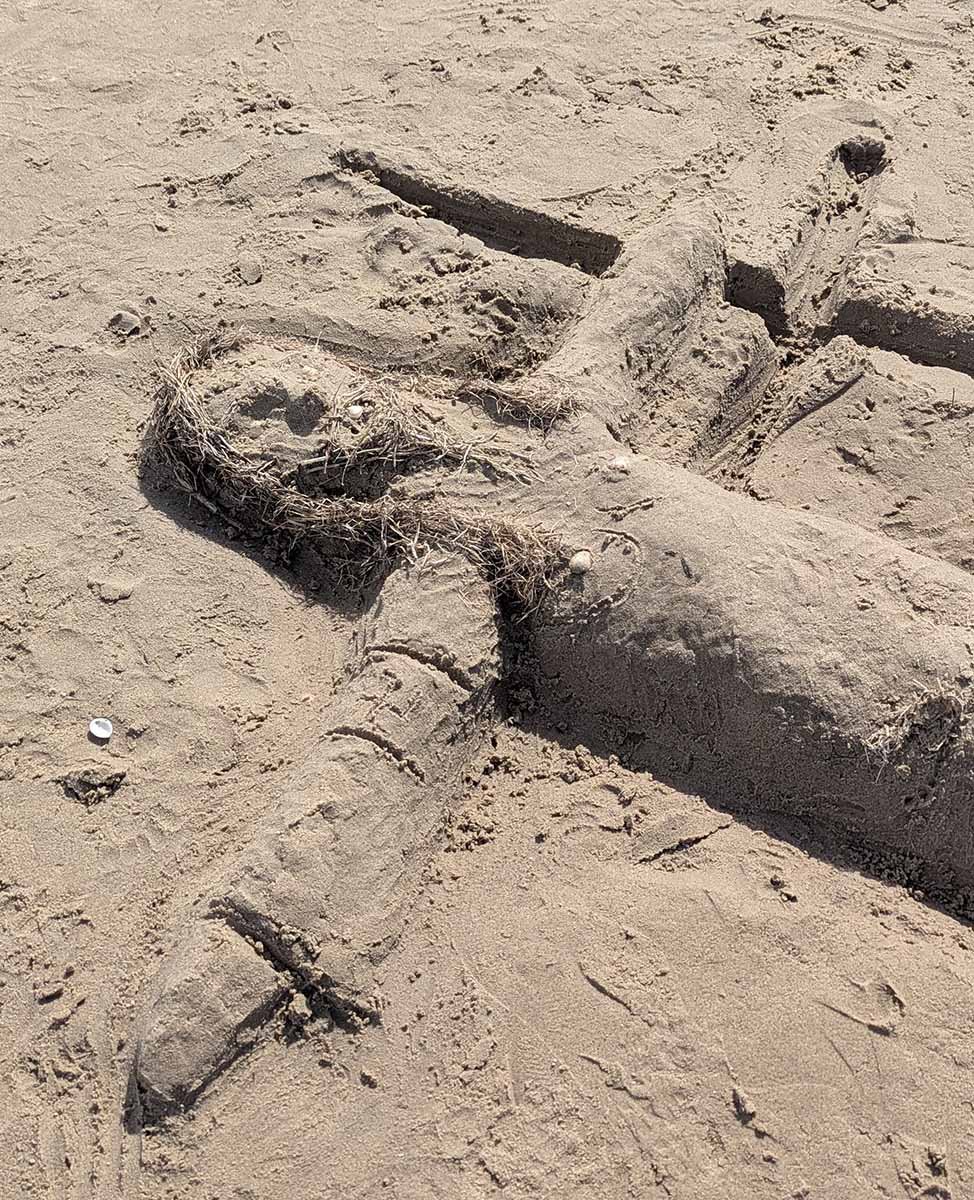
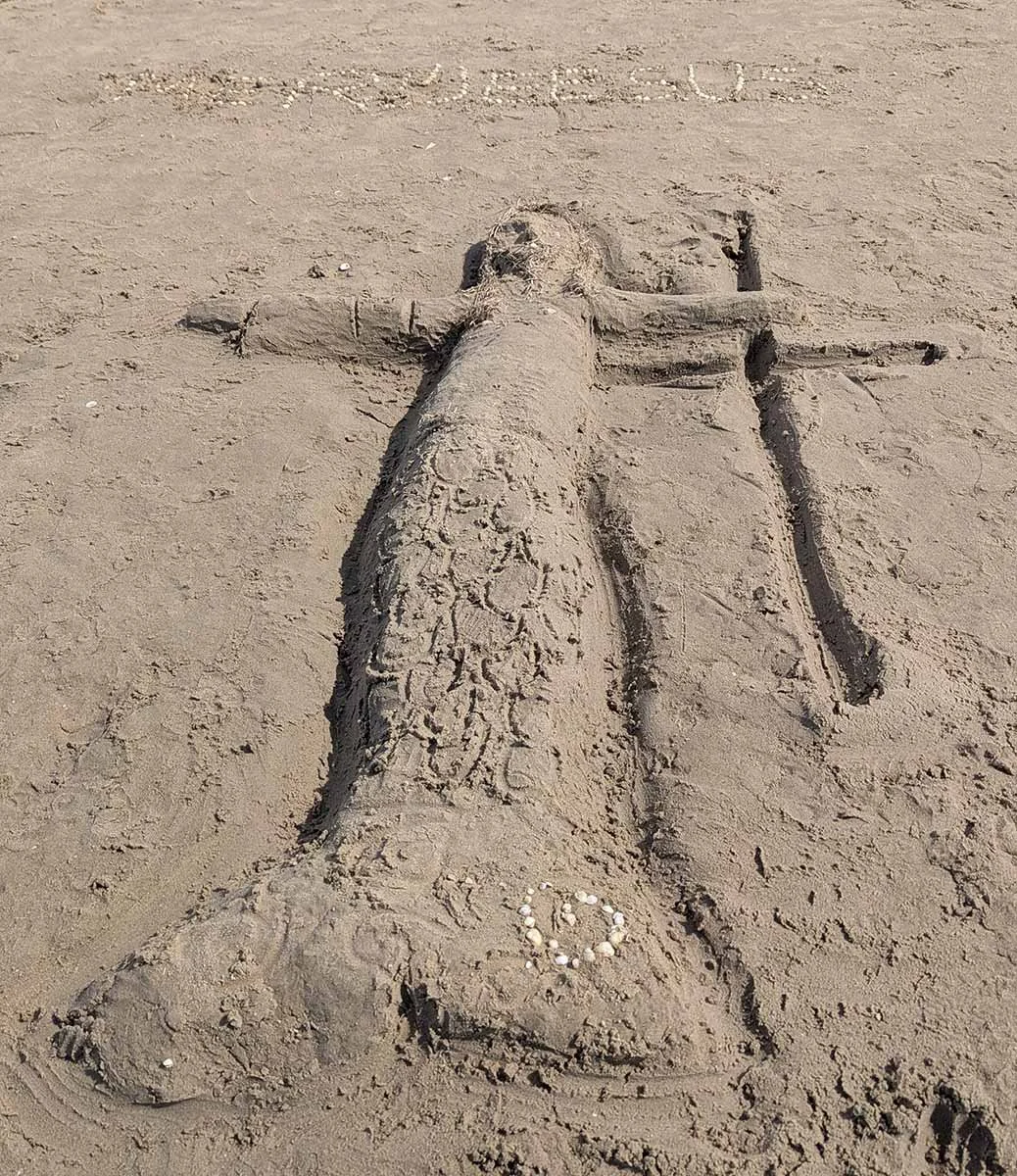
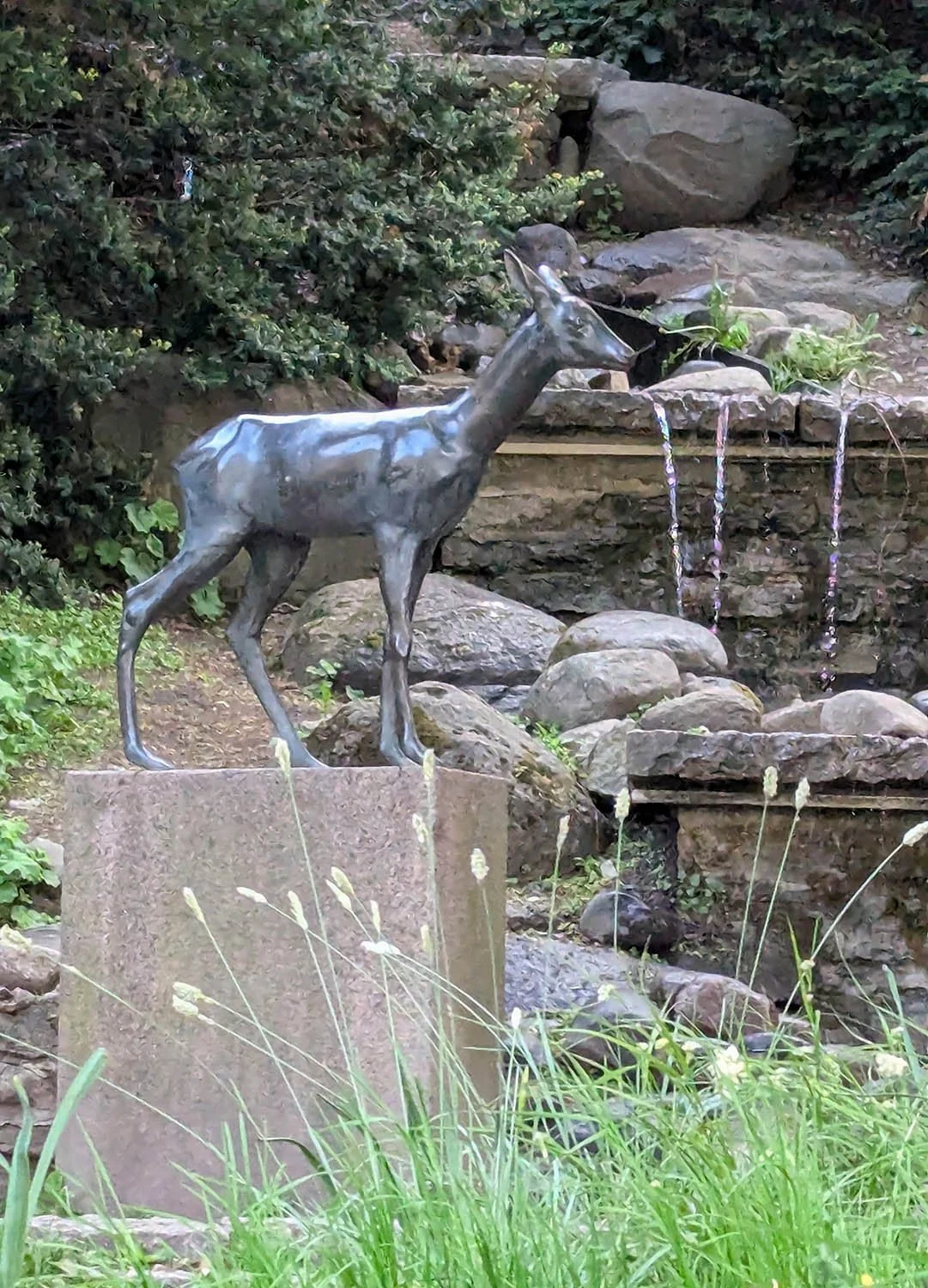
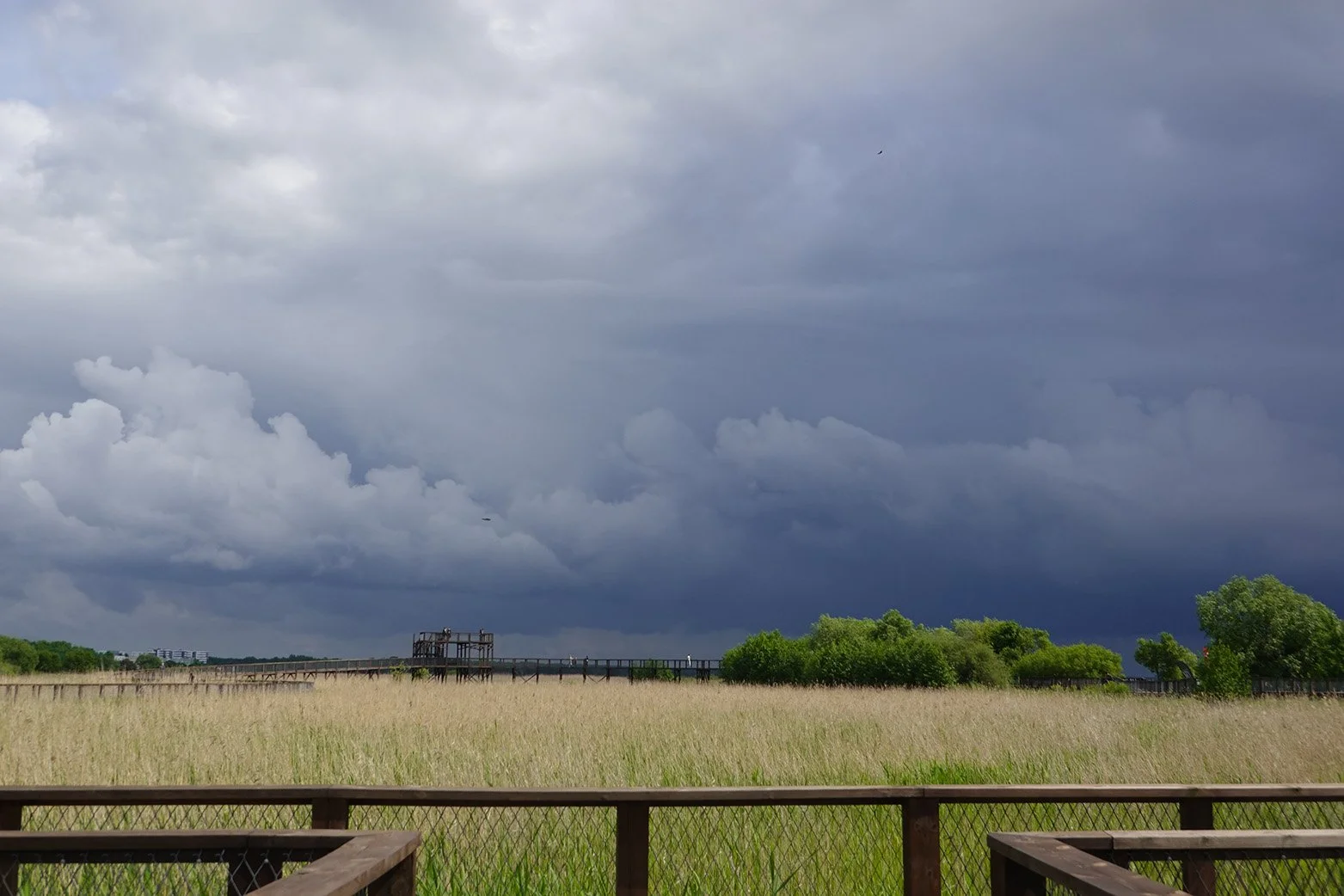
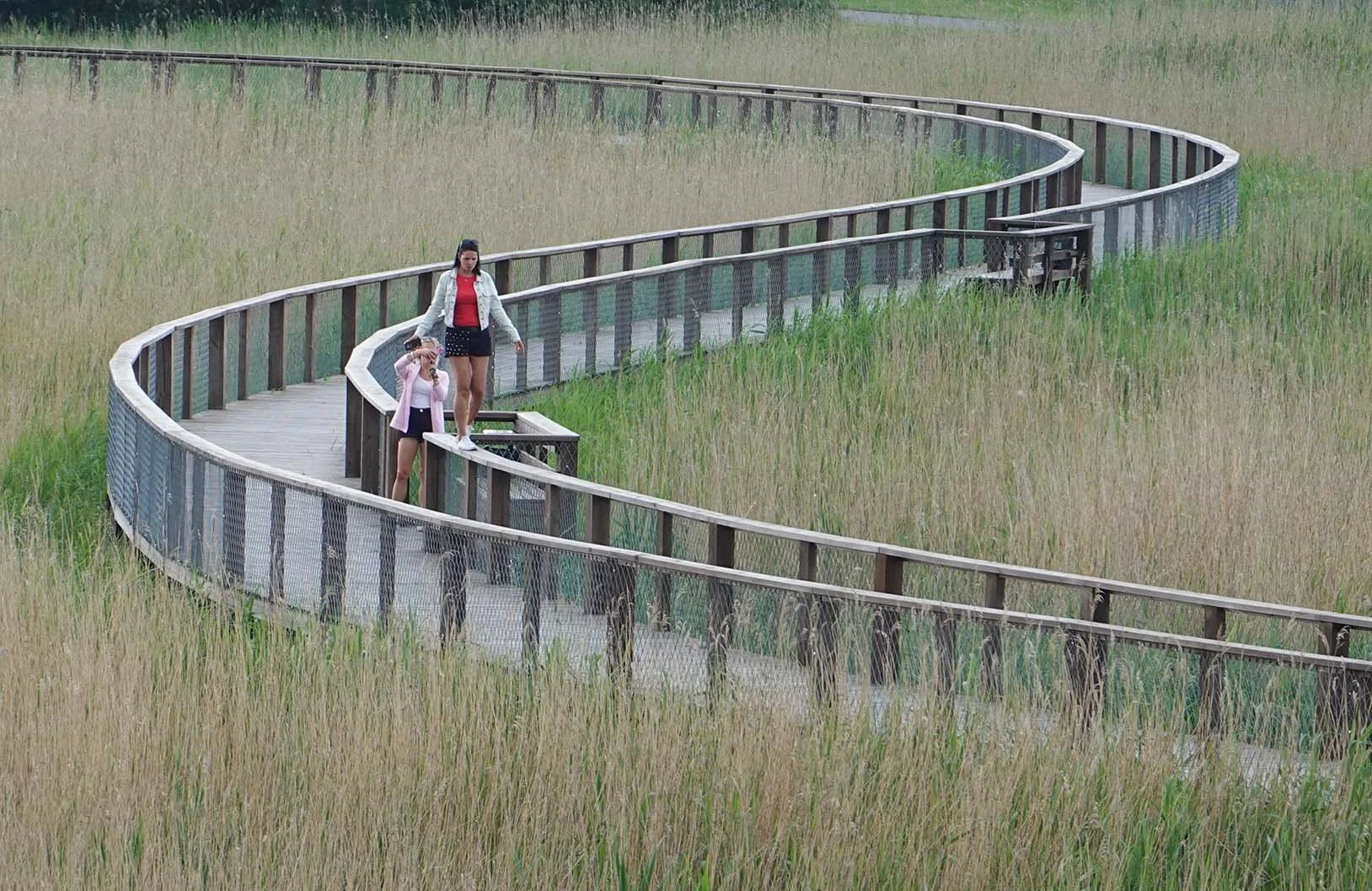
There’s also a lot of beautiful nature! My most scenic walk is is an approximately 5 mile loop through parks and residential neighborhoods down to the protected meadow, out to the beach, along the beach until it ends at the jetty, and then back up and through a park with a sculpture walk. There is always some wildlife to enjoy on that walk, including frogs, birds, and insects. I also really like walking along and across the river.

After almost three weeks and while doing a deep dive online, I discovered an artists’ guild that I hadn’t yet found in Old Town, and I was so confused - but when I went to it, I discovered why: they’ve closed off the whole street for construction for the whole month! With determination, I found an alternate route through back alleys and was pleased I did - it’s got a lot of great artists. There are other arts organizations here as well including the City Gallery and Artists’ House, and the Museum of New Art.

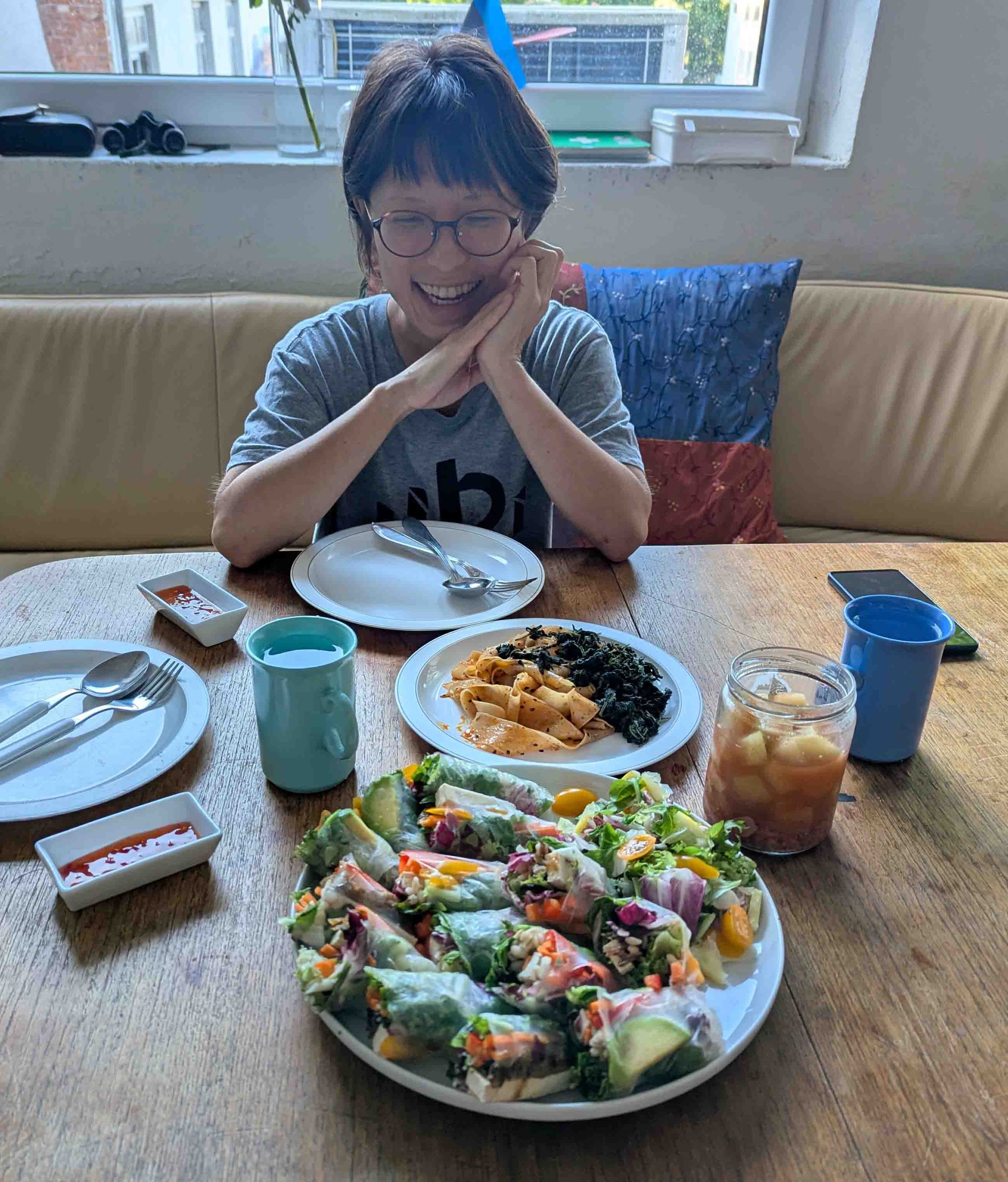
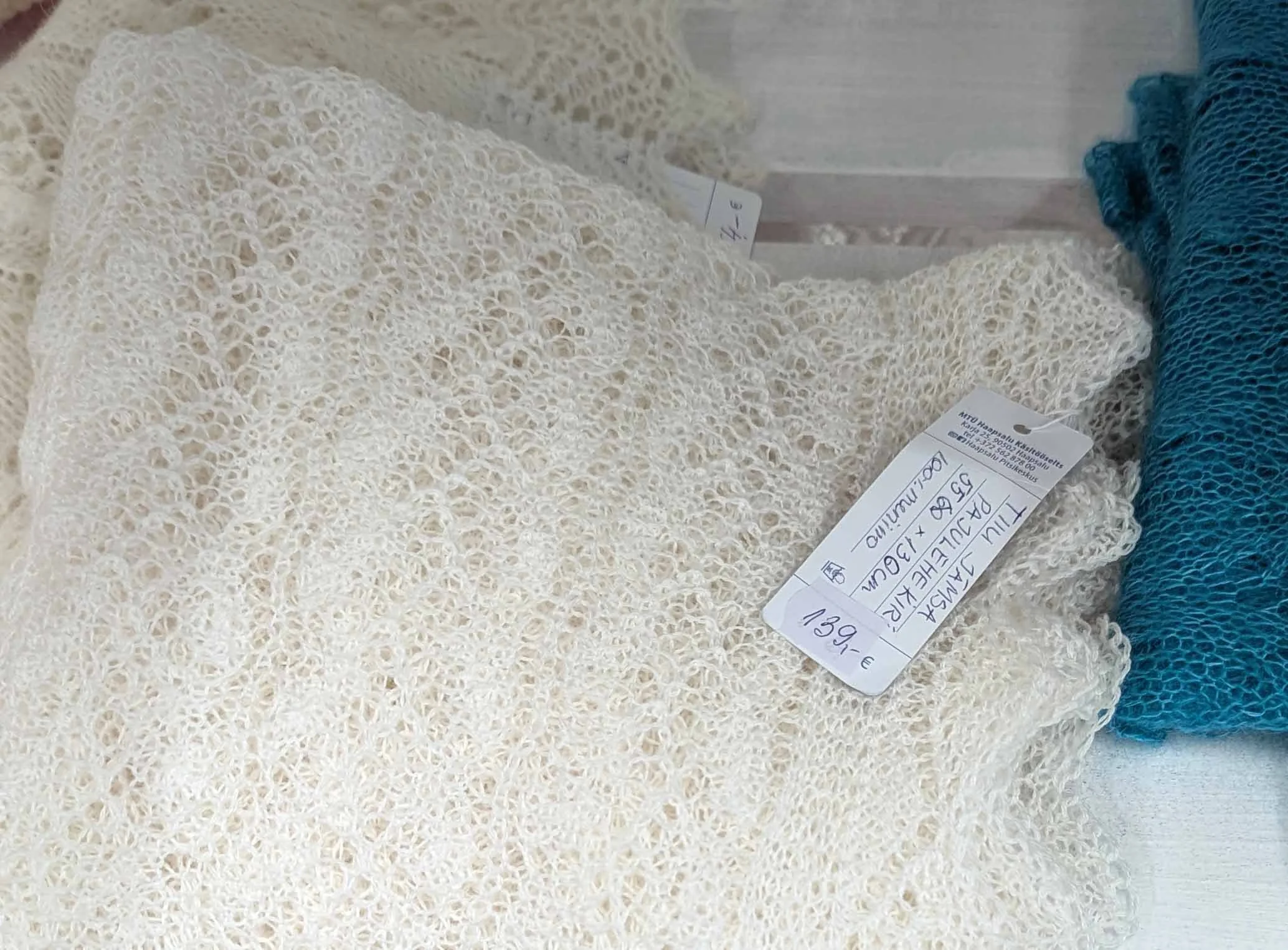
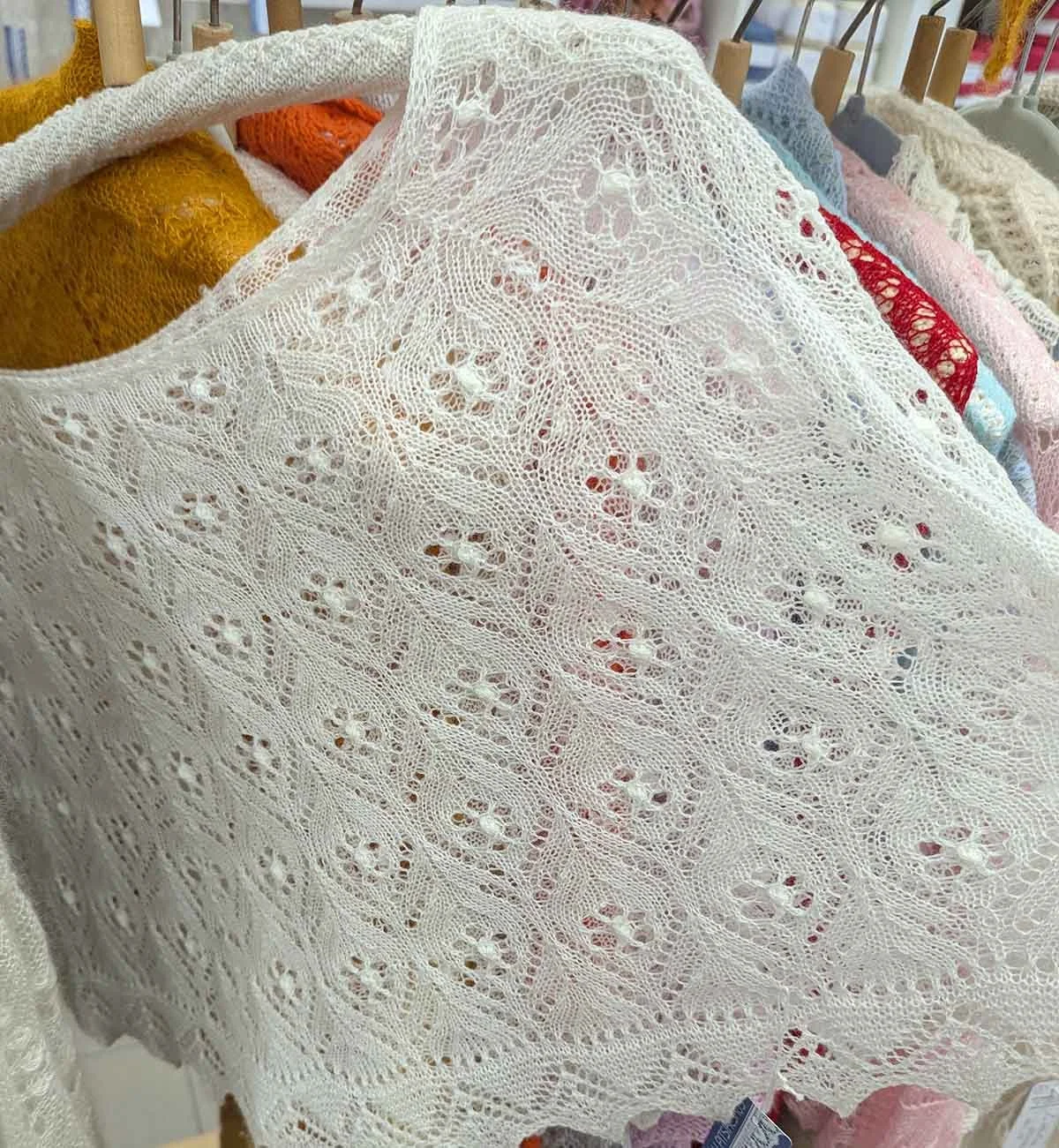
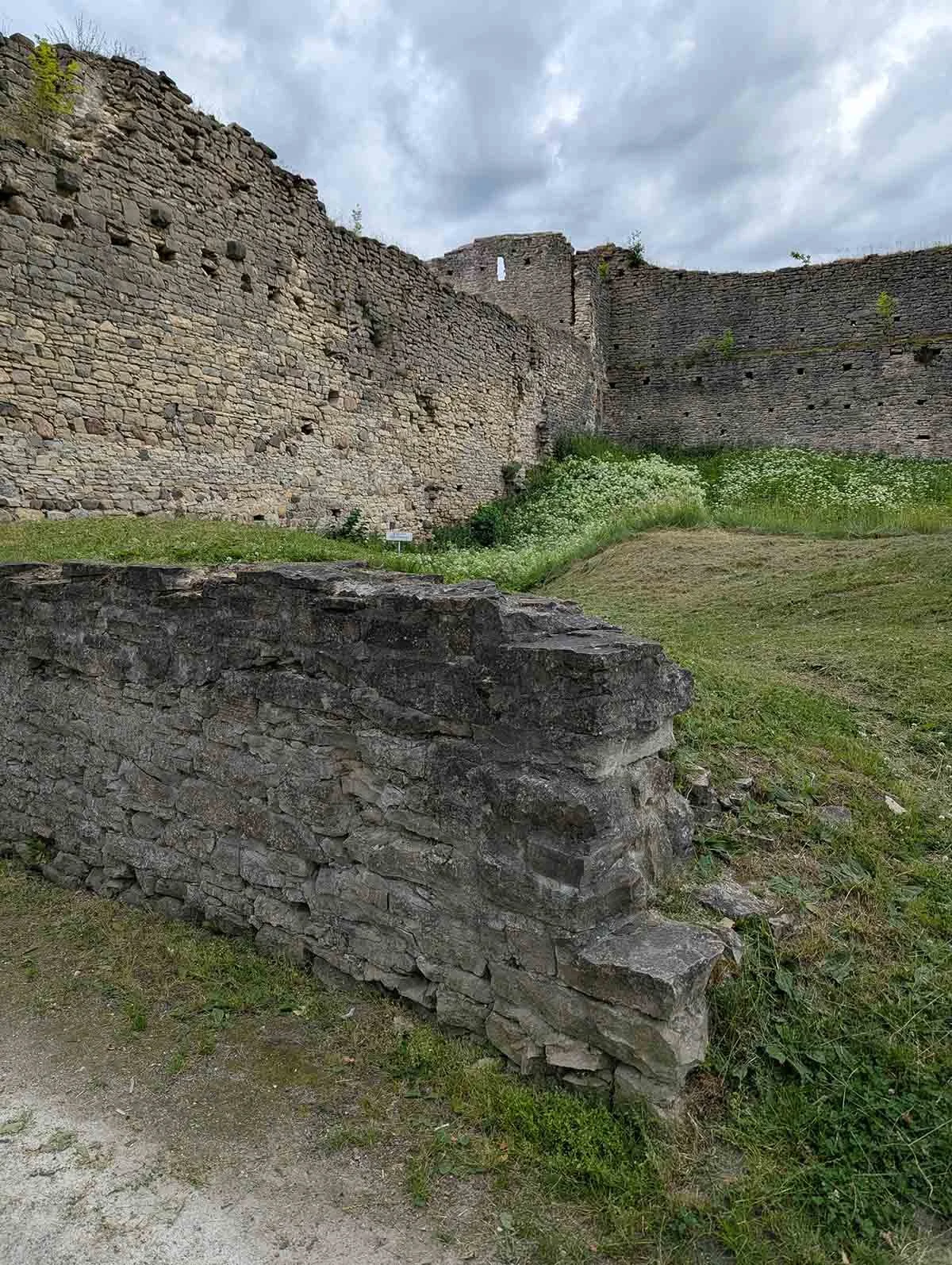
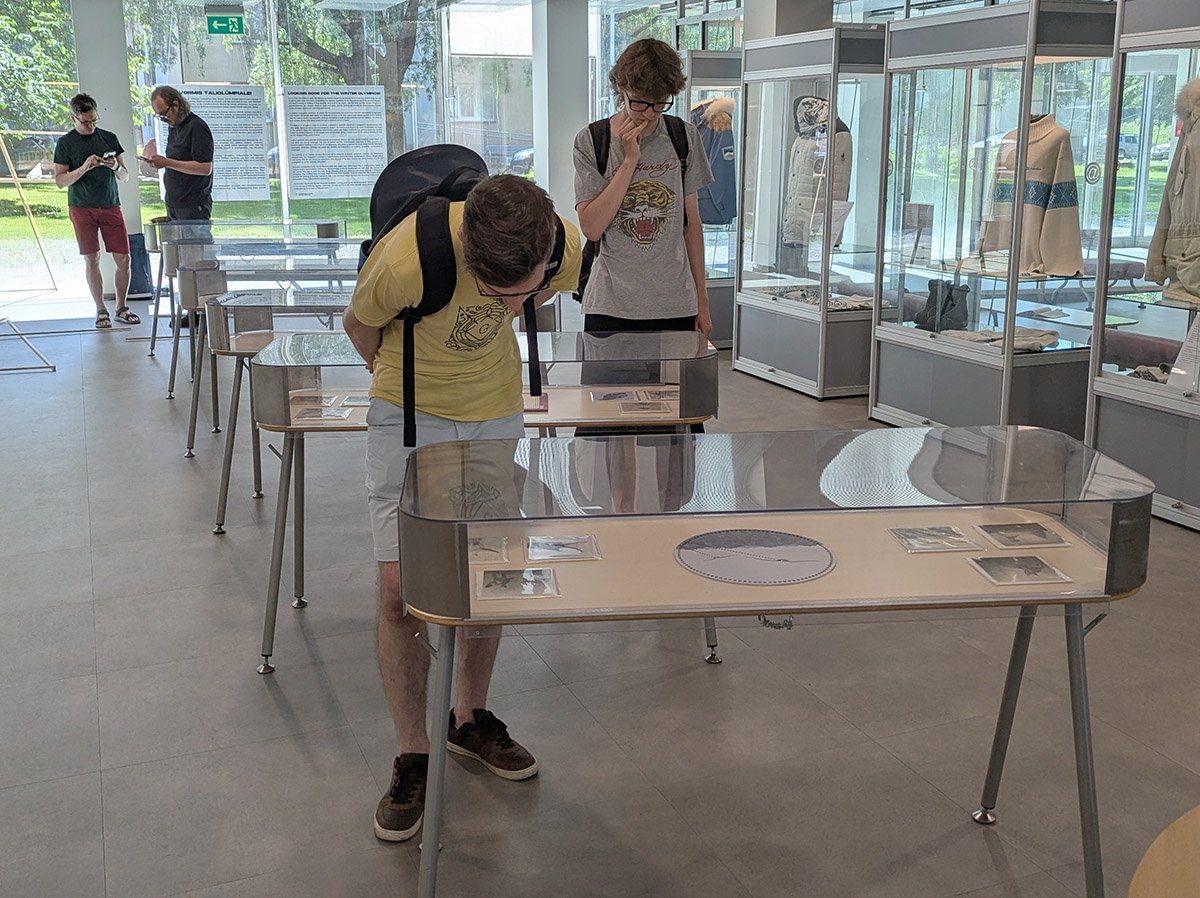
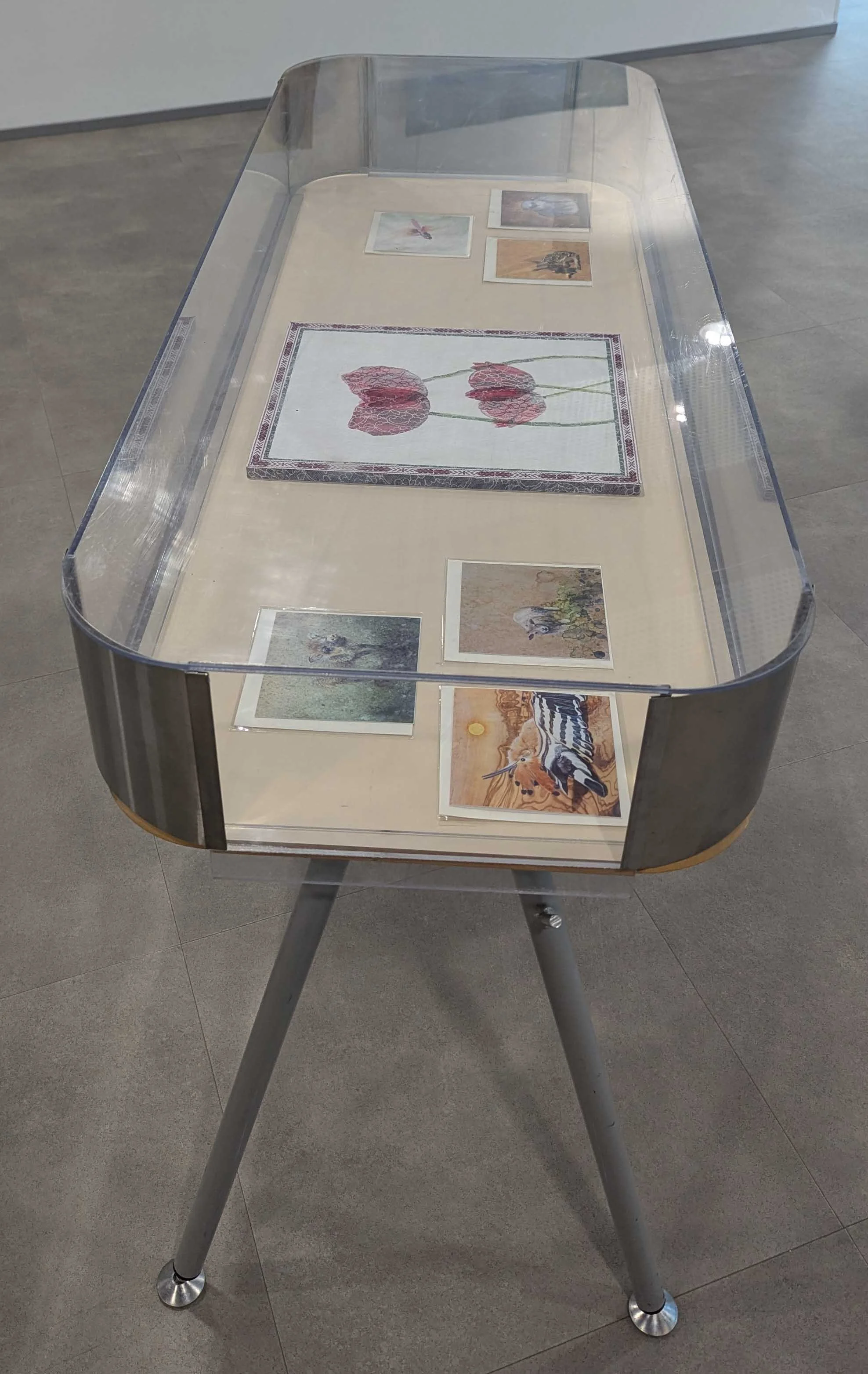
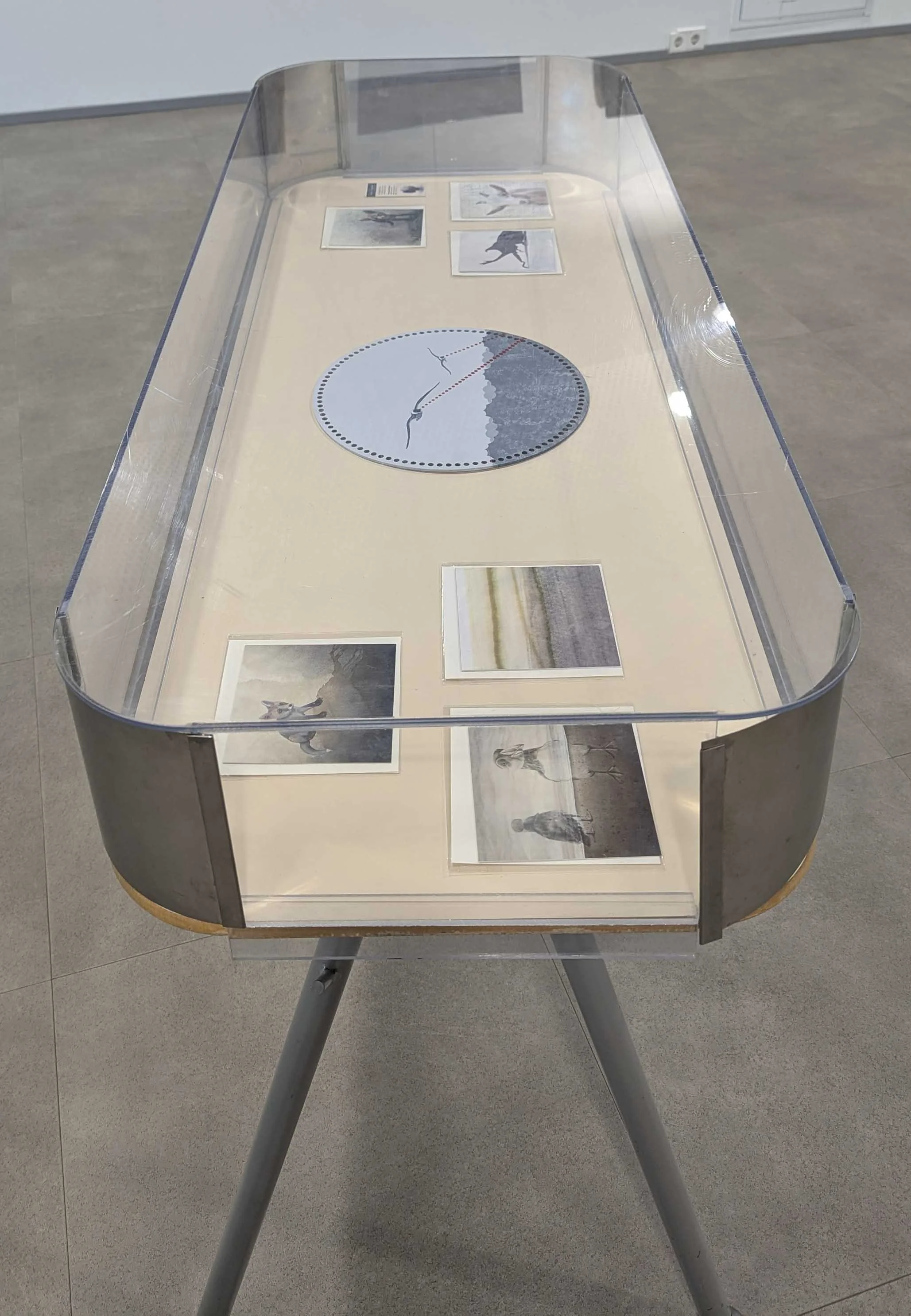
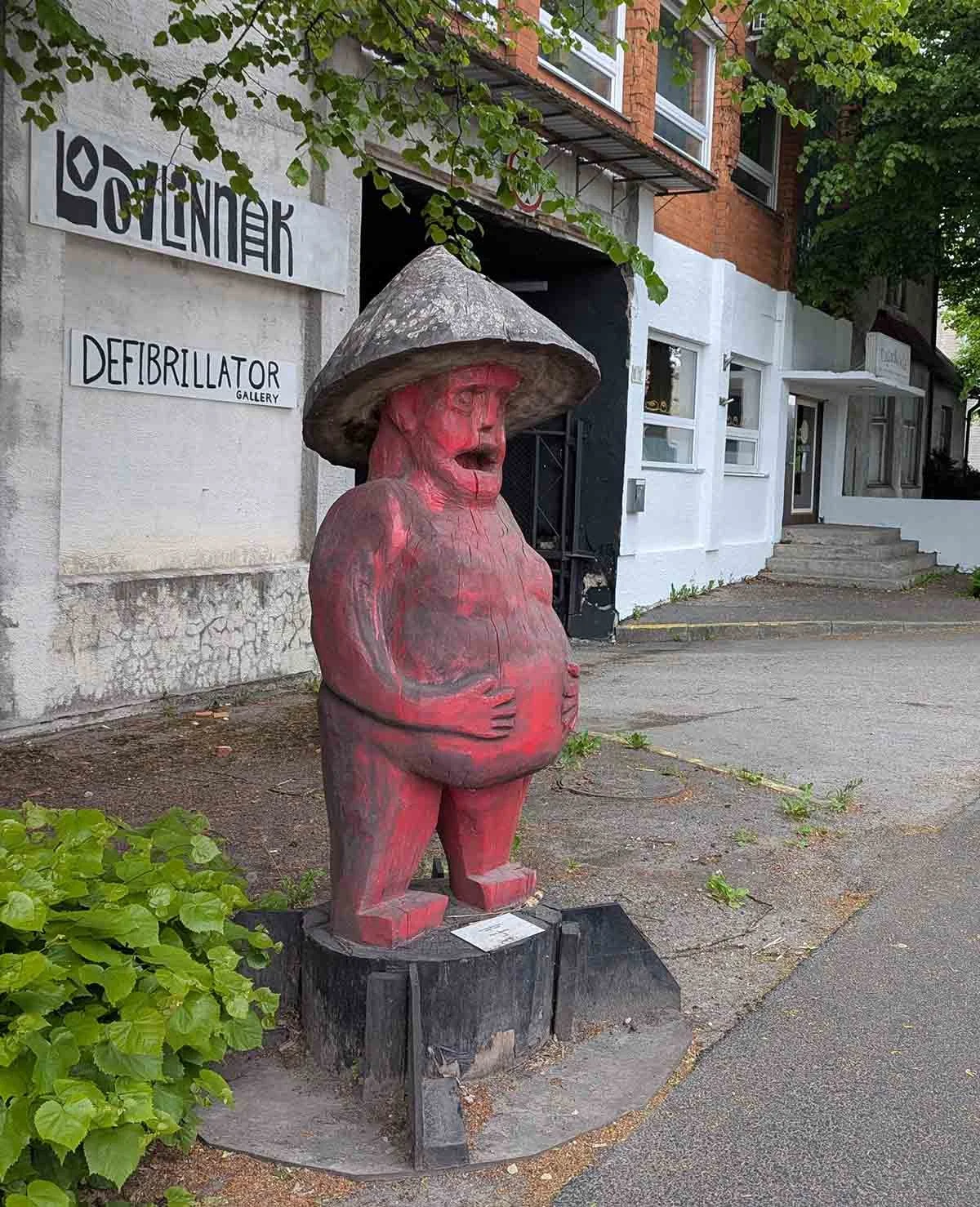
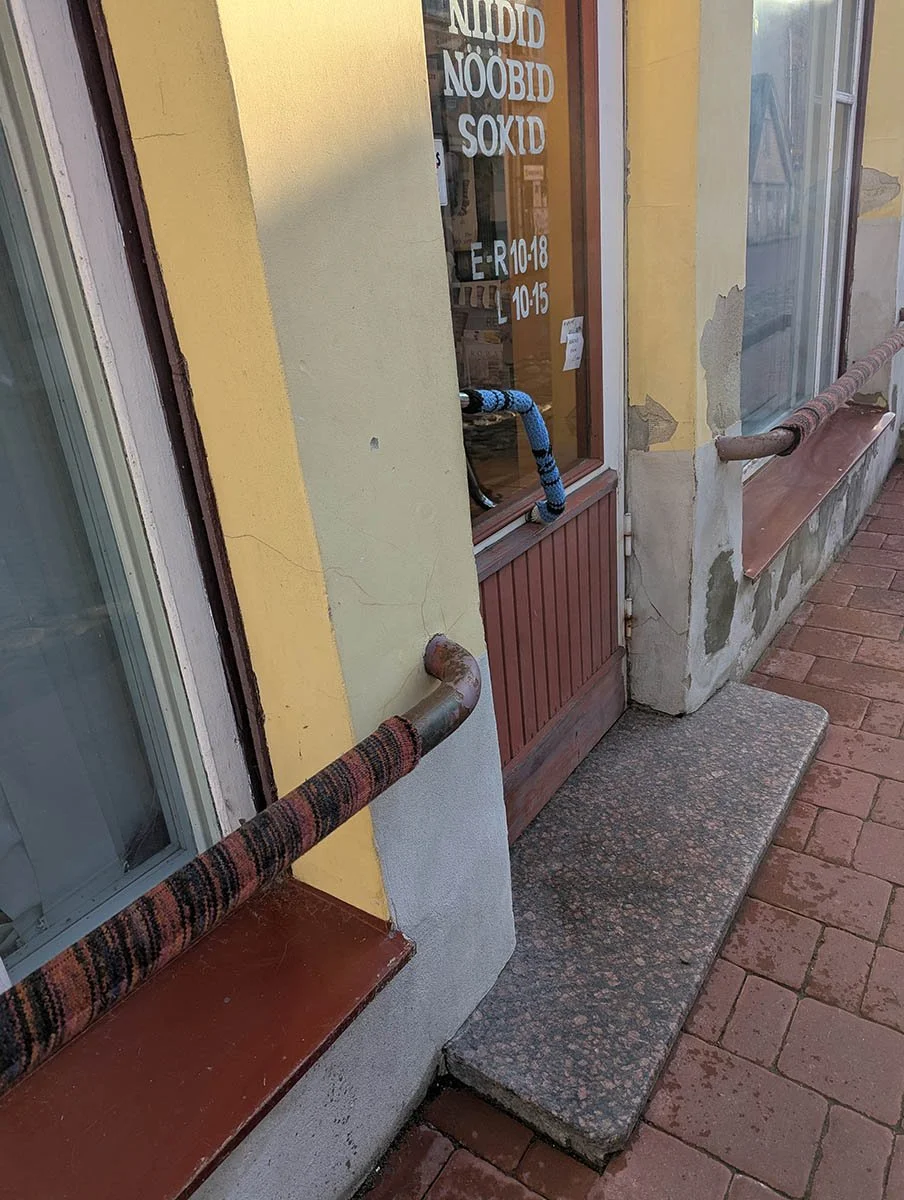
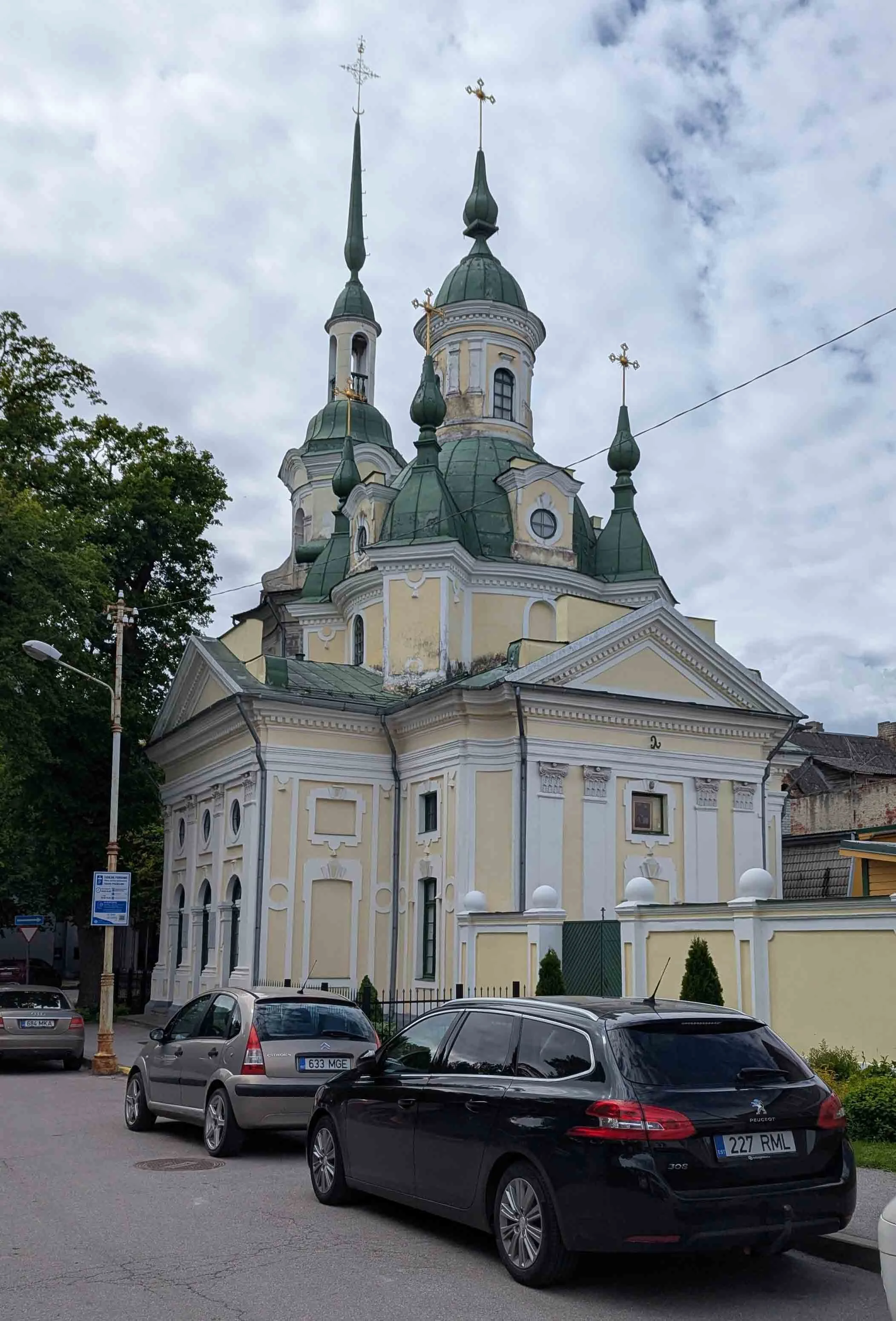
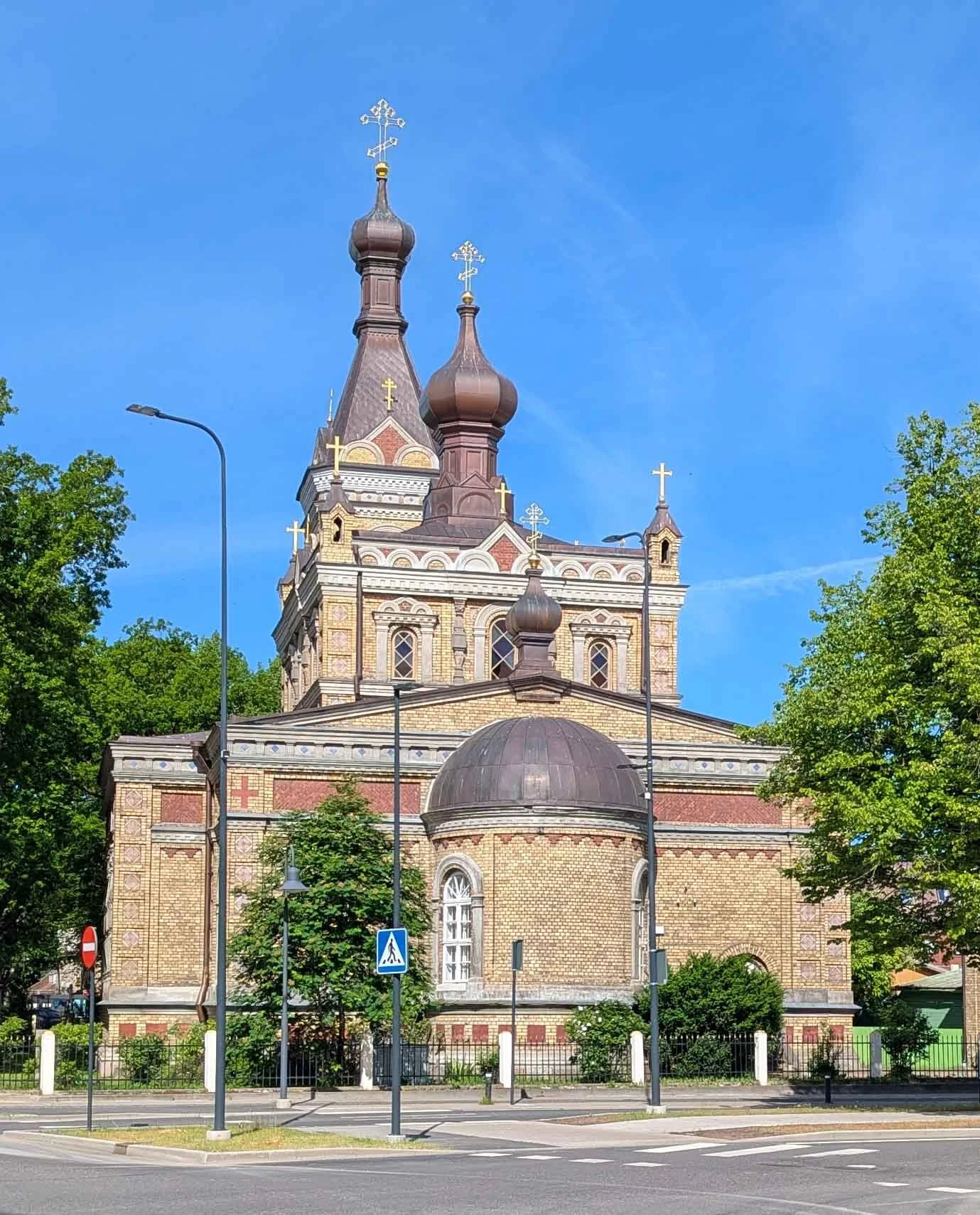
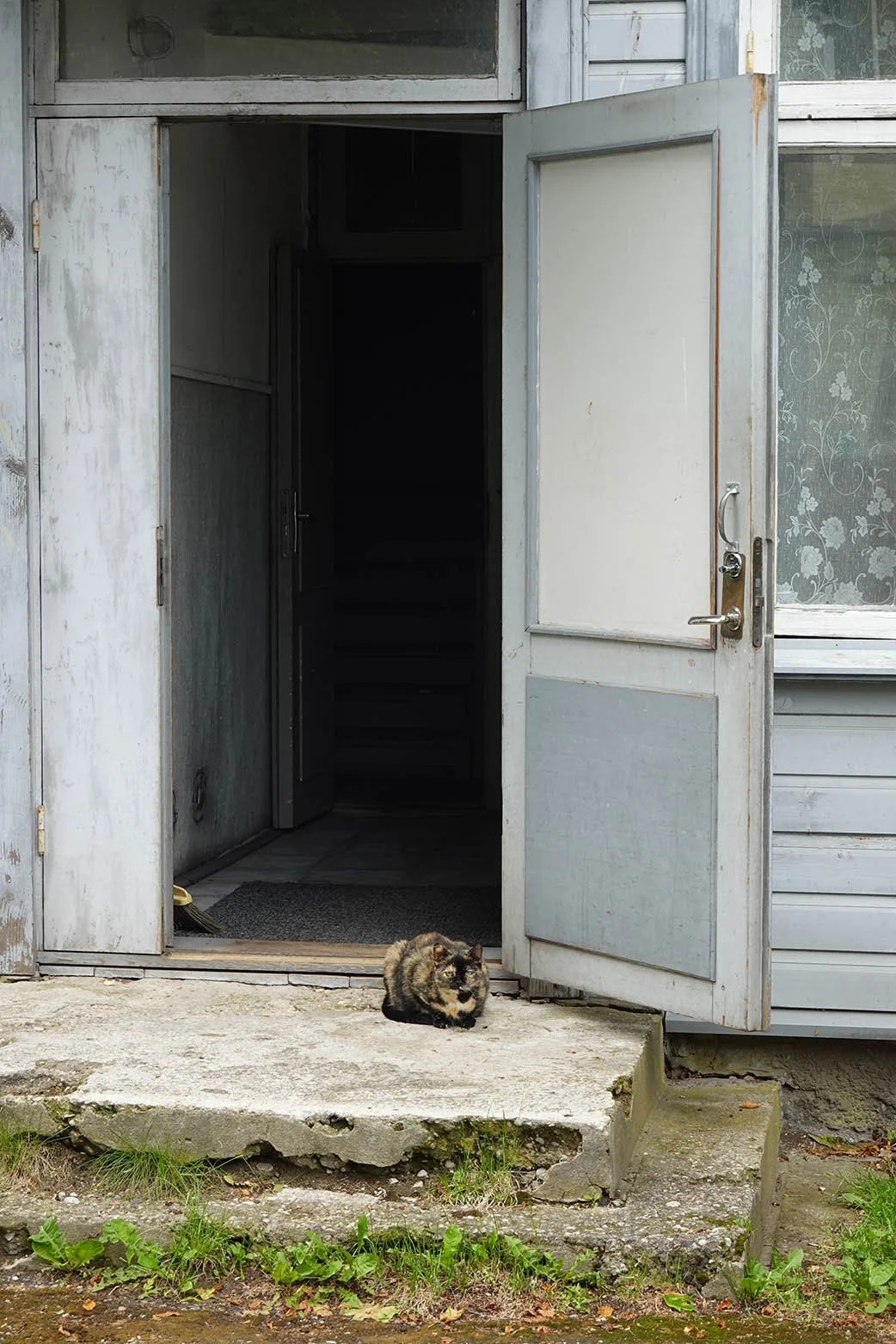
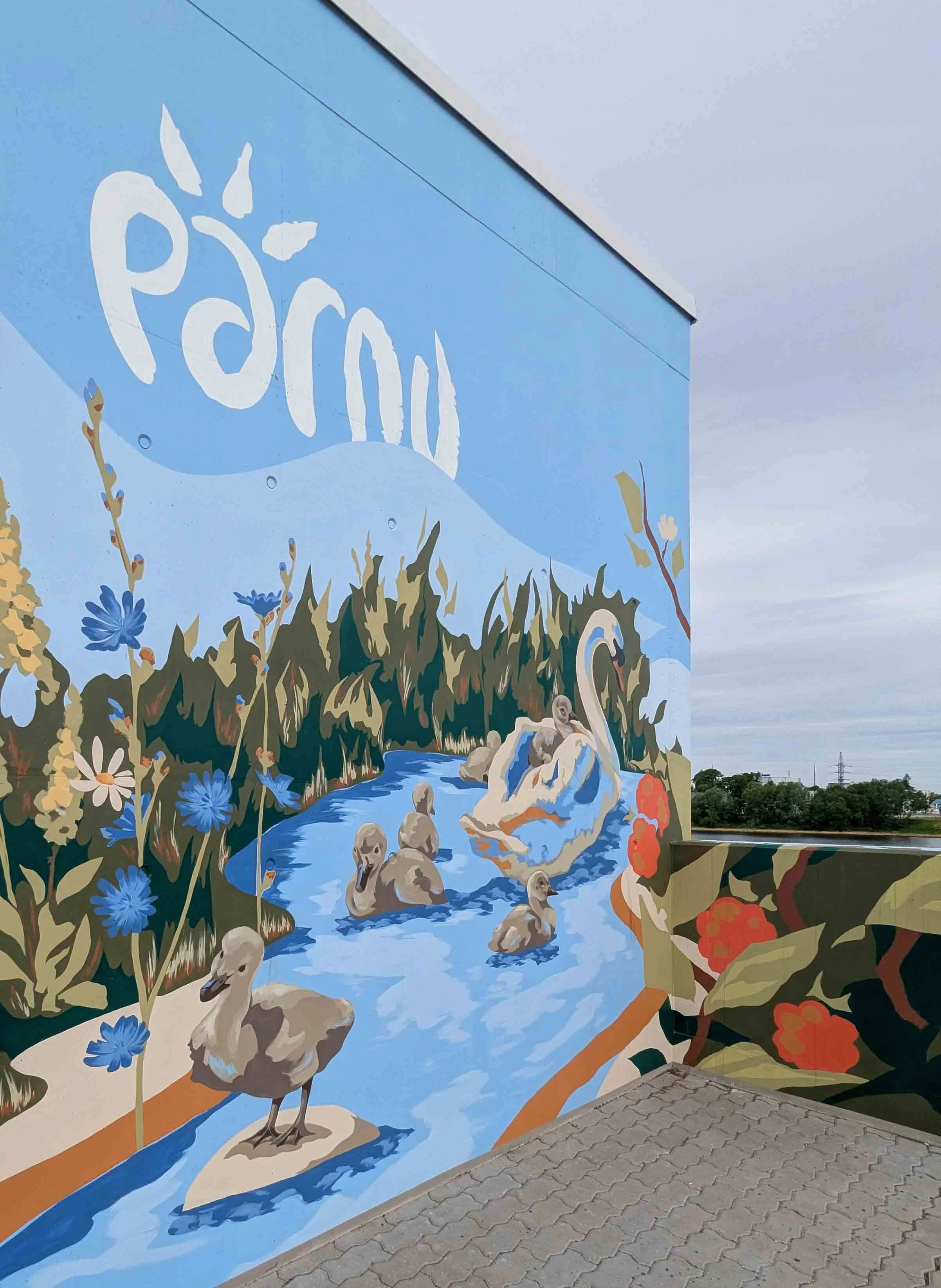
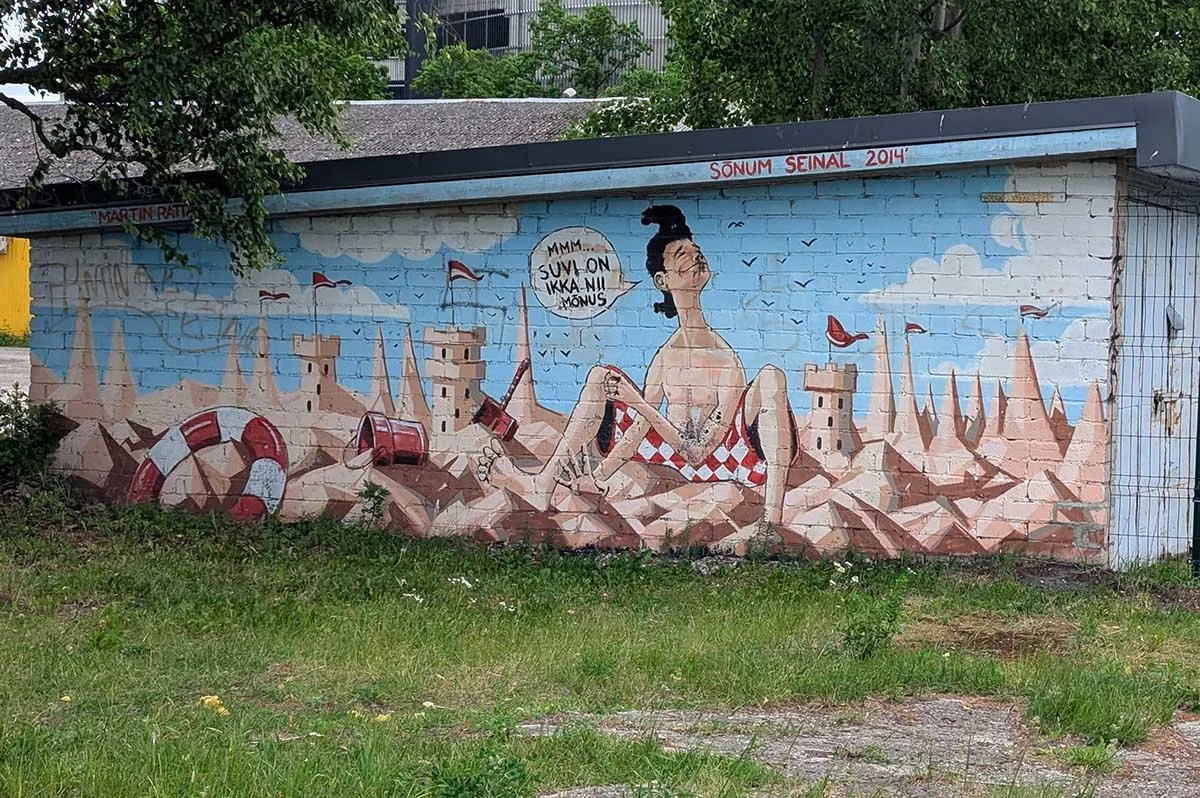
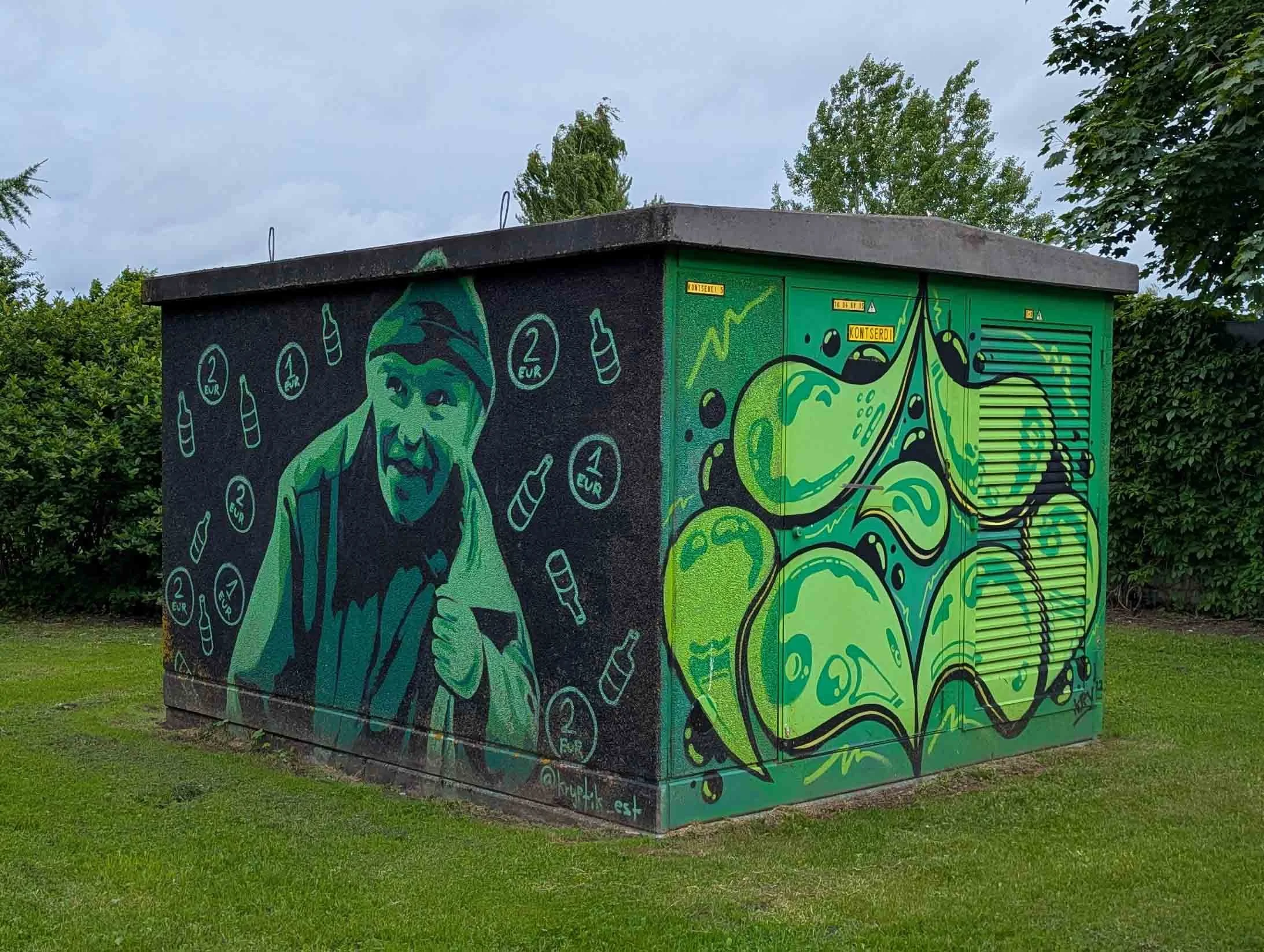
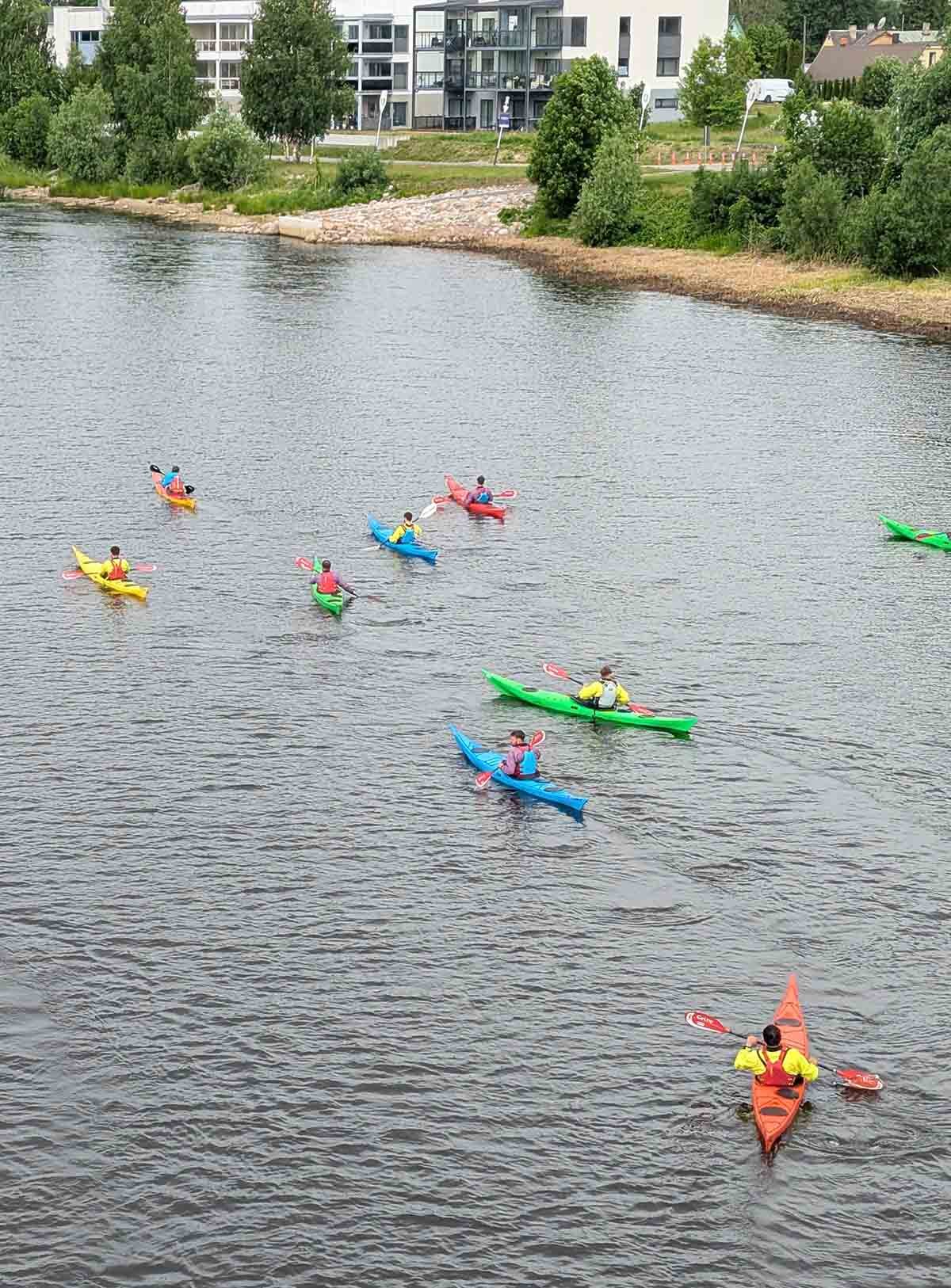
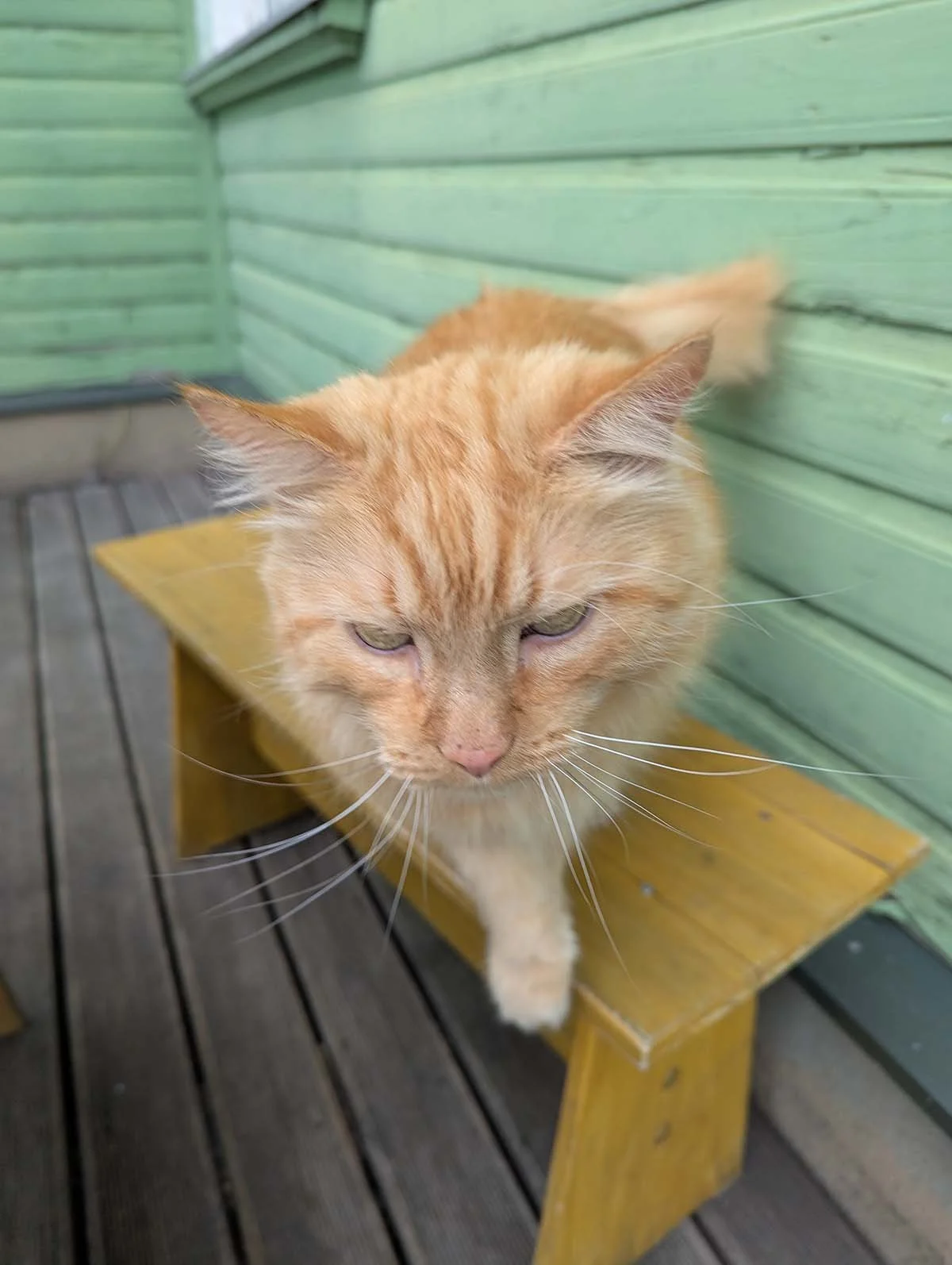
You can click into any of these cropped thumbnails to see the whole, larger images! They’re a mishmash of everything I mentioned above and some extras, like my favorite tree and the cat who demanded a lot of pets while I was eating vegan sushi.

New Artwork: Woven Thresholds

I’ve been painting red flowers lately, and I intentionally chose to continue that trend since I was building around a component I planned to use from the start: a jacquard folk pattern trim I picked up at Karnaluks OÜ in Tallinn. Once I saw a stand of vivid tulips, the rest of the composition came together..

The process differed from Between Worlds. Here, I painted the floater panel and tulips first, then laid down plastic and painted the lace pattern on top of it. After removing both those layers, I worked through a wide range of compositional options before settling on this angled, mirrored lace overlay. From there I secured the lace, added the trim, then cleaned up and secured the back. This was the second piece I started, but the third to finish! The delay was due to the sequential steps I needed to complete, each of which involved drying/curing periods.

Iconographically, tulips function as shields, threshold filters, and barriers across multiple traditions, a symbolism rooted in their nyctinasty: they close their petals tightly at night or on cloudy days, sealing their core away from cold, damp, and nocturnal threats. That self-protective habit is part of why tulips are believed to draw in positive energy while keeping poverty, bad luck, and hostility from crossing into the home, and why they carry associations of safety within oppressive environments. The lace adds a further veil over the tulips, while the mirrored, overlapping composition contributes a sense of movement and dissonance.
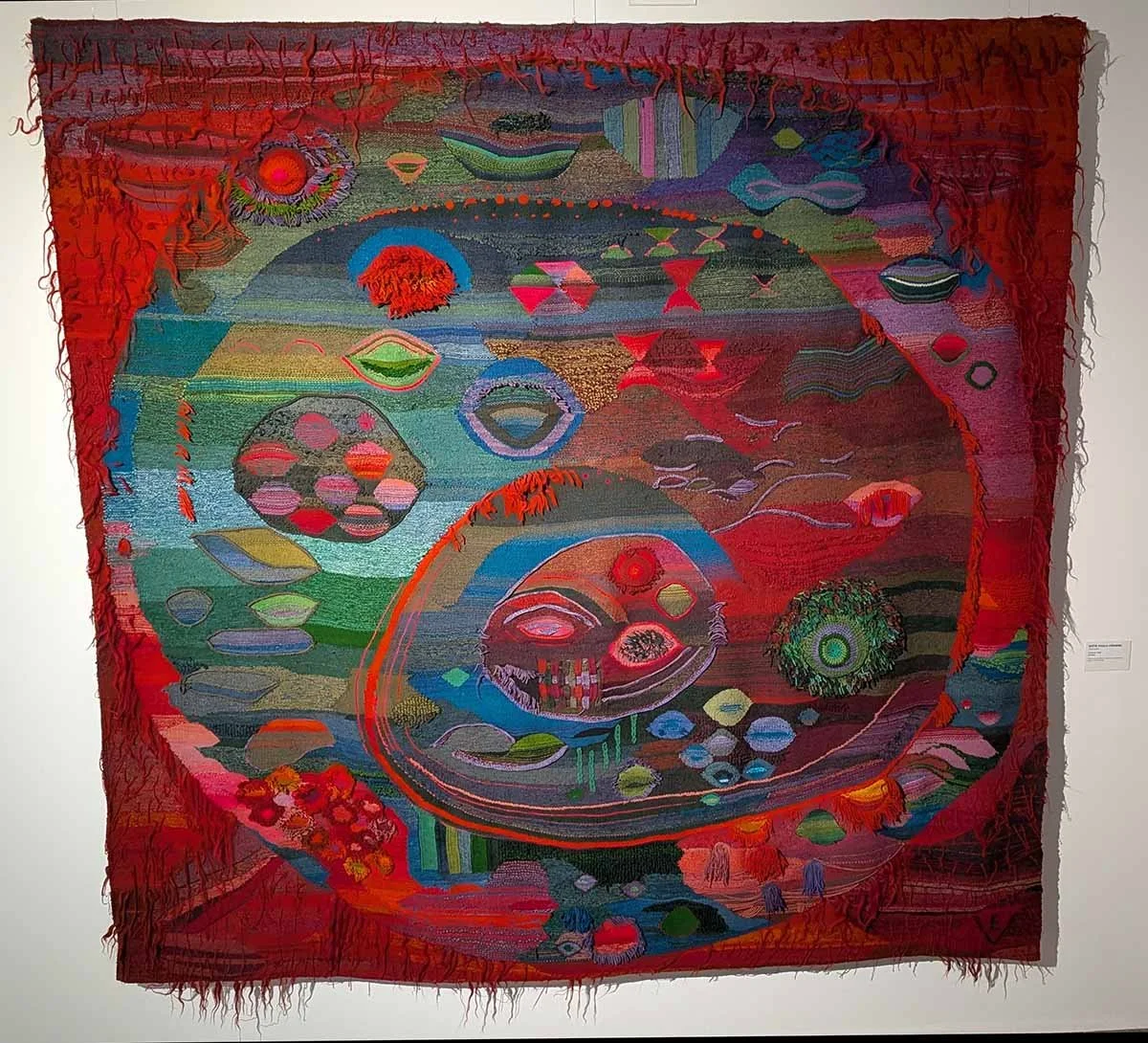
The outer border carries its own layer of meaning: it is a traditional Baltic woven band steeped in regional folklore and protective symbolism. Its color scheme has historically represented life, fire, and an active shield against negative energy. The pattern combines two ancient Baltic symbols: the Cross of Māra, tied to the Latvian goddess of earth and home and read as a sign of grounding and stability, and the hourglass motif, which represents the rhythm of time and the meeting point of the spiritual and physical worlds.
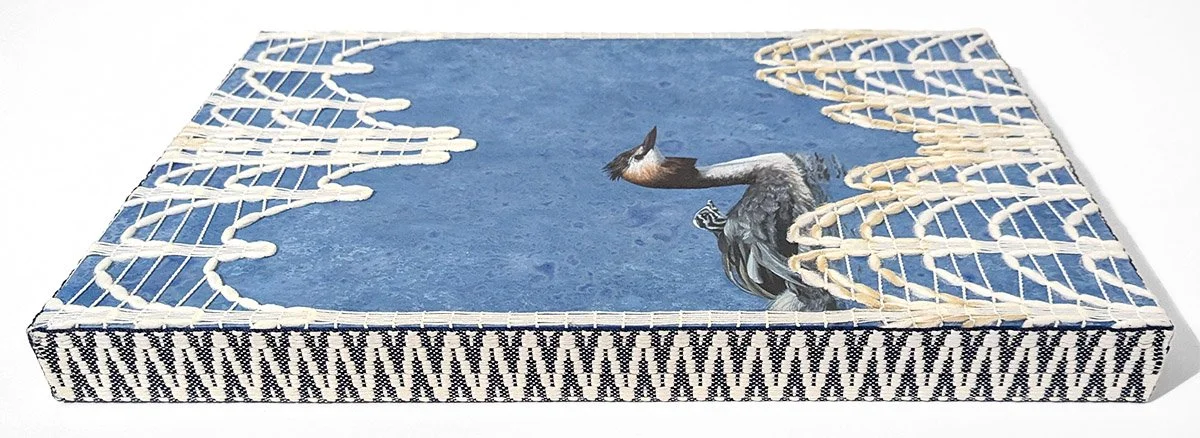
This is Woven Thresholds, acrylic, lace, and jacquard trim on wooden floater panel, 14x11x.5”, 2026.

Shelby Prindaville’s mixed media lace painting of tulips on a floater panel with Baltic jacquard trim.

New Artwork: Sower's Shadow

Wool is ubiquitous here in the Nordic-Baltic region, appearing in many forms: knitted, crocheted, and felted into clothing, mittens, and gloves; accessories like hats, necklaces, and pins; and home goods like placemats, blankets, and children's stuffed animals.

When I came across a felt letter board at a vintage shop in Pärnu, it spoke to me as a viable substrate. I wanted to incorporate wool in some way into my Estonian body of work given its regional importance, and I also liked the idea of converting a familiar mechanism for rigid text-based communication into artwork that through removal of its frame, rotation, and incorporation of organic form brings new associations.
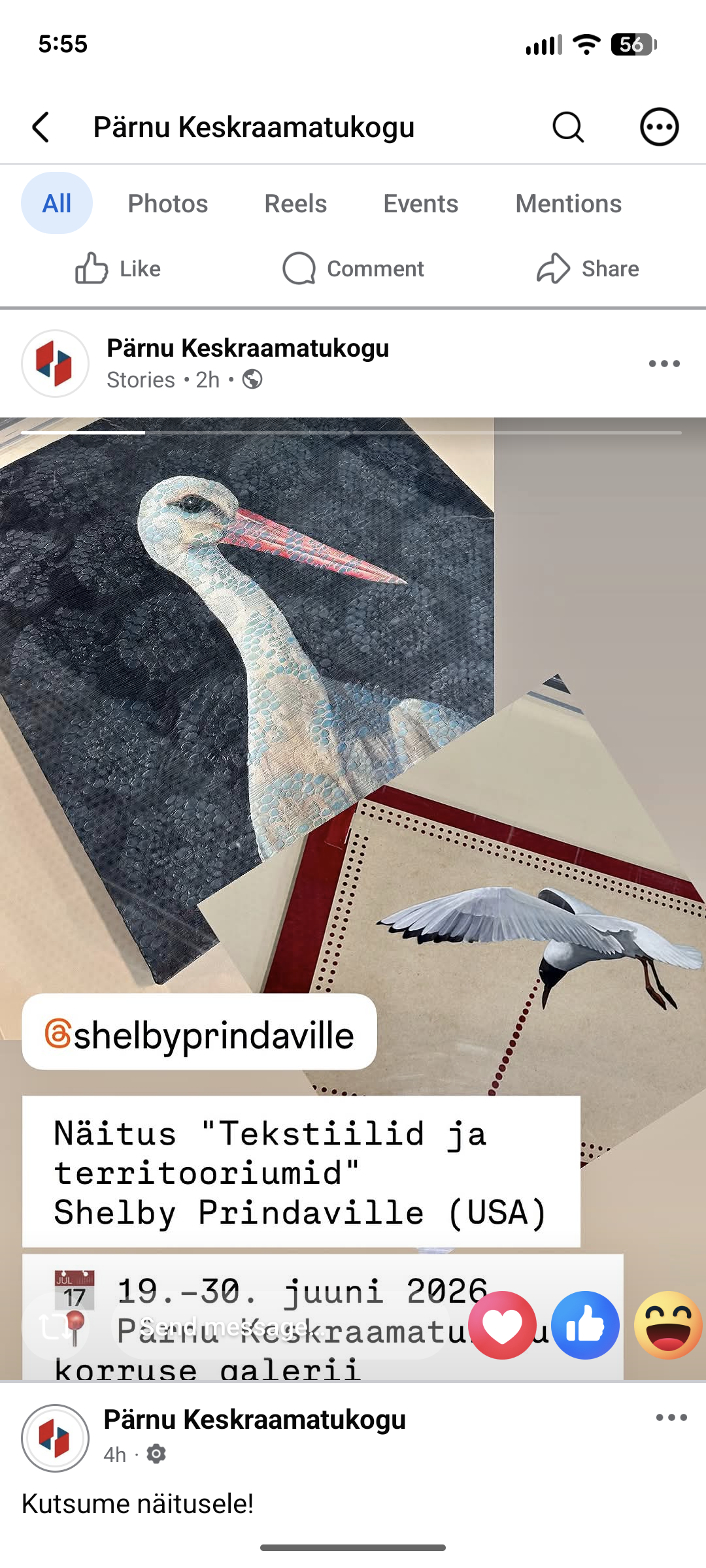
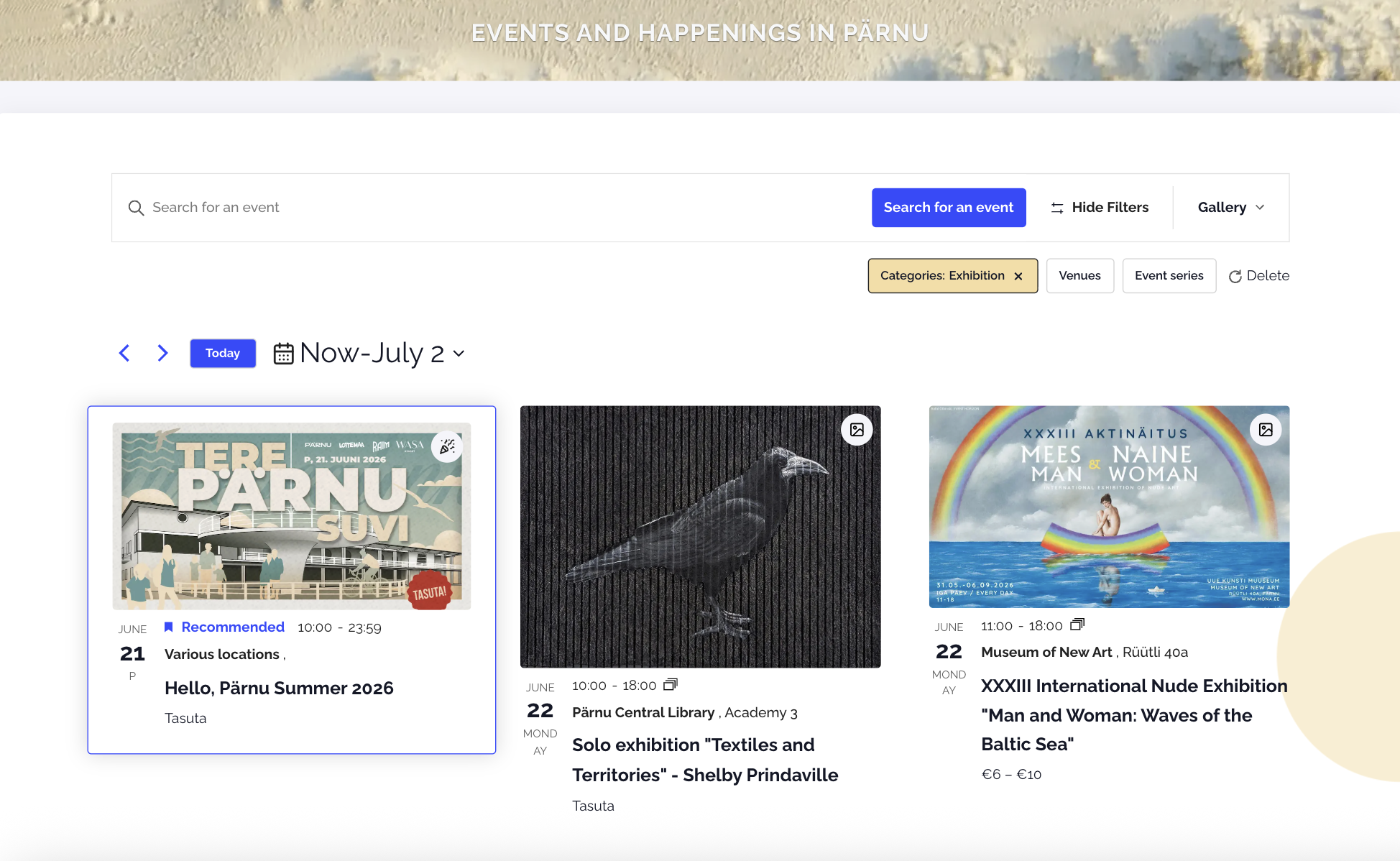
This second finished mixed media painting depicts a rook (Corvus frugilegus). A member of the corvid family (which also includes crows, ravens, and jackdaws), rooks forage on arable land and nest close to farms and villages.

This is Sower’s Shadow, acrylic, molding paste, and matte medium on felt letter board, 11x14.9x.4”, 2026.

Shelby Prindaville's painting of a rook on a felt letter board.

New Artwork: Between Worlds

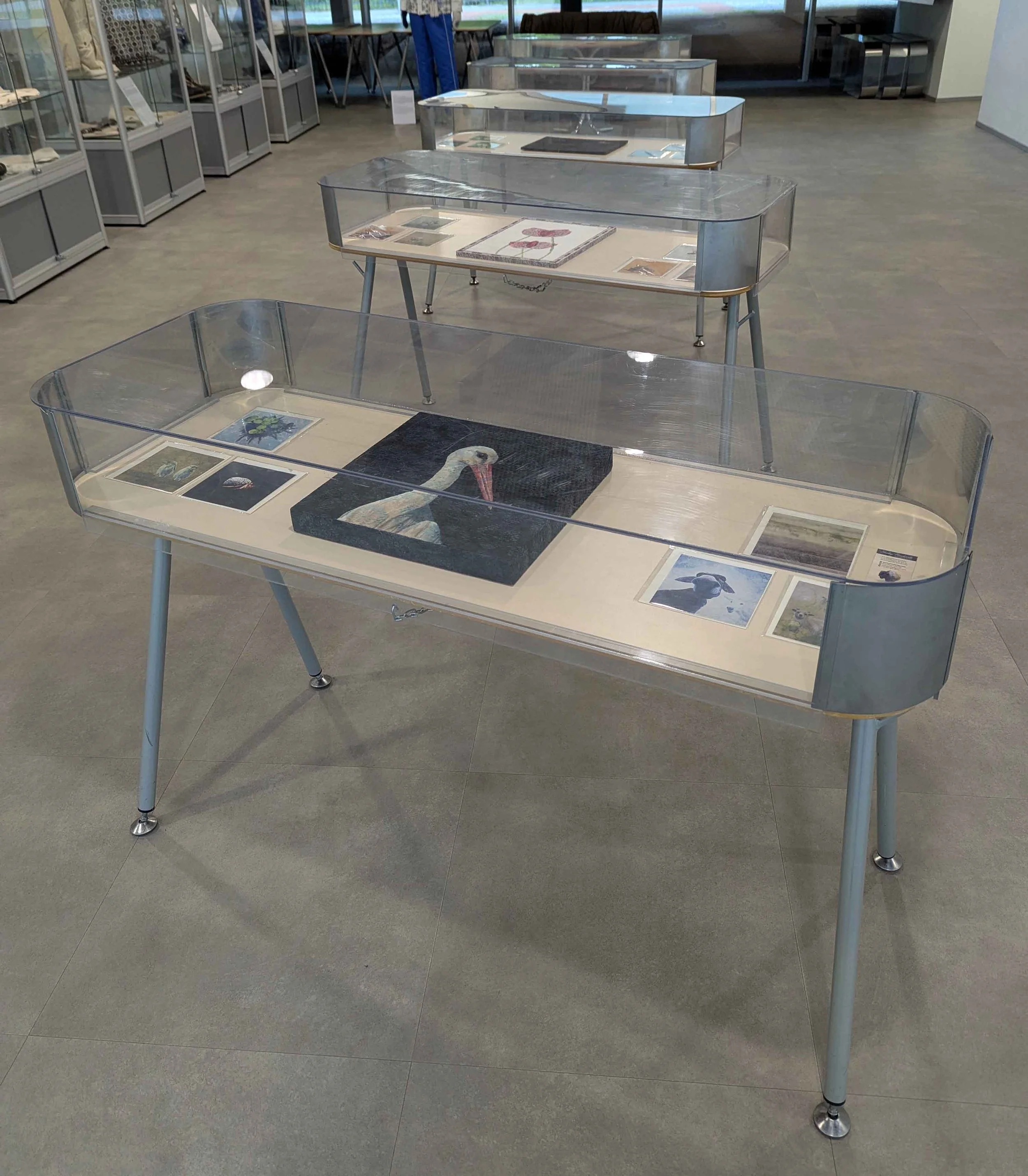
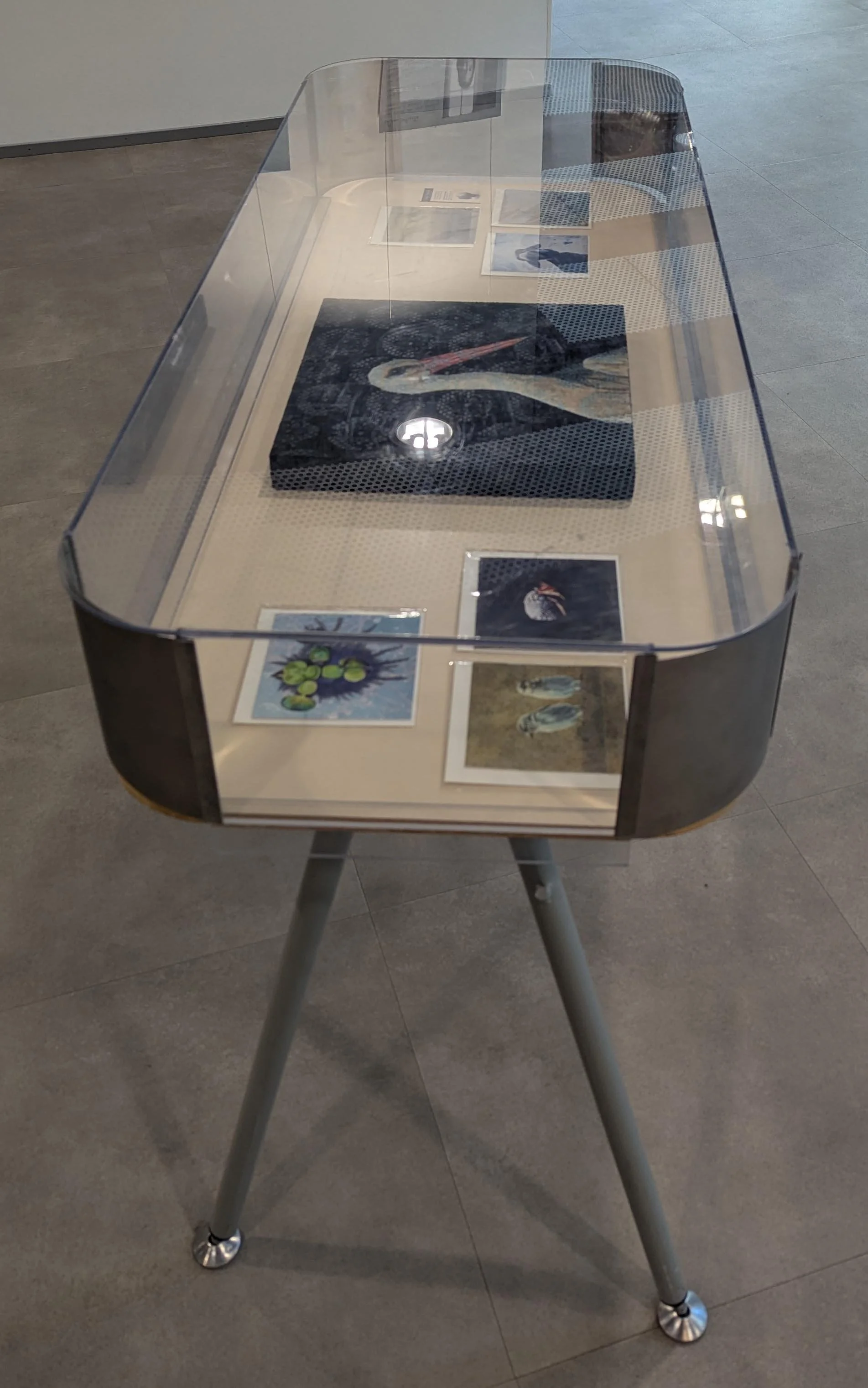
My first finished mixed media painting in Estonia depicts a white stork (Ciconia ciconia).

The substrate is antique lace over wood panel. My process involved attaching the lace to the panel, painting the portrait, removing the lace and altering the coloration of the wood panel surface, and then meticulously re-registering and attaching the lace back on top and sealing it down.

These birds are embedded in Estonian rural life: they're associated with summer farms and considered good luck omens. Storks are also important in folklore, as they accompany souls to the underworld and bring newborns into the world as a part of a cycle of death and rebirth in Finno-Ugric mythology.

This is Between Worlds, acrylic and antique lace on wood panel, 14x14x1.5”, 2026.

Shelby Prindaville's mixed media lace painting of a white stork.

My First Days in the Baltics - Helsinki, Tallinn, western Estonia

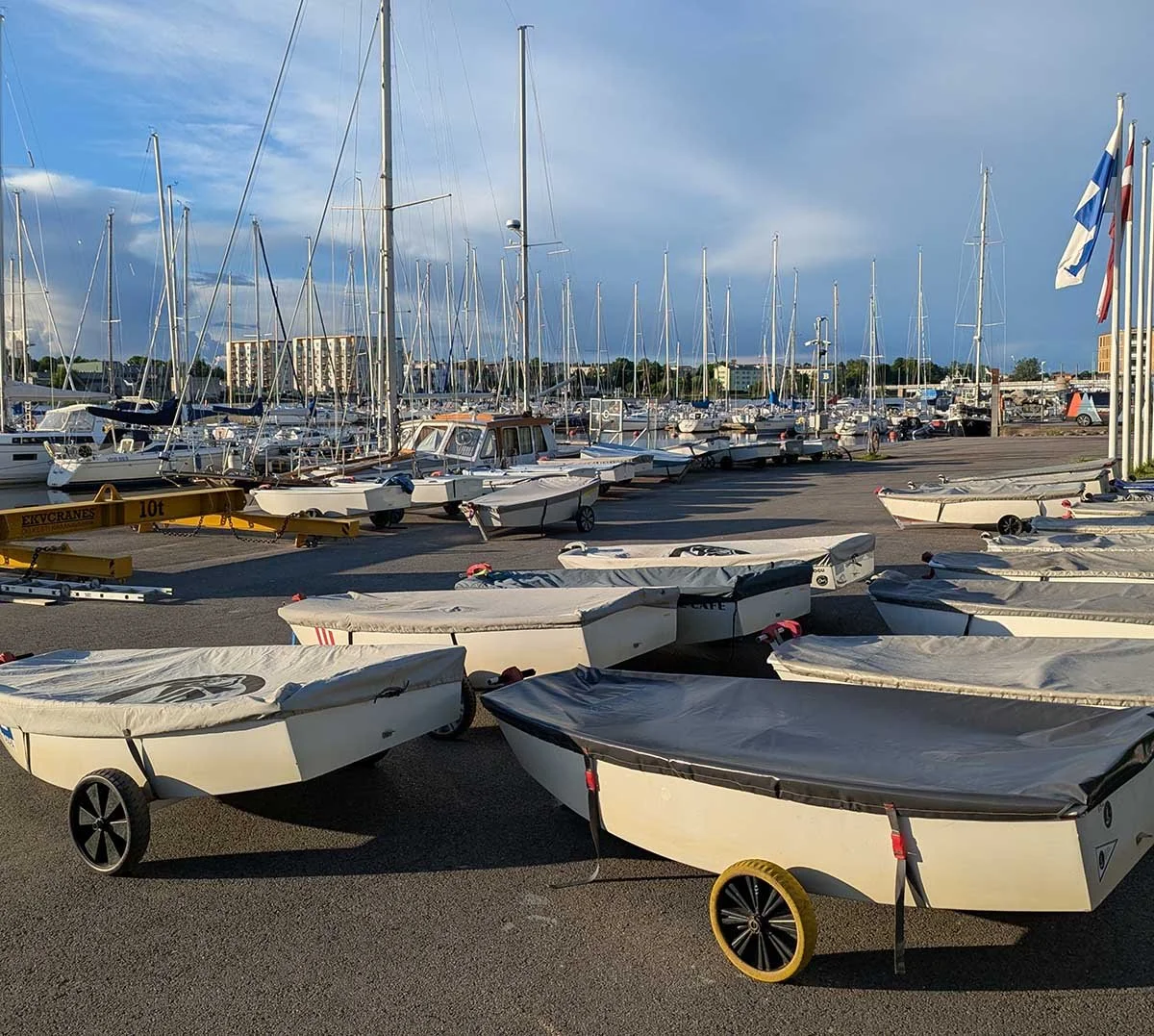
I flew into Helsinki, Finland; when I was looking at my flights, I saw they all routed through Helsinki to Tallinn. Since I knew I wanted to visit it during my stay, I figured I’d save on time and ferry costs if I just landed in Helsinki to begin with and then ferried down to Tallinn after a couple of days.

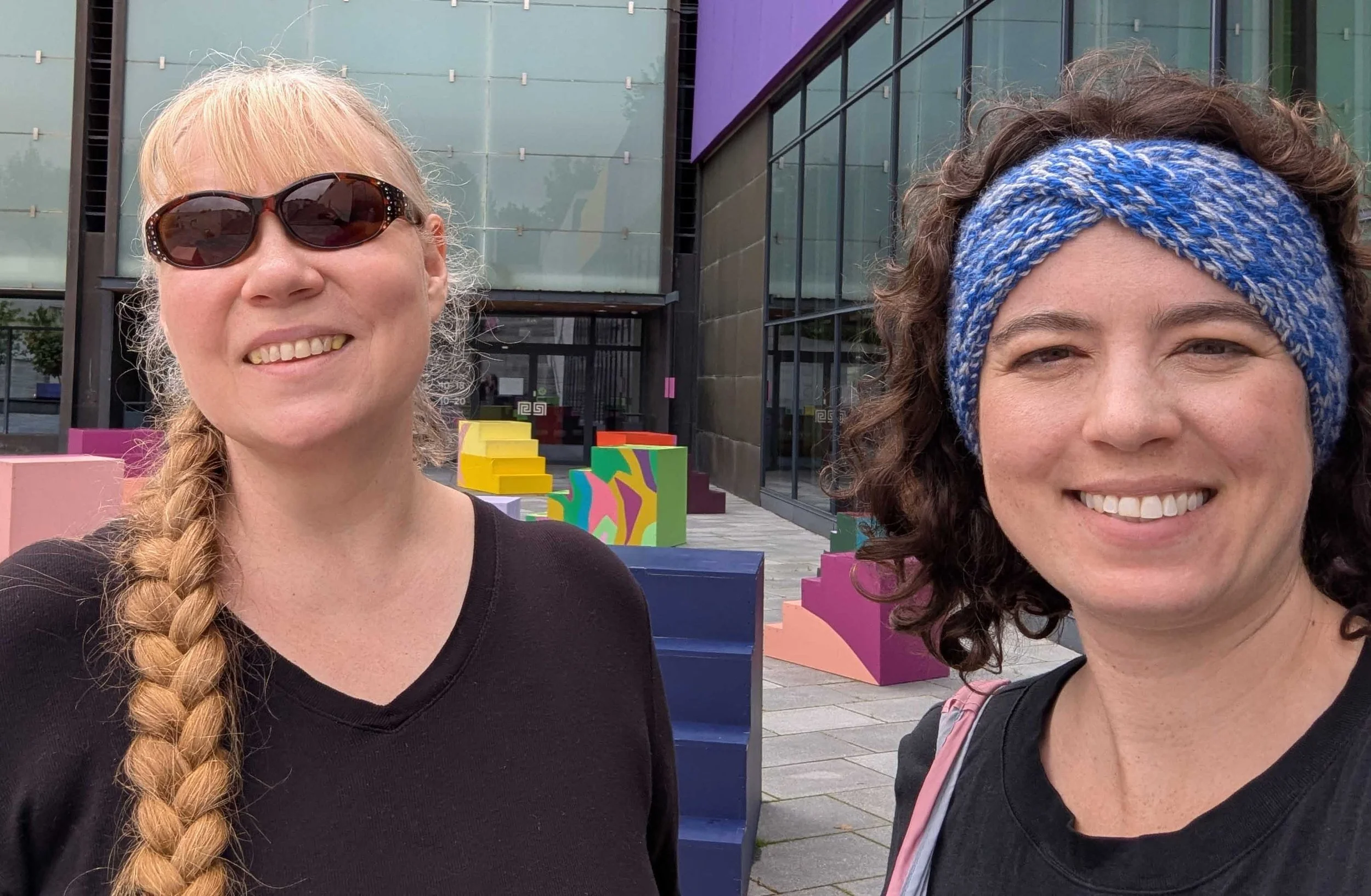
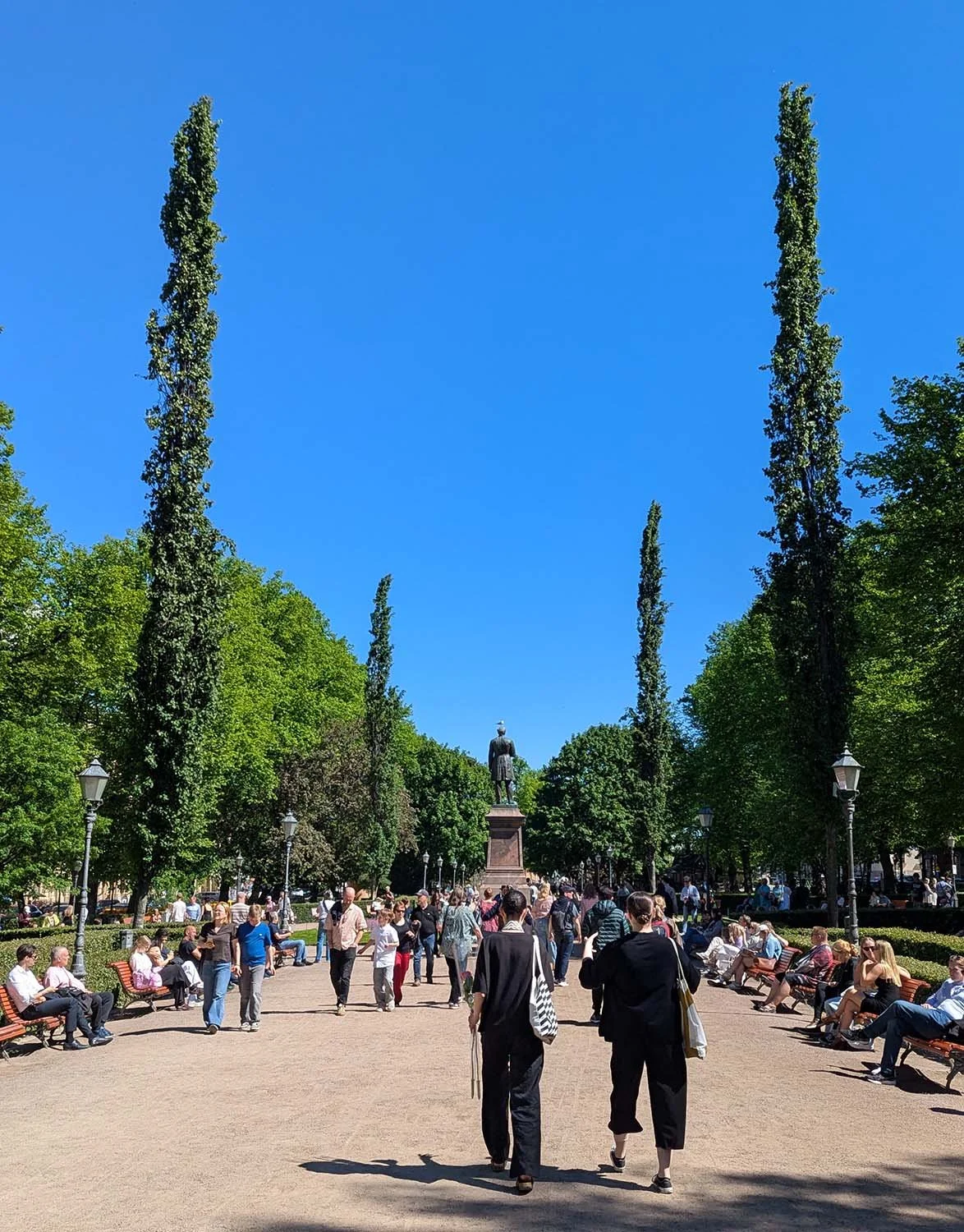
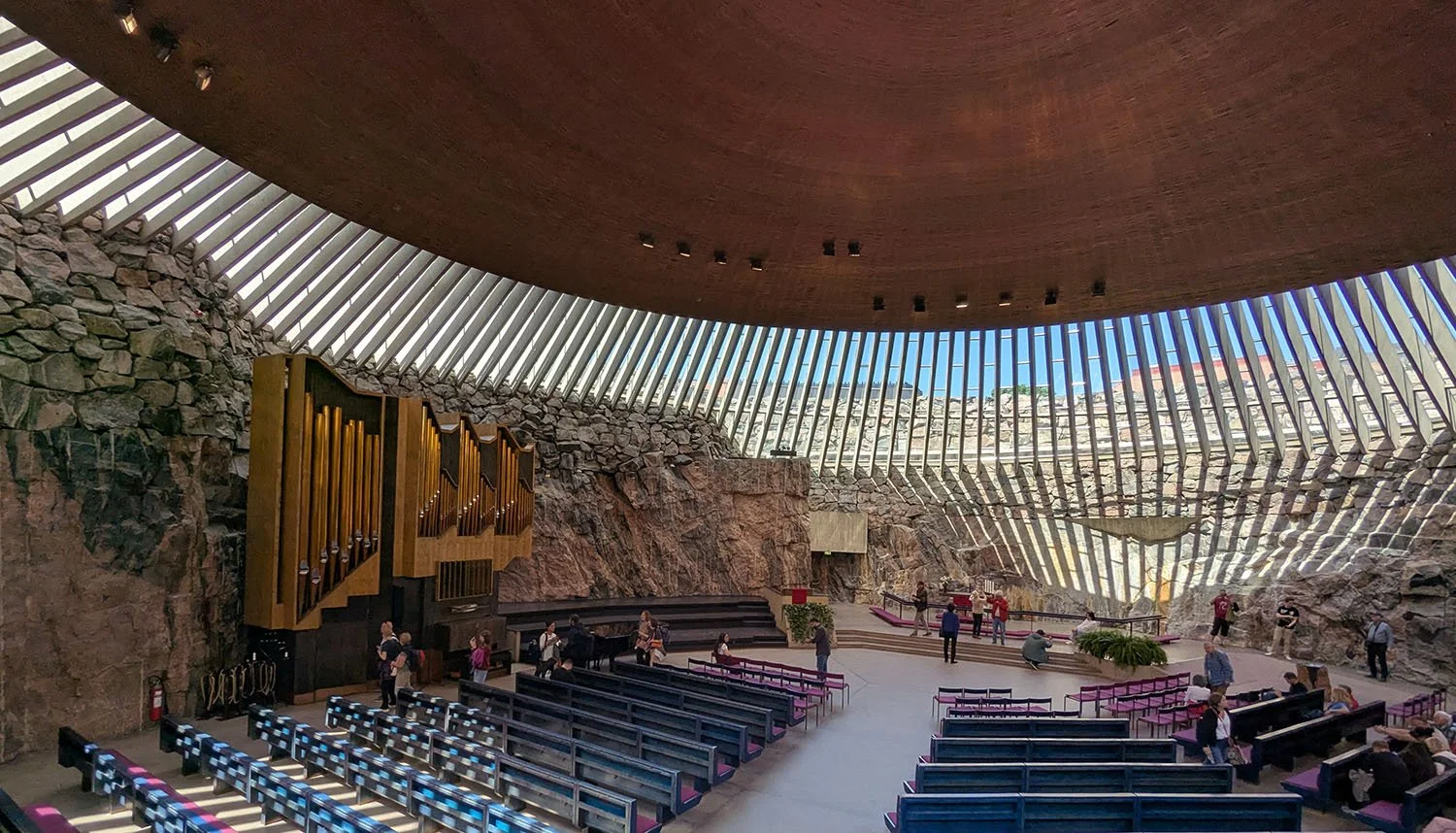
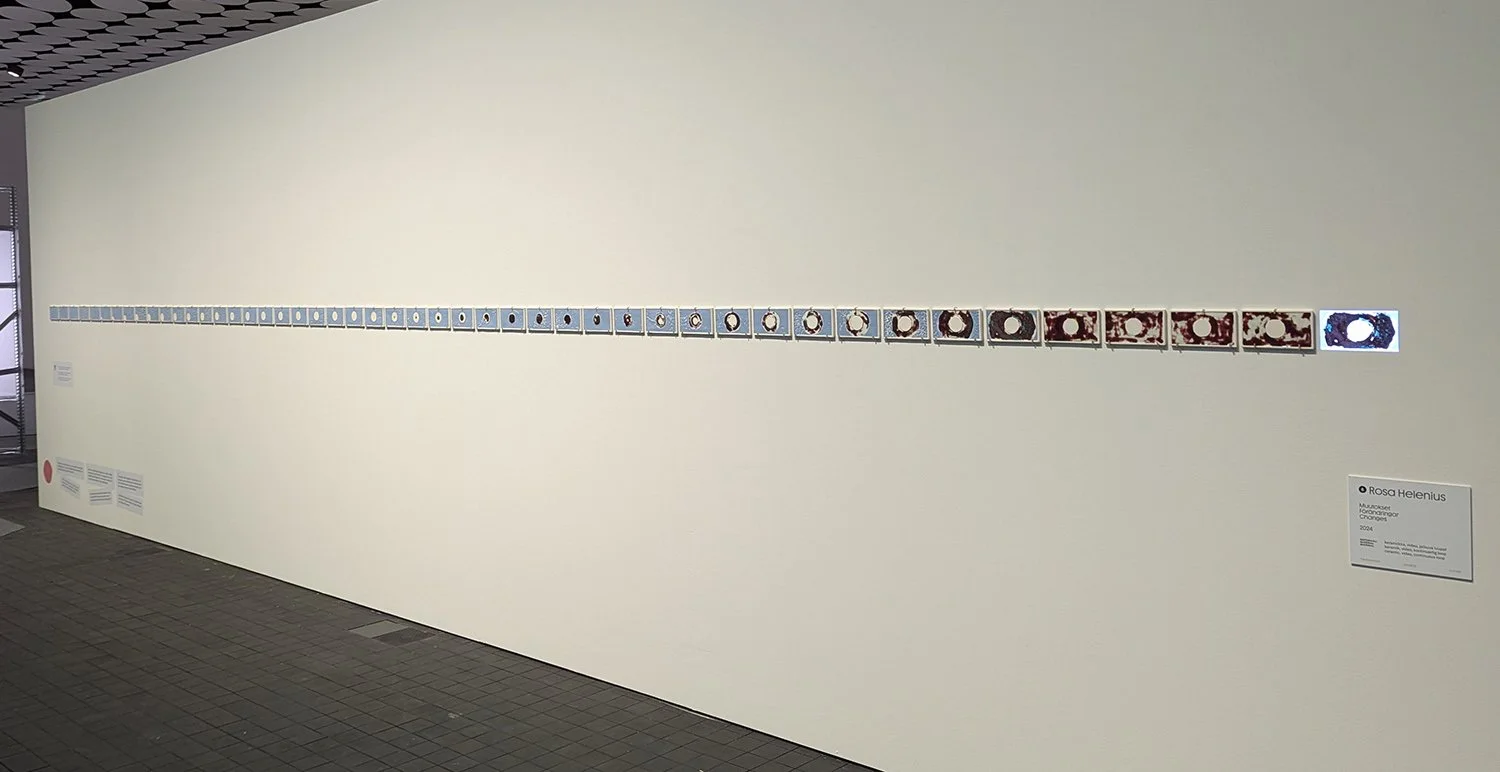
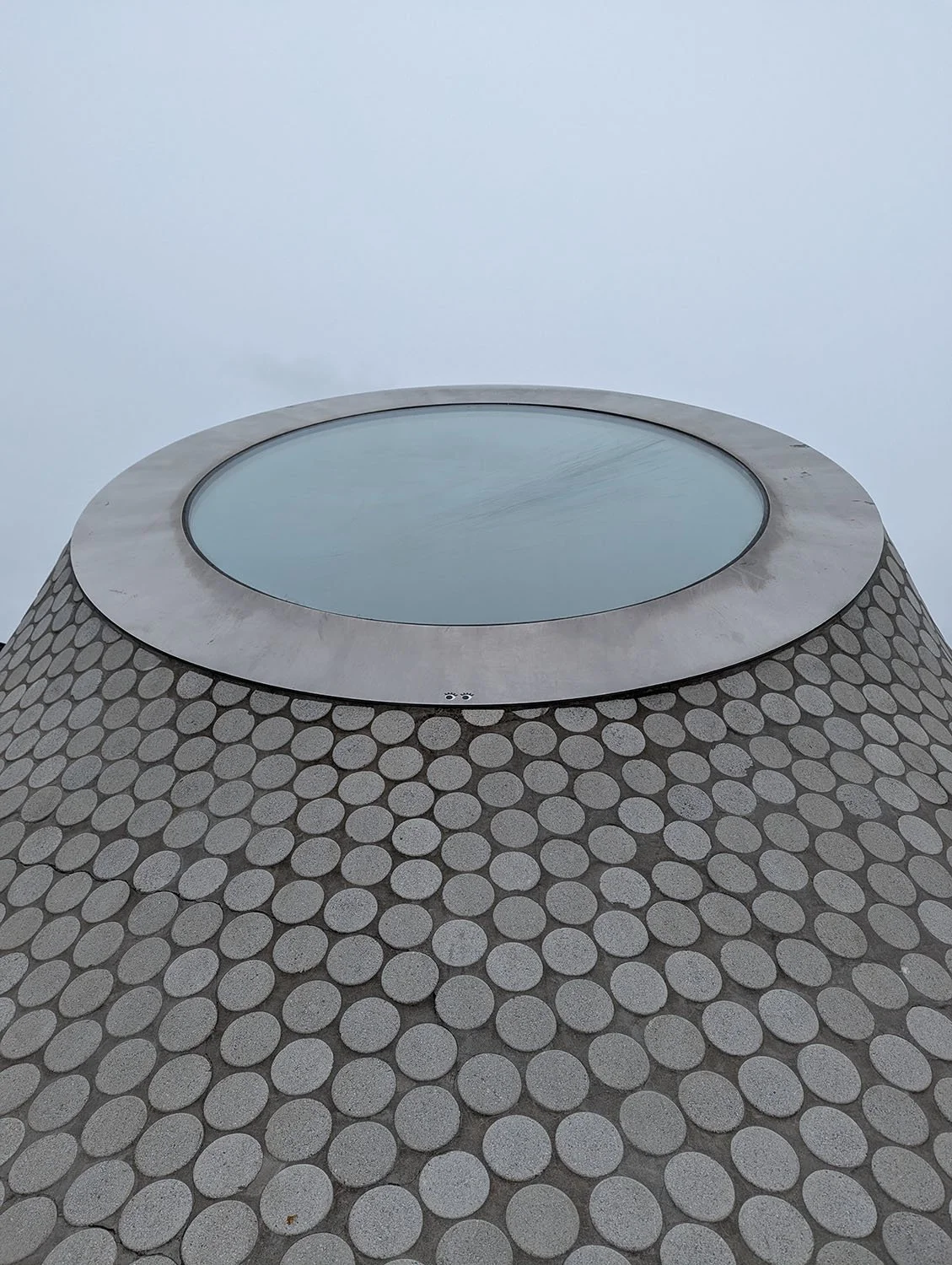
In Helsinki, I visited two different museums (the Architecture and Design Museum and Amos Rex), Temppeliaukio Church, and checked out Hietalahti flea market, Market Square, Old Market Hall), and the Design District. I was lucky enough to get to visit Amos Rex with a former student of mine who was also in Helsinki, so that was quite cool! As I was seeing all the arts and crafts, I noted how much knitting, crocheting, fiber arts, fabrics, and fashion are a part of the design landscape here - particularly that of women. I decided I want to lean into that for my own artwork.

Some general takeaways from Helsinki - the downtown and all associated destinations felt more contained and smaller than I anticipated. There is pretty clearly a decent vegan and vegetarian scene. The tram system is really nice. For whatever reason, Helsinki is like Japan wherein they give you the smallest of cups even for water, so you have to ask for refills constantly. Or you just outright have to pay for water, and even then it’s a tiny bottle. I much prefer the US’s large glass of free tap water approach.
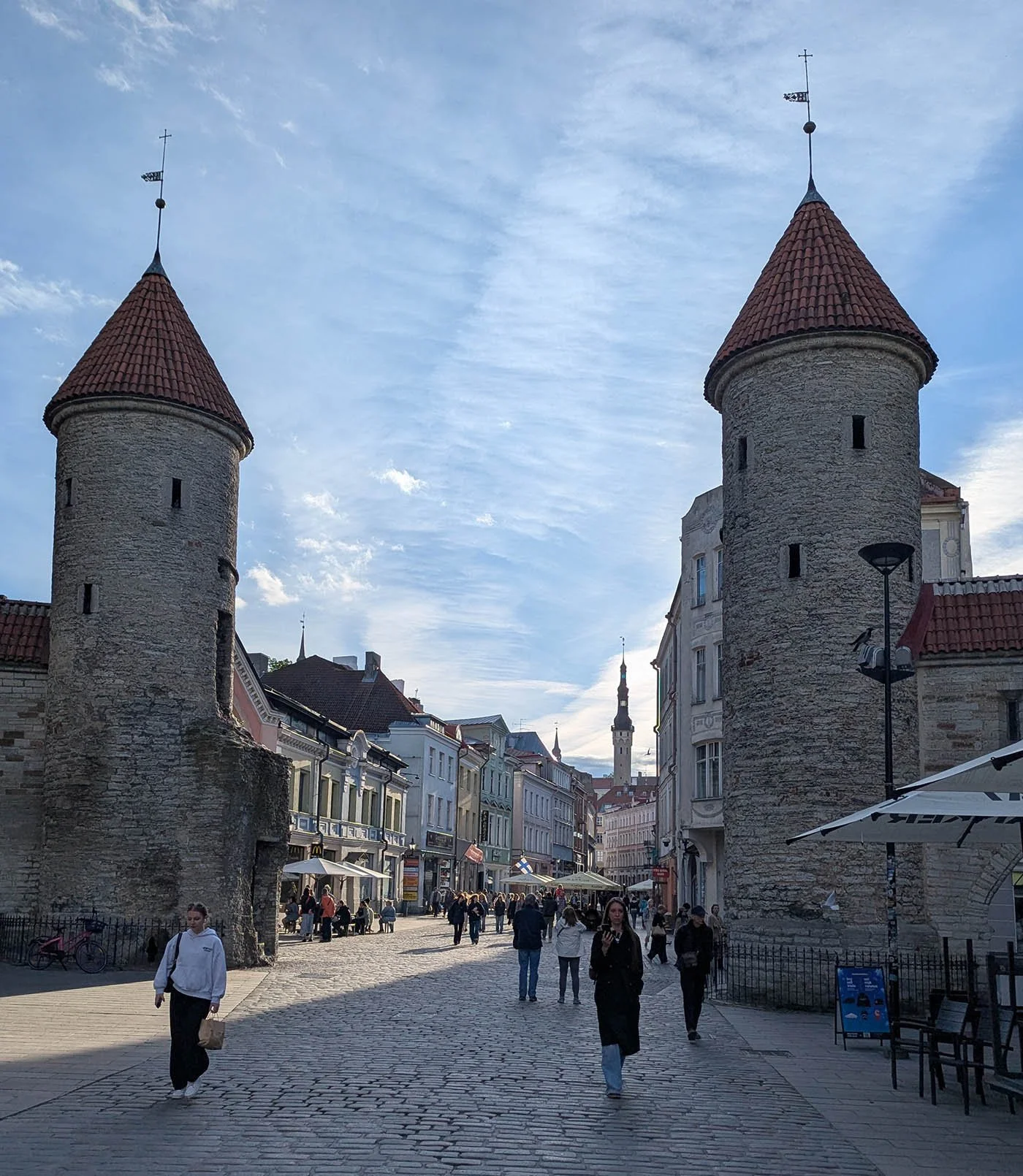
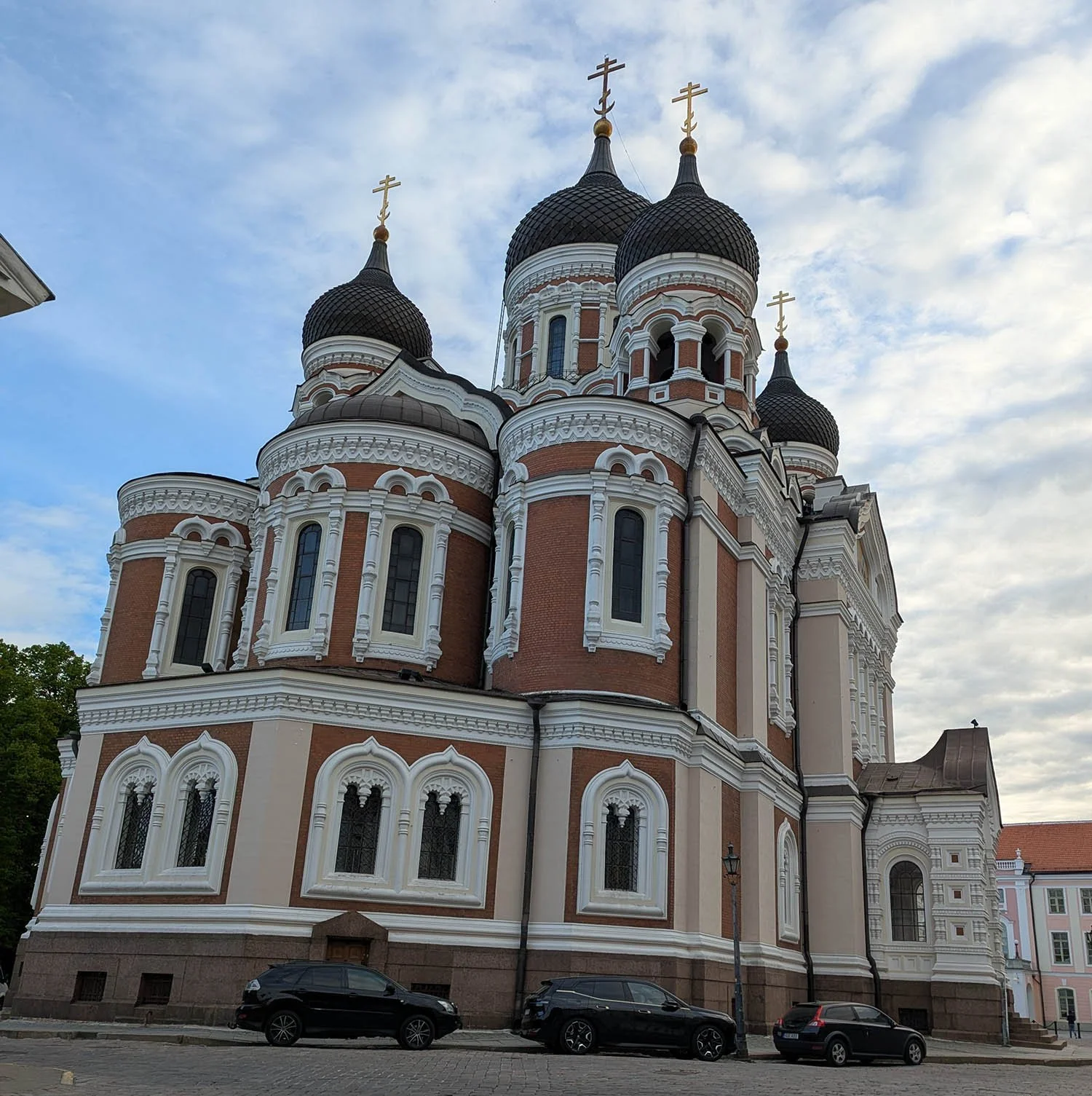
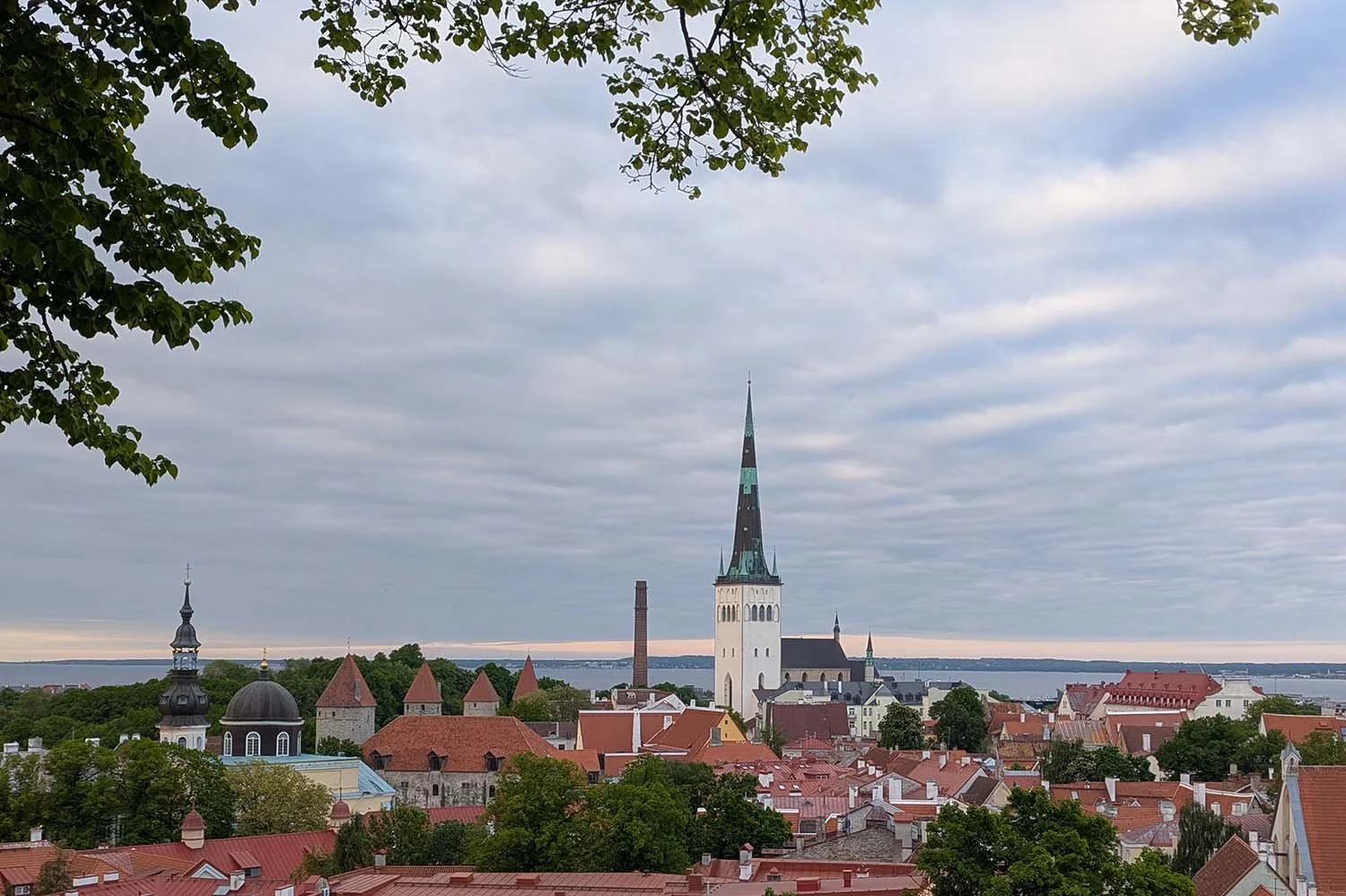
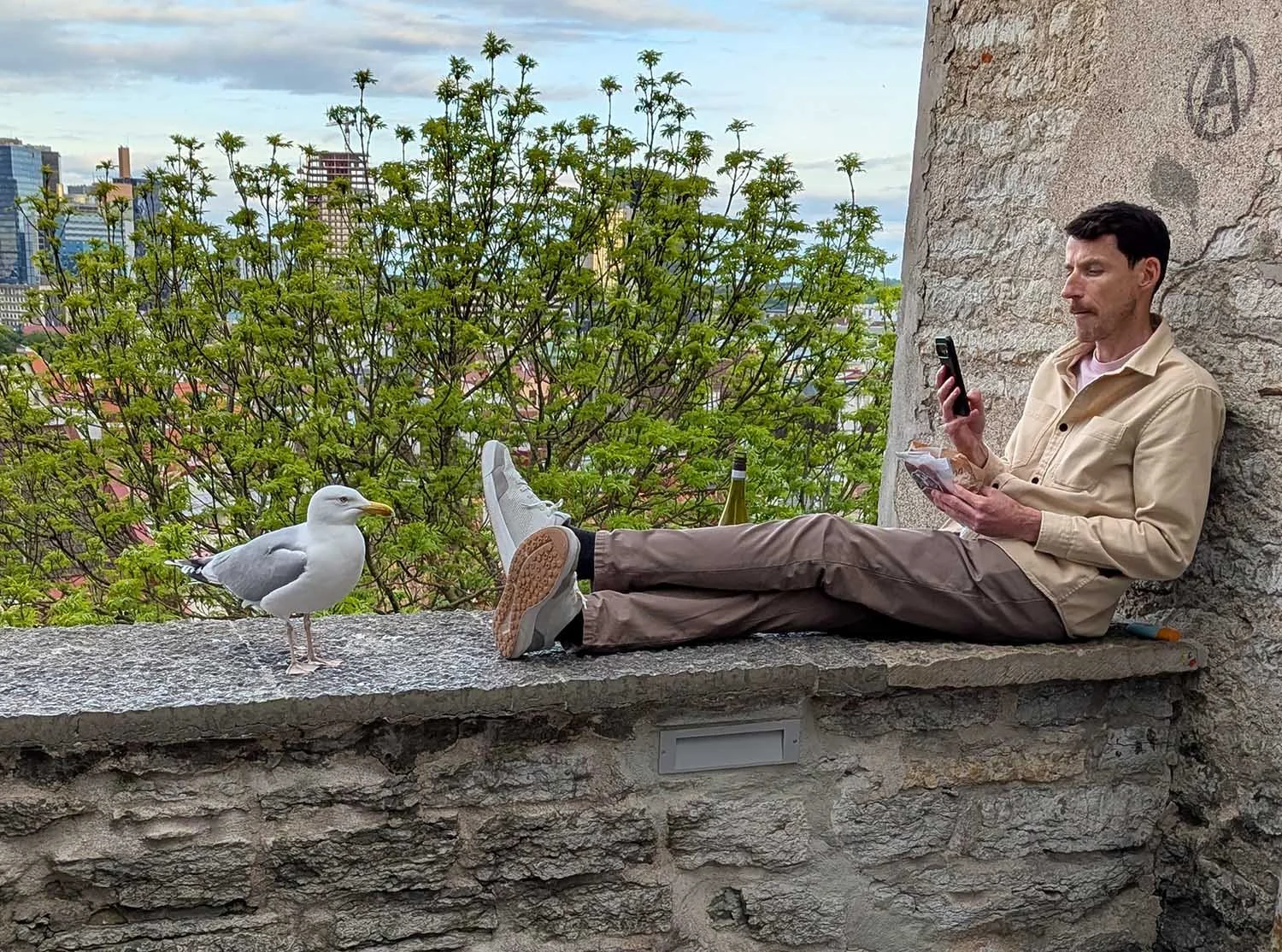
After I was done touring Helsinki, I took the Tallink ferry down from Helsinki to Tallinn, Estonia. The ferry was absolutely enormous, and fortunately it did not set off any significant motion sickness. Once in Tallinn, I hauled my luggage from the port terminal to my hotel and set off on an evening walking loop of the Old Town. Note the seagull-man standoff; they were arguing about whose dinner it was that the man was trying to consume.

The next morning, I headed to Karnaluks OÜ to check out fabric and ribbon options, and had lunch in Tallinn before catching a bus down to Pärnu. After I arrived, I met with the residency directors Taje Tross and Al Paldrok, and they showed me the ins and outs of the residency and nearby neighborhood. I popped out to grab some groceries and then met up for dinner with Marko Poolamets, a Renaissance man. Amongst his many professions, he serves as a nature photographer and tour guide; I had booked the next day with him and his gear. He is also a university professor of marketing, an oral history interviewer, sits on the board of two museums, does environmental science work…

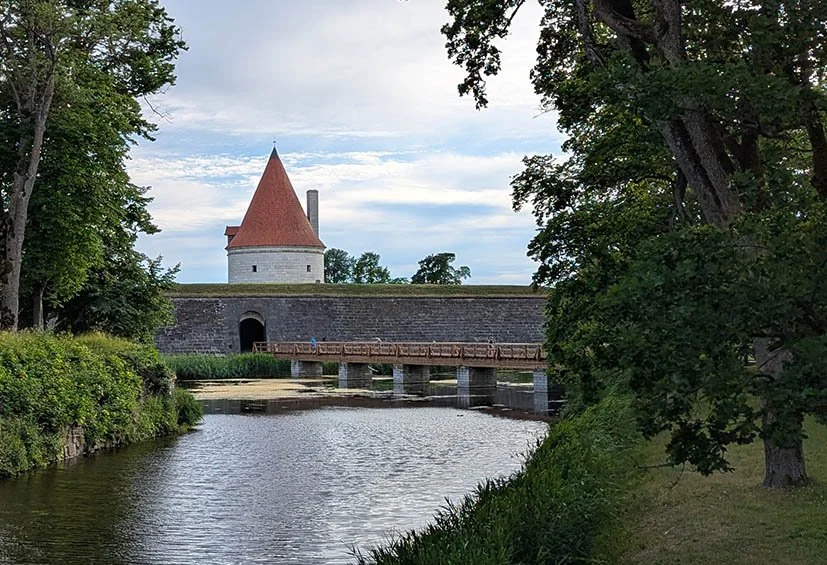
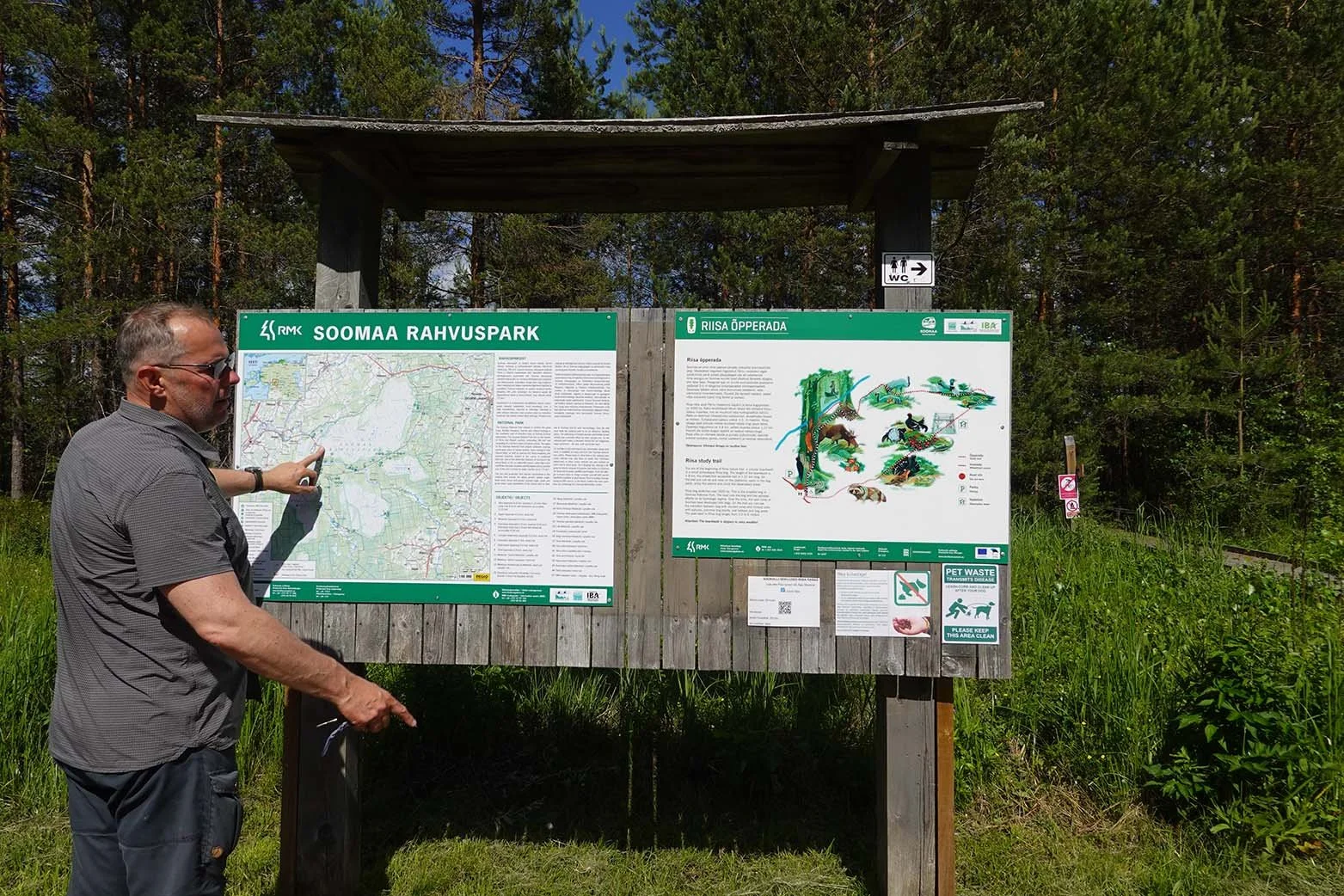
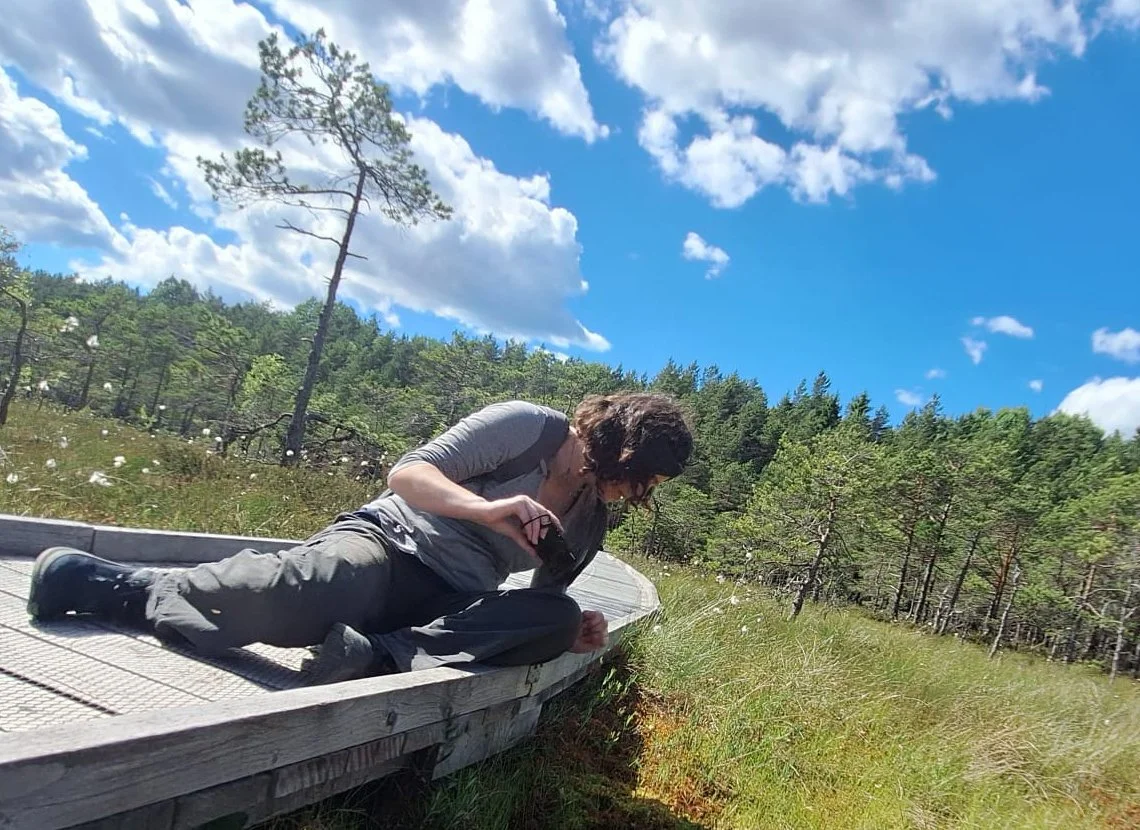
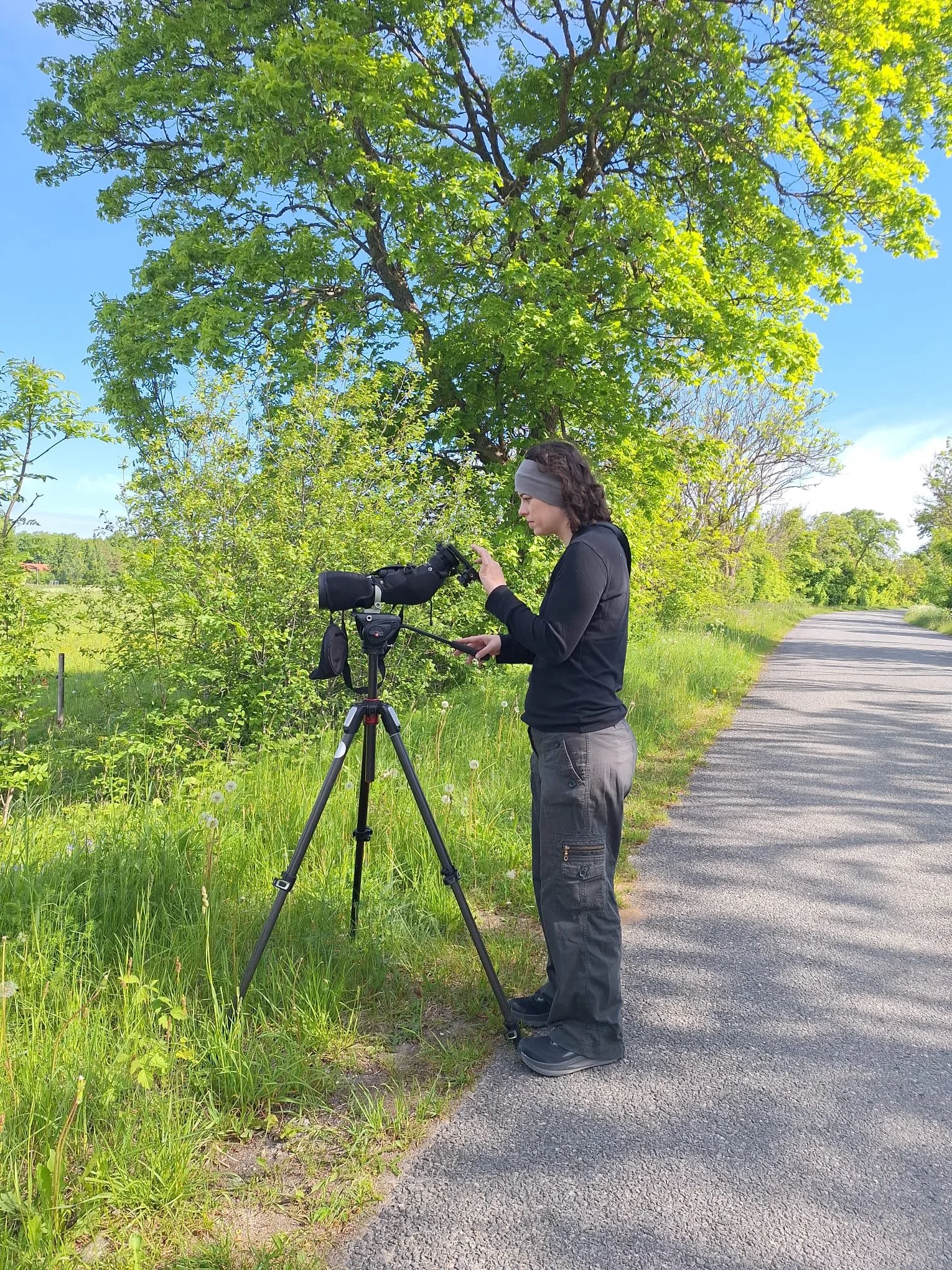
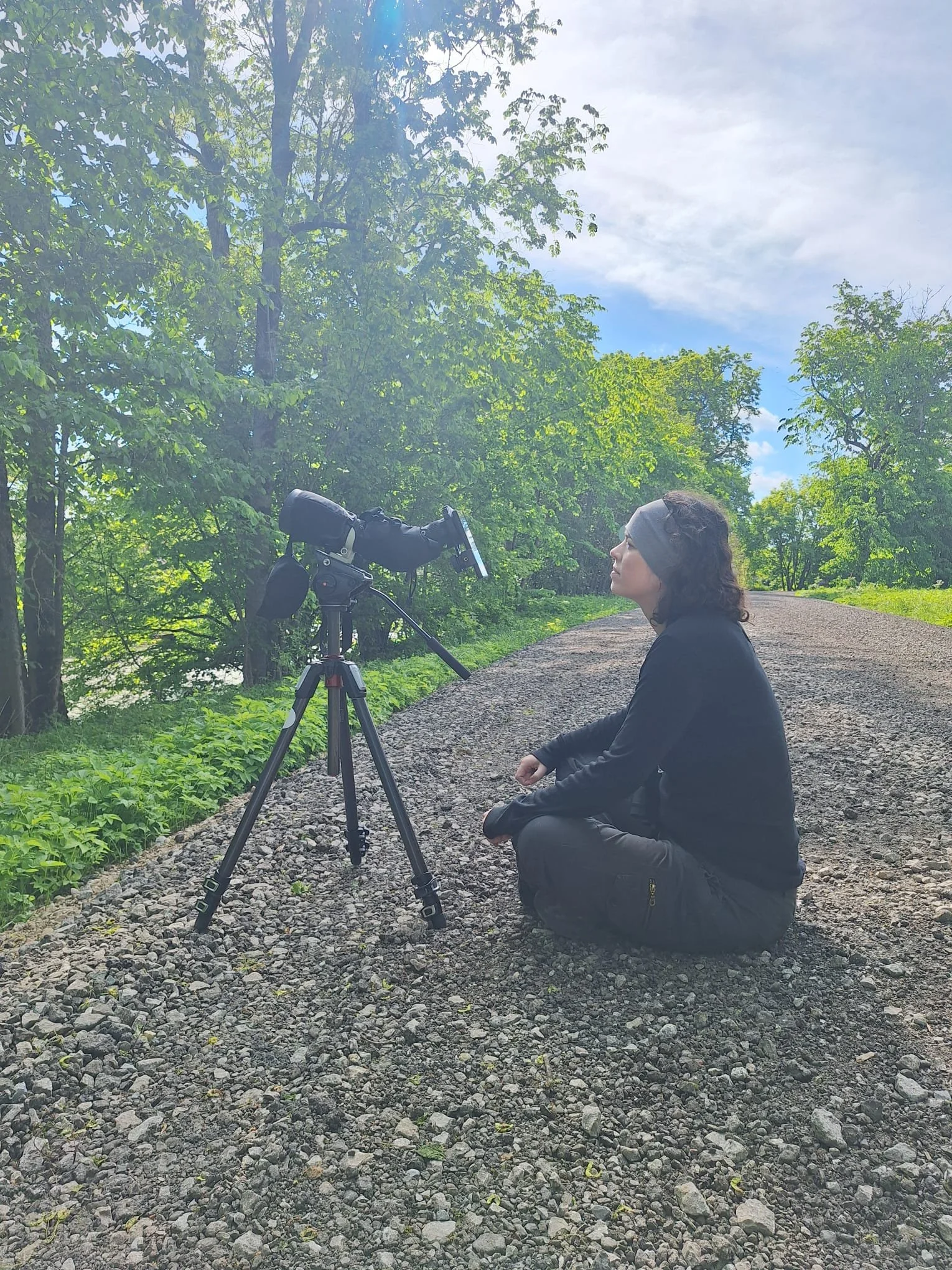
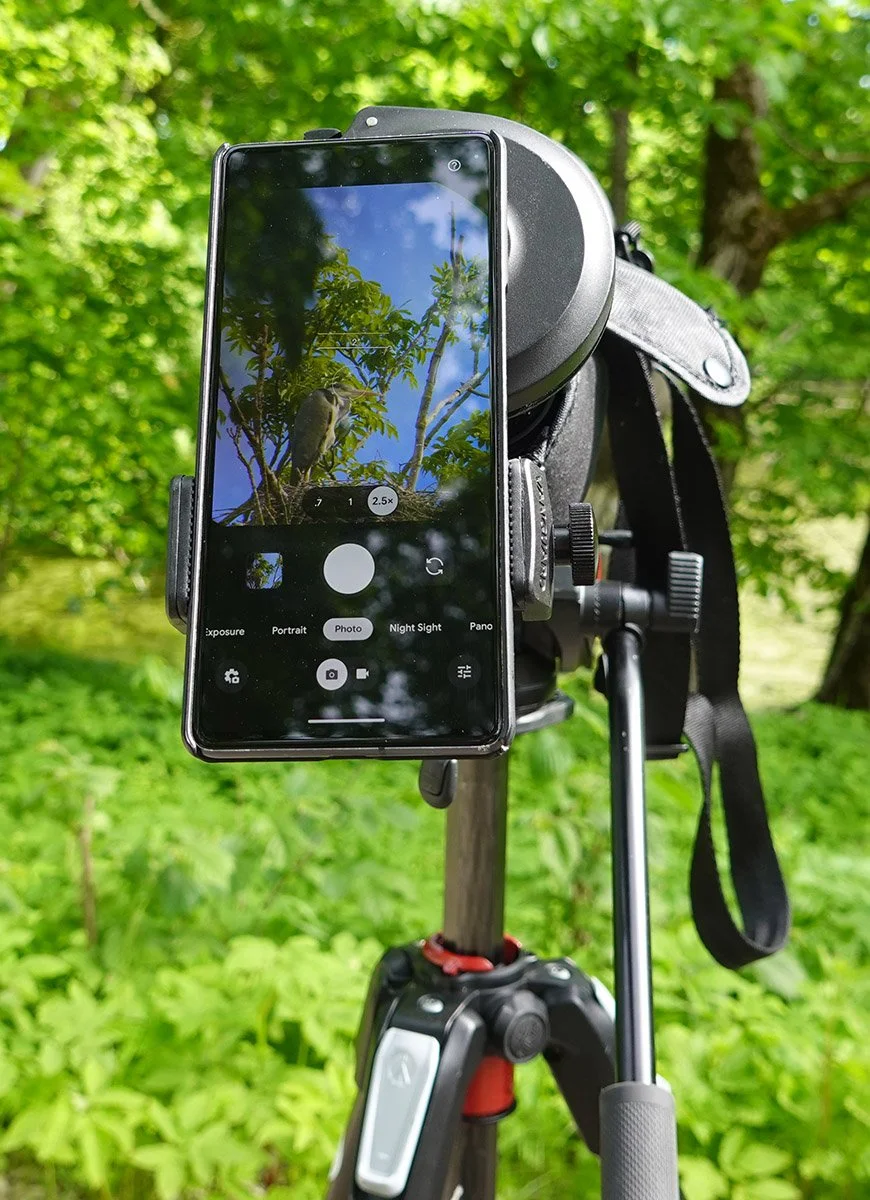
The next morning, Marko and I woke up quite early and went out for a long, delightful day of mostly birding (we were open to other species too, but the birds are plentiful here!). It was lovely to work with him and to get to borrow his gear, including his spotting scope with phone attachment. We spent a full twelve hours touring around a chunk of western Estonia including Matsalu and Haapsalu.

Then the rest of that first week I spent in the studio!

Upcoming: Loovlinnak Creative City Artist Residency in Pärnu, Estonia

I’m excited to share that I will be attending the Loovlinnak Creative City Artist Residency in Pärnu, Estonia this summer for a month-long stay in June 2026! This will be my first time in the Baltics, and I’m excited to experience and document the environment and atmosphere in and around the “summer capital of Estonia.”

As always, I’ll try to get some Estonian under my belt before I go. However, there are no local classes in Estonian nor is it even available on Duolingo, and it’s a language family with which I’m unfamiliar (Finnic, a division of Finno-Ugric). I imagine I’m not going to get very far with this one, but I’ll do what I can!