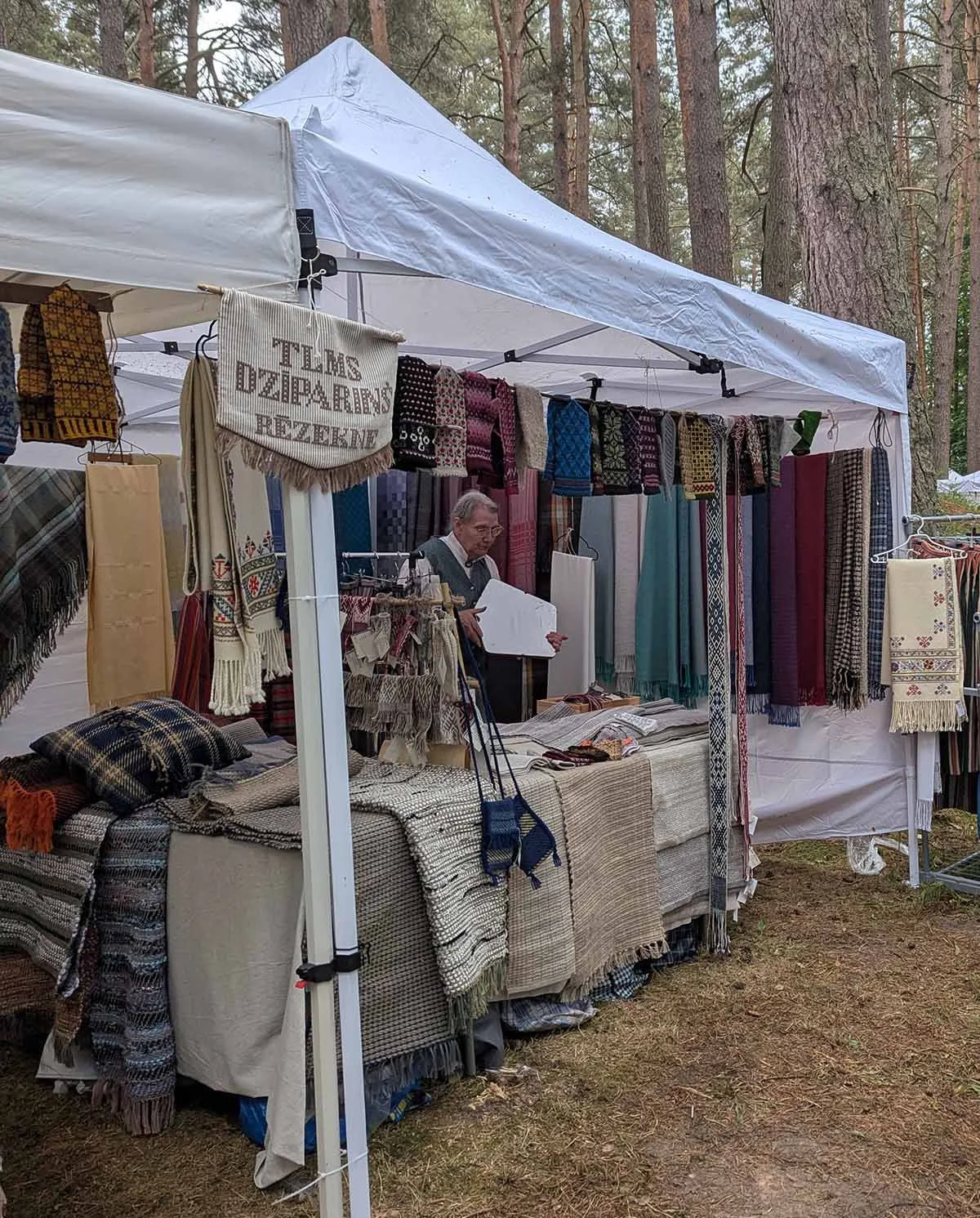
I’ve been painting red flowers lately, and I intentionally chose to continue that trend since I was building around a component I planned to use from the start: a jacquard folk pattern trim I picked up at Karnaluks OÜ in Tallinn. Once I saw a stand of vivid tulips, the rest of the composition came together..
The process differed from Between Worlds. Here, I painted the floater panel and tulips first, then laid down plastic and painted the lace pattern on top of it. After removing both those layers, I worked through a wide range of compositional options before settling on this angled, mirrored lace overlay. From there I secured the lace, added the trim, then cleaned up and secured the back. This was the second piece I started, but the third to finish! The delay was due to the sequential steps I needed to complete, each of which involved drying/curing periods.
Iconographically, tulips function as shields, threshold filters, and barriers across multiple traditions, a symbolism rooted in their nyctinasty: they close their petals tightly at night or on cloudy days, sealing their core away from cold, damp, and nocturnal threats. That self-protective habit is part of why tulips are believed to draw in positive energy while keeping poverty, bad luck, and hostility from crossing into the home, and why they carry associations of safety within oppressive environments. The lace adds a further veil over the tulips, while the mirrored, overlapping composition contributes a sense of movement and dissonance.
The outer border carries its own layer of meaning: it is a traditional Baltic woven band steeped in regional folklore and protective symbolism. Its color scheme has historically represented life, fire, and an active shield against negative energy. The pattern combines two ancient Baltic symbols: the Cross of Māra, tied to the Latvian goddess of earth and home and read as a sign of grounding and stability, and the hourglass motif, which represents the rhythm of time and the meeting point of the spiritual and physical worlds.
This is Woven Thresholds, acrylic, lace, and jacquard trim on wooden floater panel, 14x11x.5”, 2026.