copper mesh

More Raku Saggar "Faux Pit Fire" Attempts

You may recall I previously experimented with using raku aluminum foil saggars to approximate pit firing. That first time, I just tried it on one piece of burnished pottery; I liked the results!

At this recent workshop, I did two more. I also added some combustibles I hadn’t yet tried: Miracle Gro fertilizer crystals and Zep Root Kill crystals (copper sulfate pentahydrate). If I were doing actual, controlled experiments, I would test one variable at a time and then combinations of two at a time, three, and so forth. However, I have to pay firing fees for each piece of pottery I take to these workshops, so instead I’m being pretty liberal with my variables.

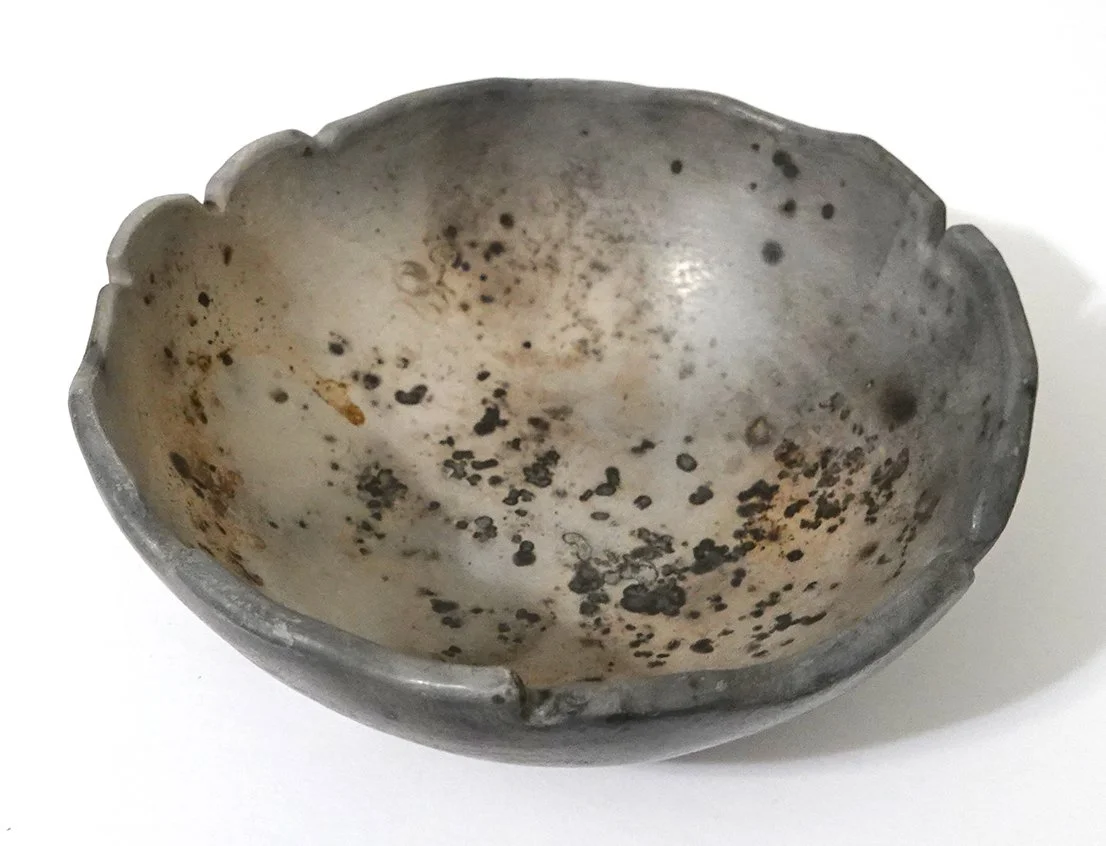
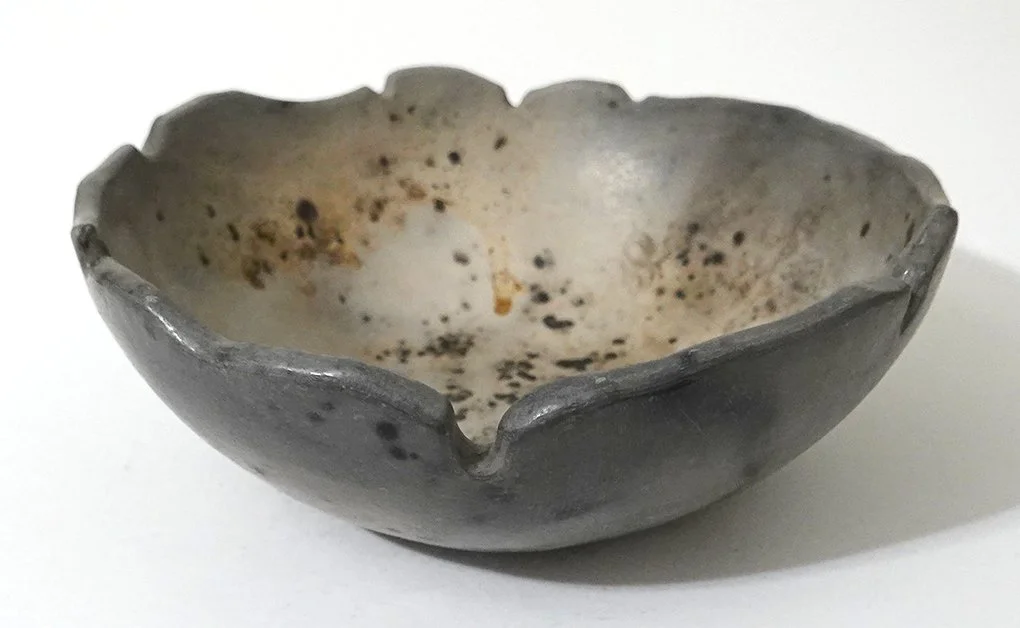
I strategically placed root kill crystals, Miracle Gro, coffee grounds, banana peel, copper mesh, copper wire, and steel wool in and around the bowl below. This time, I tacked the crystals and powder to the foil and the bowl with hairspray, so it could stay in contact with the interior and exterior sides instead of just falling to the bottom. I wrapped that all fairly tightly with a layer of aluminum foil. Then I poured some salt on and added another two layers of aluminum foil, hoping to get some cool fuming reactions.

I waited to see how the bowl turned out before committing to doing another with this same finishing technique. I admit that I was hoping the new crystals I added would have contributed a wider range of colors, but I nevertheless liked the result.
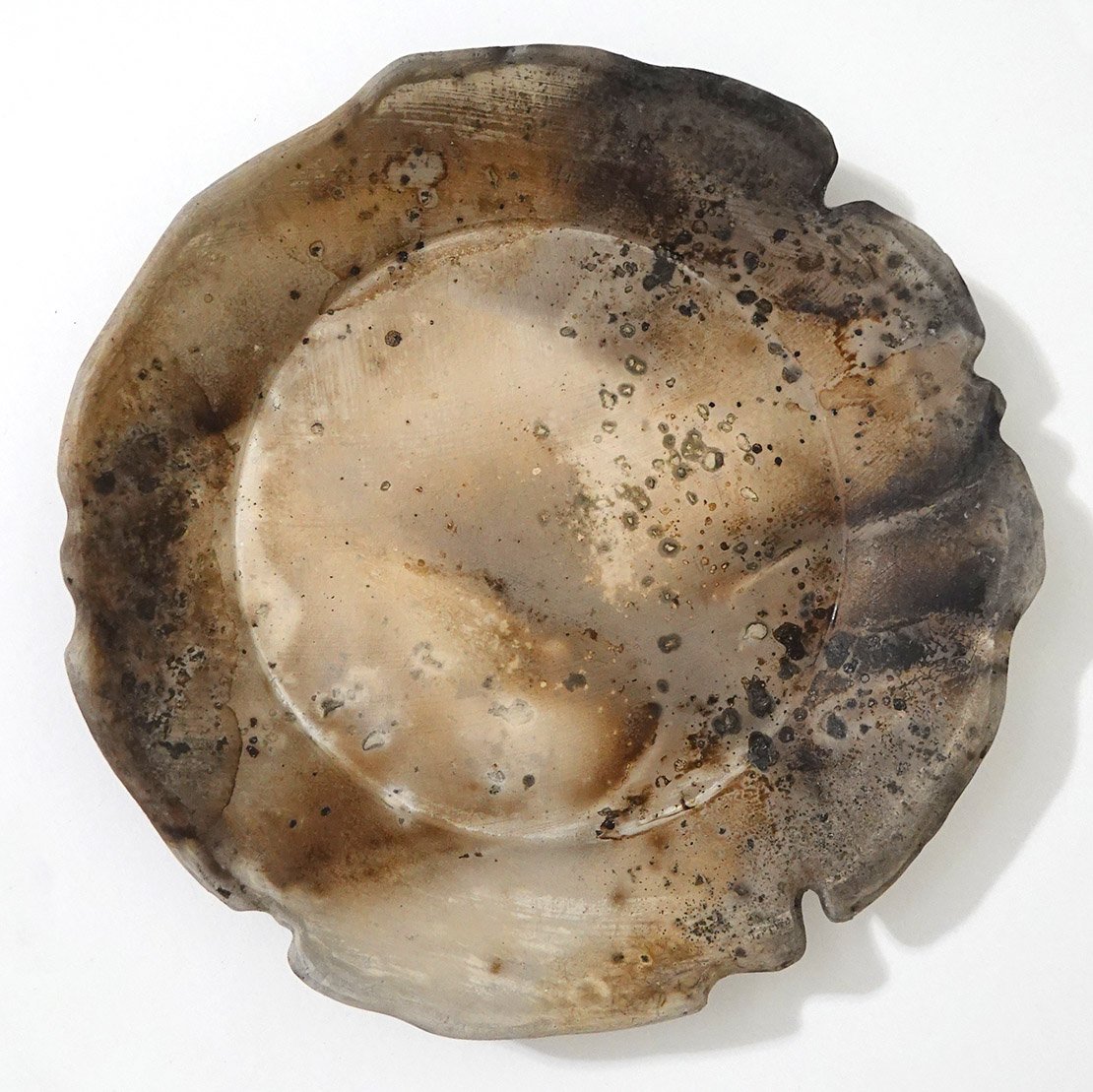
However, I wanted even more finer carbon marks on my second piece (a plate), so I used the same ingredients and added a small sprinkling of sugar as well. I again put some salt between the first and second layer of aluminum, and it didn’t seem like it required a third foil layer for coverage (it was easier to wrap the flatter form) so it got fired with just two.

I adore this plate - it’s either tied for my favorite piece from this firing or might take first place.
My Previous Raku Workshop: Mason Stain Saggar Pottery

Before we get to my pieces from the October 2025 workshop, I never finished sharing my April 2025 raku pottery as I segued into Japanese residency posts and then went on from there! When we last left off, I had shared my experiments with Mason stains and crackle glazes.

I also experimented with dark teal Mason stain and ferric chloride saggar-fired pottery!

First, we have an orb marked with copper mesh:

This is a small dish which has some marks from a copper wire on the exterior:

Next, an oblong vase! The black smoky spots are from testing out a bit of copper tape:

Finally, a small bowl, using a strip of copper mesh this time!

Copper Mesh Saggar Raku Pottery

I was most excited about trying this technique out at this recent raku workshop, as I’d only learned of it recently and I couldn’t find many photos online of it! I purchased two different brands of copper mesh scouring pads and then unraveled the pads and wrapped the copper mesh “socks” around ferric-chloride-dipped ceramics. I then bundled it all up in aluminum foil and saggar fired them (also known as the “baked potato” method).

Some tips:

  • If the ferric chloride is still wet, it will melt the copper mesh, so ideally apply it after the ferric chloride has dried. However, that means you can’t also use sugar for additional carbonization as it gets knocked off. If you’re feeling risky, you can daub some more ferric chloride atop the piece and sprinkle with sugar but it’ll then eat away all the copper in those areas.

  • The tighter the mesh atop the ceramic, the clearer the results. Really hug the vessel tightly for the most overall effect.

  • The resulting finish when taken right out of the foil looks like a hot mess due to all the ash produced - but after you rinse the ceramics off, their true appearance is revealed!

I’ve since learned that you can just buy rolls of copper mesh (so you don’t have to go the cutting-and-unraveling-scouring-pads approach unless you already have some on hand); I may play around with that moving forward! I really like the results I got from this process. In different areas, the copper mesh carbonization marks look like fish scales (or maybe dragon scales!), chainmail, webbing, fishnet stockings, or unraveling yarn. When the mesh only is in discrete spots, its marks also contribute to a layered, graffiti-like aesthetic.

Here’s the most mesh-marked piece of the batch, a small oblong vase:

Next, a small orb:

A weird little vessel I’m calling an oddgon:

And finally a larger, sideways orb: