clay

Preparing for the Next Raku Workshop: Hump Molds!

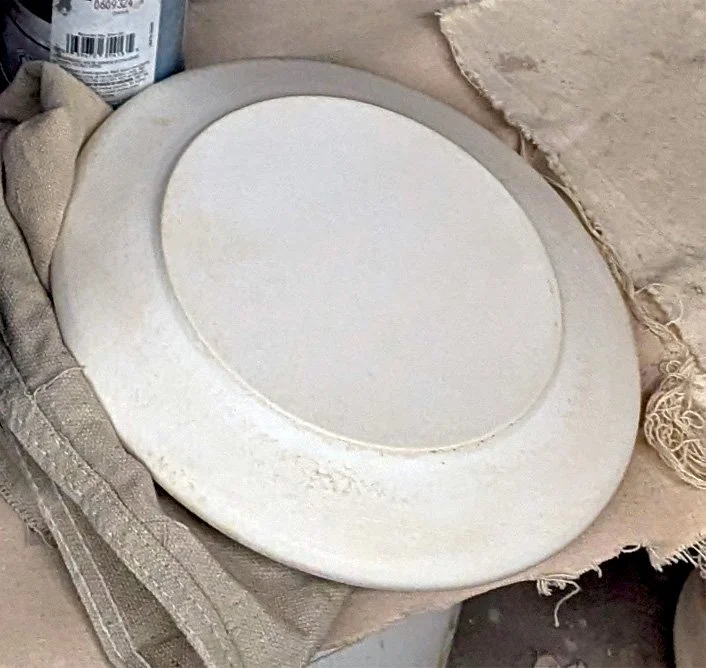
A plaster hump mold for a plate.

I’ll be taking a group of nine (including myself) to another raku ceramics workshop at Dakota Potters Supply this weekend!

This semester has been very busy, so I’ve chosen to focus entirely on hump-mold pottery for this workshop. Using plaster hump molds (convex forms over which slabs are placed and pressed) significantly reduces the time required to make raw ware compared to pinch-pot, hand-built construction.

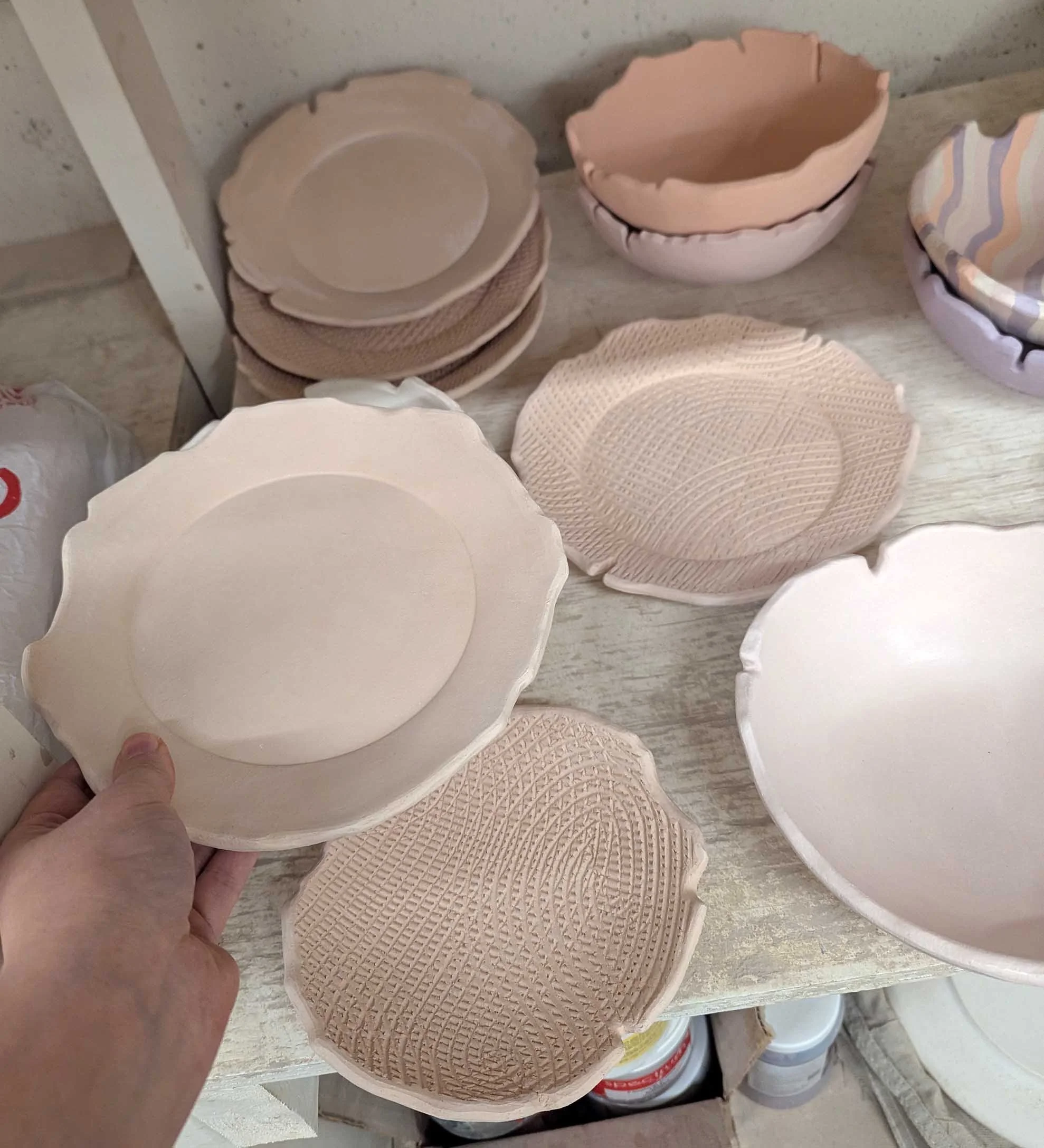
Hump molds also allow me to easily add and retain complex texture particularly to the interior of a piece; when making a pinch pot, the shape comes from pounding, pulling, and tapping the clay with tools that typically leave a fairly consistent surface. I can add texture to the exterior of a pinch-pot bowl or vase after it is built by rolling it over a texture plate or hitting it with a textured paddle, but I can’t do that to the interior. I can always carve texture in to both sides or use other techniques if I really want to, but what I’m getting at is that texture is more complicated to add and retain when working in my preferred pinch pot style.

With these plaster hump molds, I can easily add complex surface texture to a flat slab and control whether it appears on the exterior, interior, or both. I then rely on gentle pressure, gravity, and evaporation to shape the clay, rather than the more aggressive pinch-pot methods that diminish or fully remove surface detail.

I am also continuing to experiment with Mason stains and burnishing on a few of the ceramics!

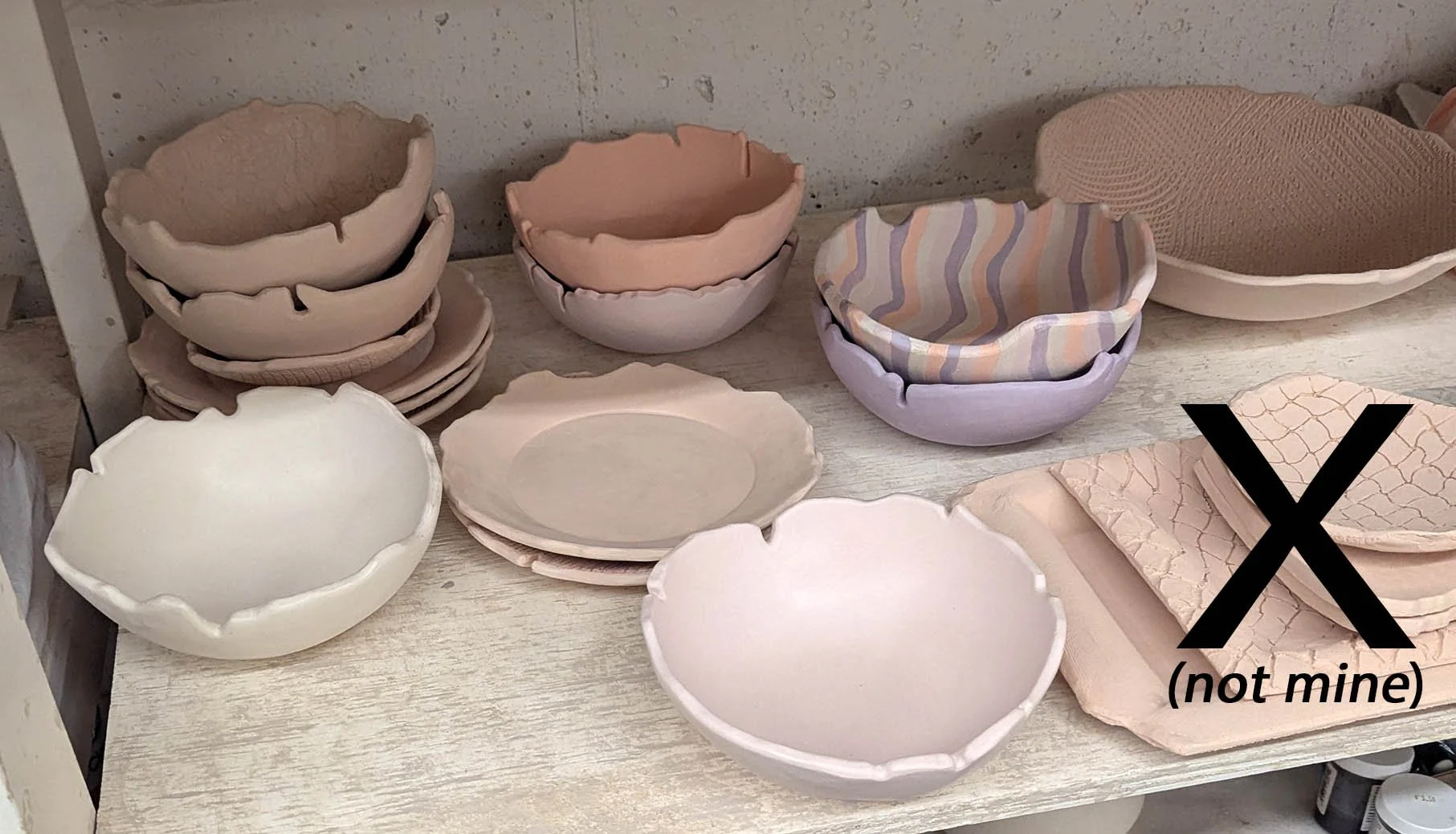
I saved enough time that I actually made more pottery than I think I’ll have time to finish at the workshop, which is a good problem to have. I’ll nevertheless bring it all just in case I’m wrong about that! Below is all the bisque ware I’m bringing with me. I share space with other folks in our ceramics studio, so I’ve crossed out the pieces in the first photo that aren’t mine. In the second photo, you can see the variety of techniques more closely, and the plate I’m holding corresponds to the hump mold pictured above (as do others).
My 41.816, -94.646 Ceramics

In my three-person show Whiterock Art at the Betty Strong Center here in Sioux City, IA, I have 37 pieces on display! There are 2 painted reliefs, 20 8x8” chromatograms, and 15 handmade ceramics. I’ll post photos from the show and reception shortly, but right now I want to focus on those 15 ceramic pieces in detail.

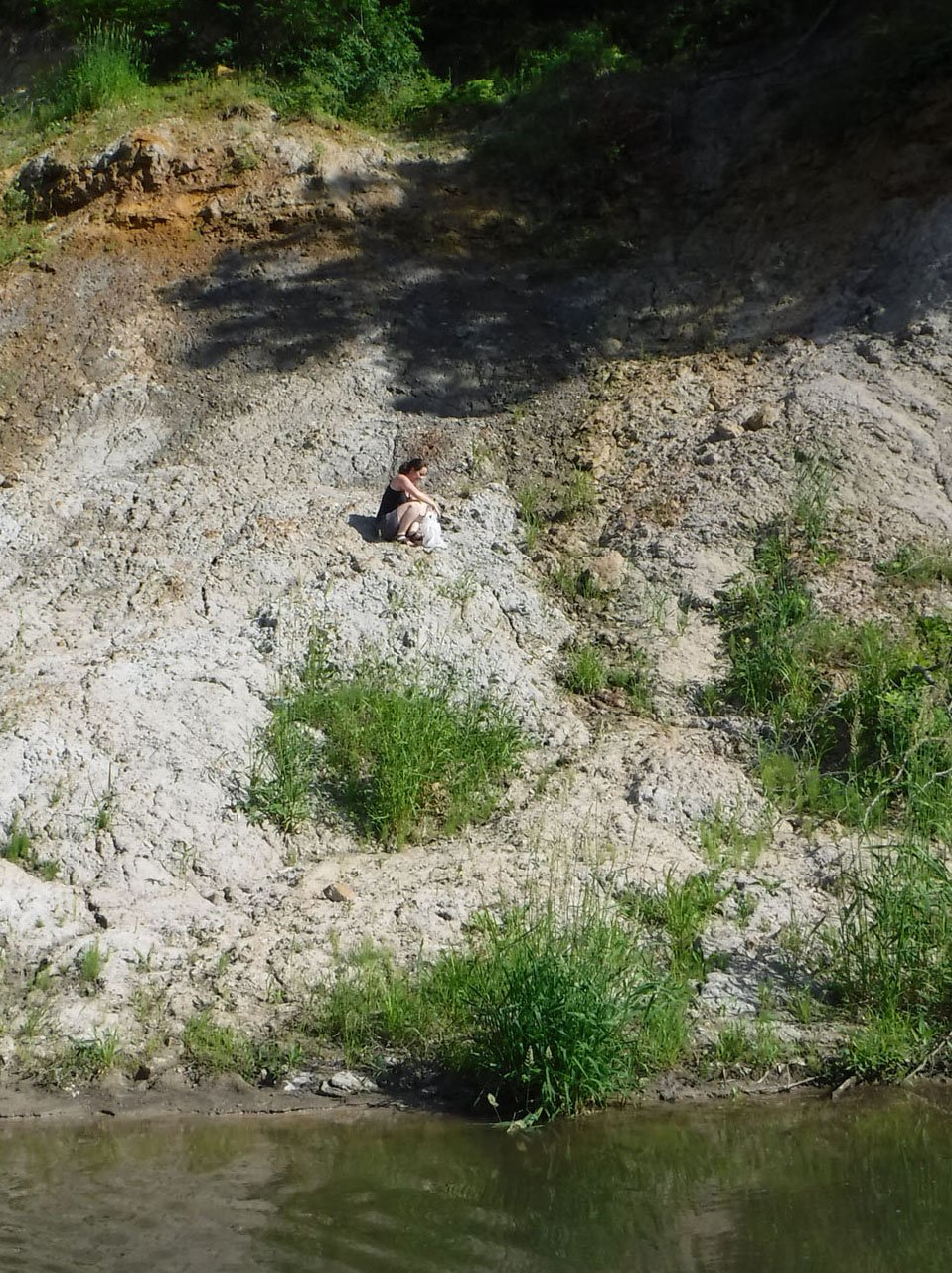
My Whiterock Conservancy ceramic body of work is special in that it is 100% site-specific in every component. I dug my own clay out of the Middle Raccoon river beach cliff, cleansed it of rocks, roots, and other debris, and then I did not amend it (often potters mix additives into their harvested clay to improve elasticity or other desirable characteristics, but I thought that would weaken this collection’s conceptual power). Below are images documenting my clay collection!

I handbuilt 15 different vessels, and as I was doing so, I thought about if I should glaze them at all, and if so, would transparent glaze from non-local sources taint the project…? I shared this quandary with friends, including my wonderful former colleague and master ceramist Susan Nelson.

After a couple of weeks mulling it over, Susan arrived at a different solution: ash glazing. I learned from her that ash can be used as a glaze, often in combination with clay to lower its melting point and smooth out the finish. I reached out to Whiterock Conservancy co-founder Liz Garst to see if I could collect some of the ash they generate, and she was kind enough to collect me a gallon bag of ash from a slash pile burn primarily composed of invasive honeysuckle bushes.

I inter-library-loaned a book on natural and ash glazes and conducted a variety of tests to determine the best ash glaze mixtures, application methods, and firing temperatures - but I also had deadlines to meet that meant I couldn’t dally too long in the experimentation phase. I eventually settled on using three ash glaze mixtures that used different proportions of clay to ash mixed with water and put 6 pieces in a Cone 8 electric kiln firing and 9 pieces in a Cone 9 gas kiln firing. Below (respectively from left to right) is a still wet raw ware handbuilt bowl, bisque-fired pieces, my work study students and I experimenting with ash glaze recipes in the ceramics studio, and ash-glazed bisque ware awaiting its glaze firing.

Below are are the finished pieces in the 41.816, -94.646 collection. Those title numbers are the latitude and longitude of the artworks’ origin, and if you input them into a map application you’ll see a pin drop on Whiterock Conservancy near the river beach! I love that these ceramics are made of the land itself, and are glazed with the conservation efforts of people today trying to restore what we’ve lost in ecosystem health and diversity. The colors, texture, and variation resonate in this body of work, and I look forward to comparing these pieces with future geographic coordinate collections, as I plan to create site-specific ceramics from other localities as well.